The 30-Piece Executive Wardrobe No. 12
The Navy Overcoat

There are garments that complete an outfit.
And then there are garments that define the man wearing it.
The navy overcoat belongs firmly in the latter category.
It is not seasonal excess.
It is not stylistic flair.
It is command, distilled into fabric.
Why the Navy Overcoat Matters
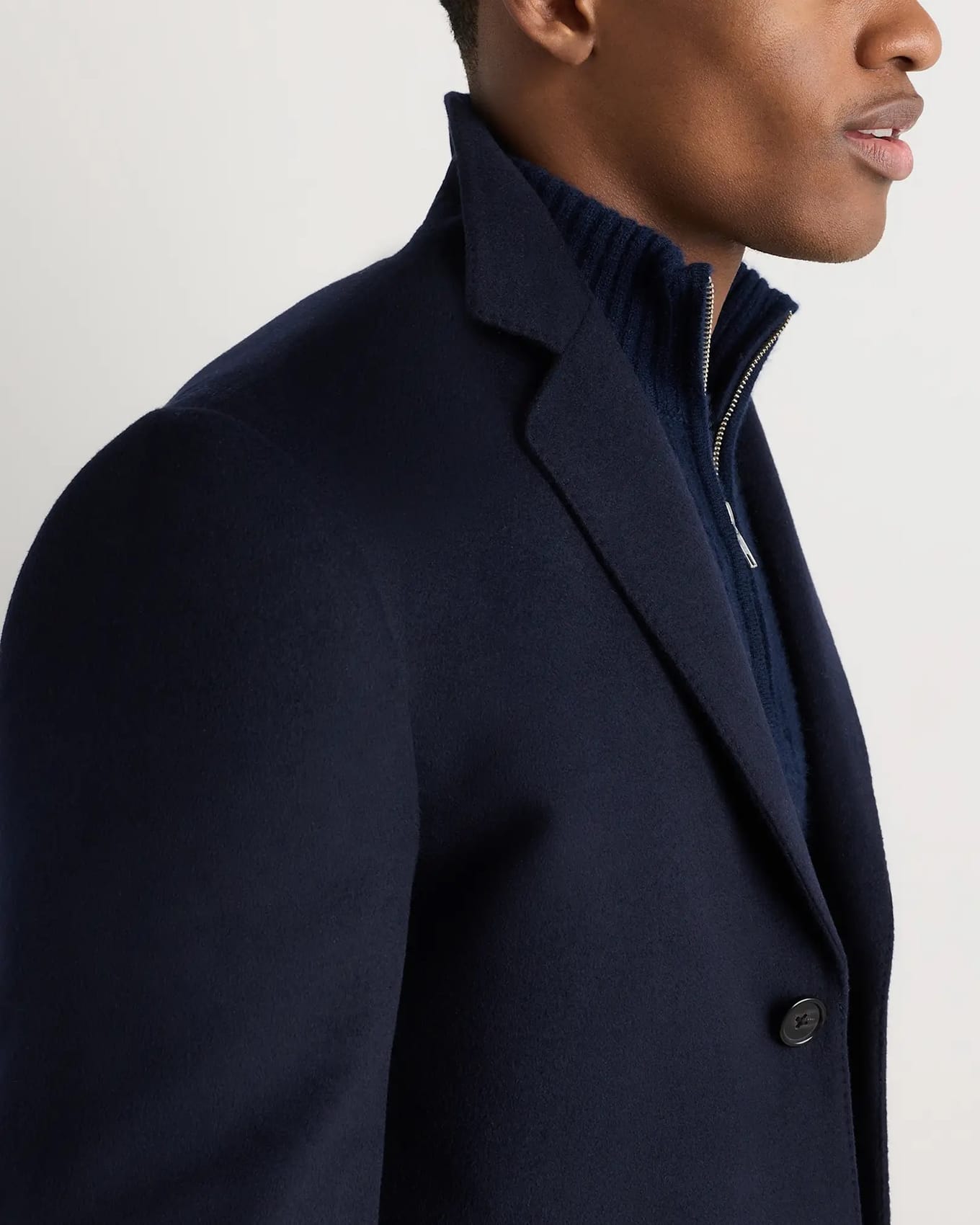
The modern executive operates in transition.
From car to office.
From meeting to dinner.
From daylight authority to evening discretion.
Most men treat outerwear as protection from the elements.
High-performing men understand something different:
Outerwear is the first impression—and often the only one that matters.
Before a word is spoken…
Before a handshake is exchanged…
The overcoat has already introduced you.
Why Navy—Not Black
Black is harsh.
Black is final.
Black creates distance.
Navy, however, communicates something far more powerful:
Authority without aggression
Sophistication without rigidity
Presence without theatrics
In natural light, navy reveals depth.
In low light, it reads as near-black—but softer, more intelligent.
It is the color of boardrooms, not funerals.
The Silhouette: Structure Over Excess
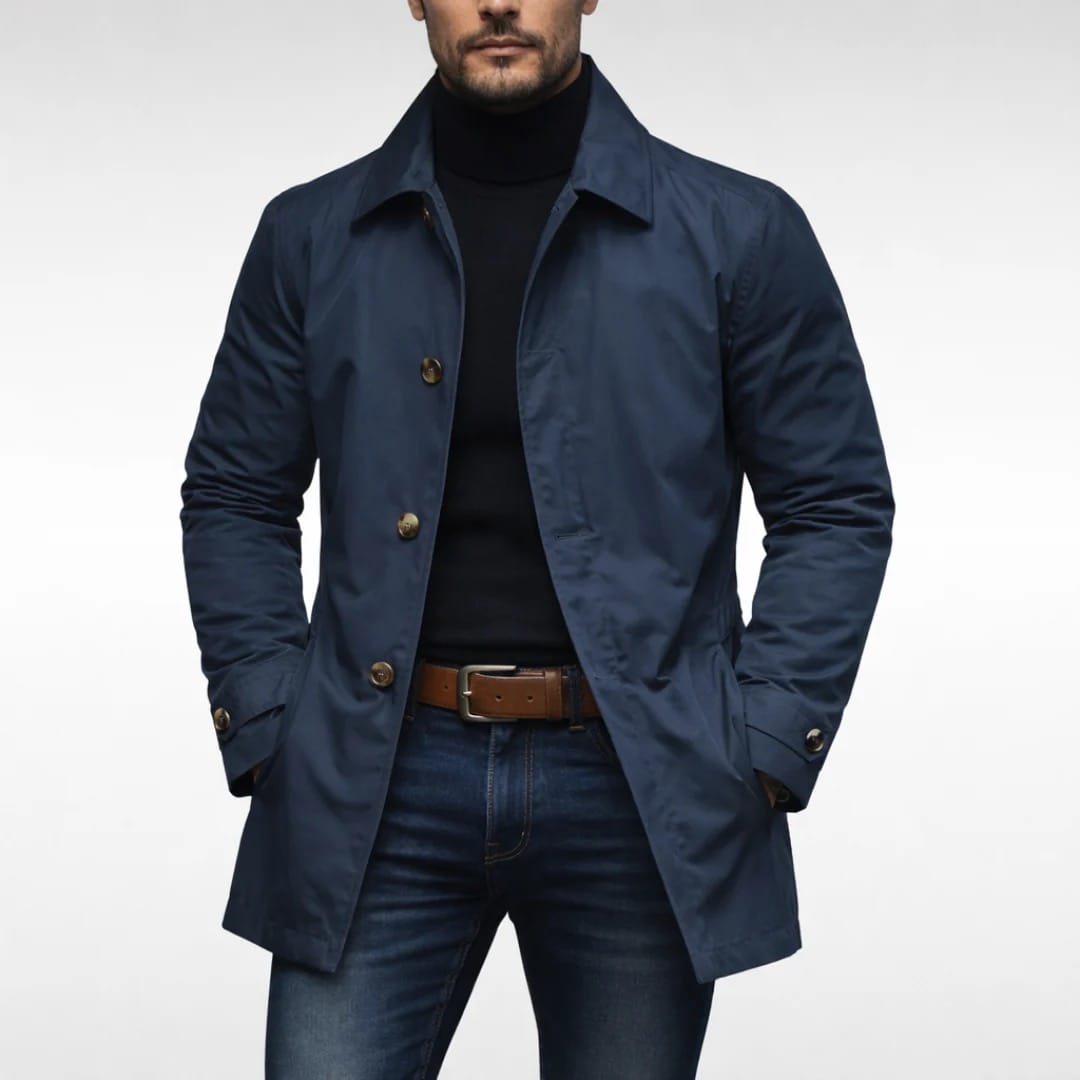
The navy overcoat should not overwhelm the body.
It should frame it.
The ideal cut:
Clean, structured shoulders
A tailored drape through the torso
Enough room to layer over a jacket without bulk
A length that falls just above the knee
Anything shorter loses authority.
Anything longer becomes costume.
This is not fashion.
This is proportion as strategy.
Fabric: Weight Signals Power
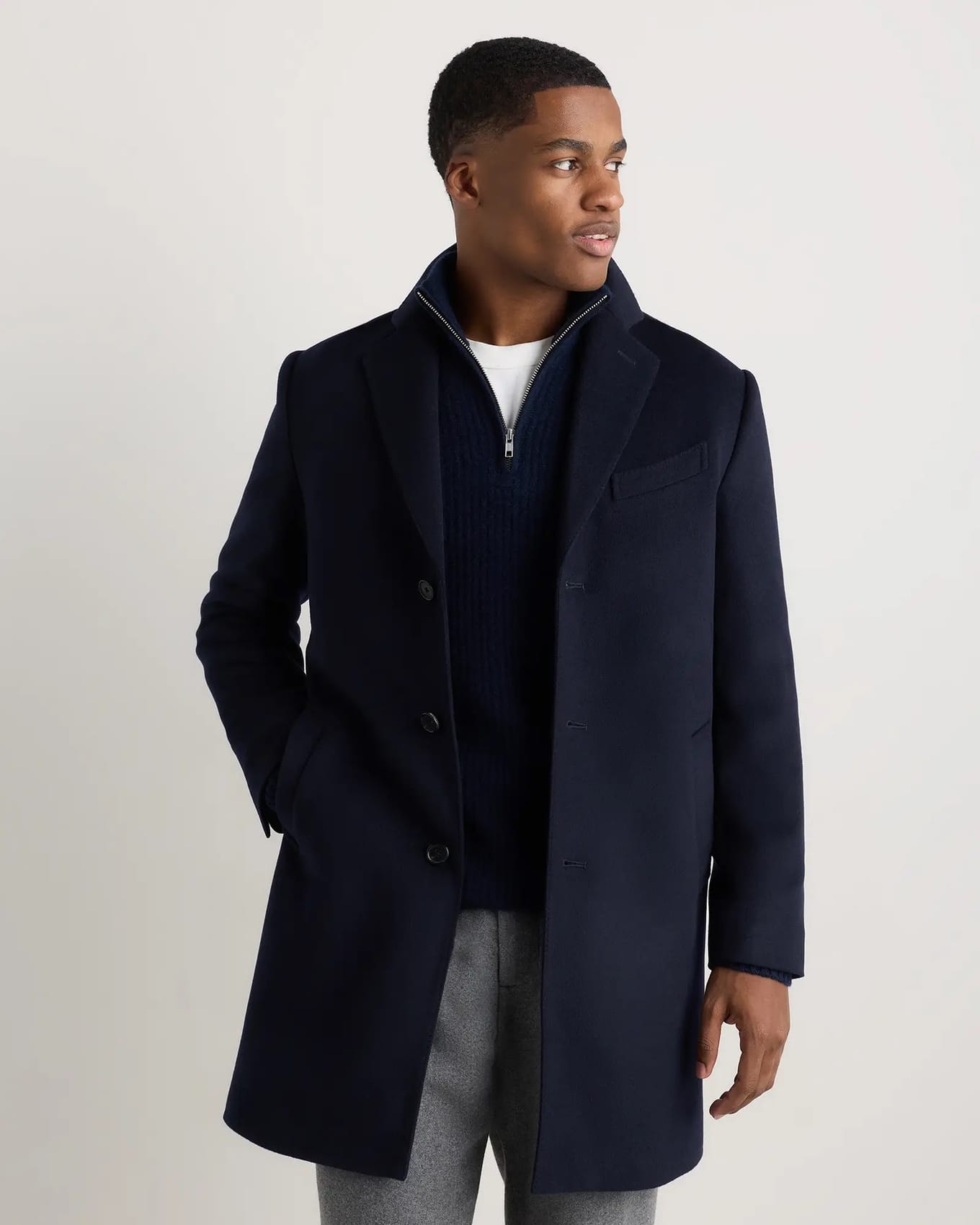
A proper overcoat carries presence—even at rest.
Look for:
Wool or wool-cashmere blends
A dense, substantial hand feel
Minimal sheen (matte finishes read more expensive)
When you remove the coat, it should feel like you’ve set down armor—not discarded an accessory.
Single vs. Double-Breasted

Both are correct.
But they communicate differently.
Single-breasted:
Understated
Efficient
Quiet authority
Double-breasted:
Commanding
Architectural
Assertive presence
If your environment is conservative—start with single-breasted.
If your presence must carry weight before you speak—graduate to double.
How It Should Be Worn

The navy overcoat is not a background piece.
It is the anchor.
It should be worn:
Over a navy or charcoal suit for seamless continuity
Over a grey flannel suit for contrast and texture
Over elevated casual (knit, trousers, loafers) to maintain authority off-duty
Leave it open when moving.
Button it with intention when arriving.
Everything about this garment should feel deliberate.
Common Mistakes
Most men get this wrong in predictable ways:
Too tight — breaks the silhouette over a jacket
Too short — reads like a trend, not a staple
Too light — lacks visual and physical presence
Over-designed — unnecessary details dilute authority
The navy overcoat should be quietly perfect.
Nothing more.
The Psychological Edge
There is a moment—subtle, but real—when wearing a proper overcoat.
You stand straighter.
You move slower.
You speak more deliberately.
This is not vanity.
This is alignment.
The uniform shapes the man.
Final Word

If the suit establishes credibility…
The overcoat establishes status.
It tells the world:
This man operates at a level where details are not optional.
They are expected.
The 30-Piece Executive Wardrobe Series Continues

Each piece is not just clothing.
It is a tool.
And when assembled correctly…
It becomes a system.
For the Reader
If you own a navy overcoat—evaluate it.
Not sentimentally.
Not casually.
Critically.
Does it project the man you are becoming?
Or the one you’ve outgrown?