The 30-Piece Executive Wardrobe No. 11
The Camel Overcoat
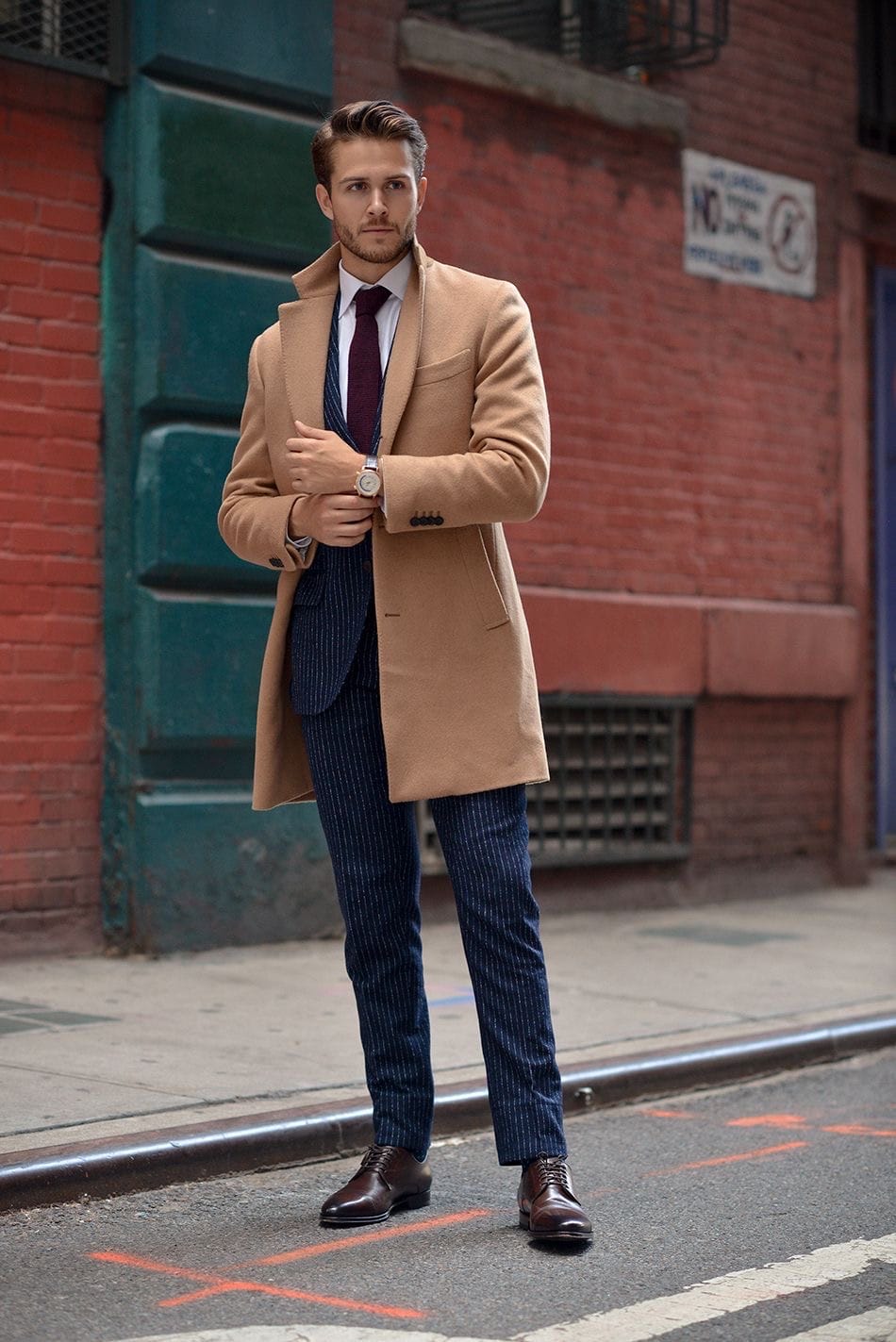
There are few garments in a man’s wardrobe that communicate authority, taste, and quiet confidence as effectively as the camel overcoat. It is not merely a coat—it is a signal. A signal that the man wearing it understands proportion, restraint, and timeless style.
Within the 30-Piece Executive Wardrobe, the camel overcoat occupies a unique position. It is the rare outerwear piece that elevates everything beneath it. Whether worn over a tailored suit or a simple sweater and trousers, the camel coat adds a layer of polish that few garments can replicate.
For executives navigating boardrooms, conferences, and travel during cooler months, this coat becomes an essential instrument of presence.
Why the Camel Overcoat Matters
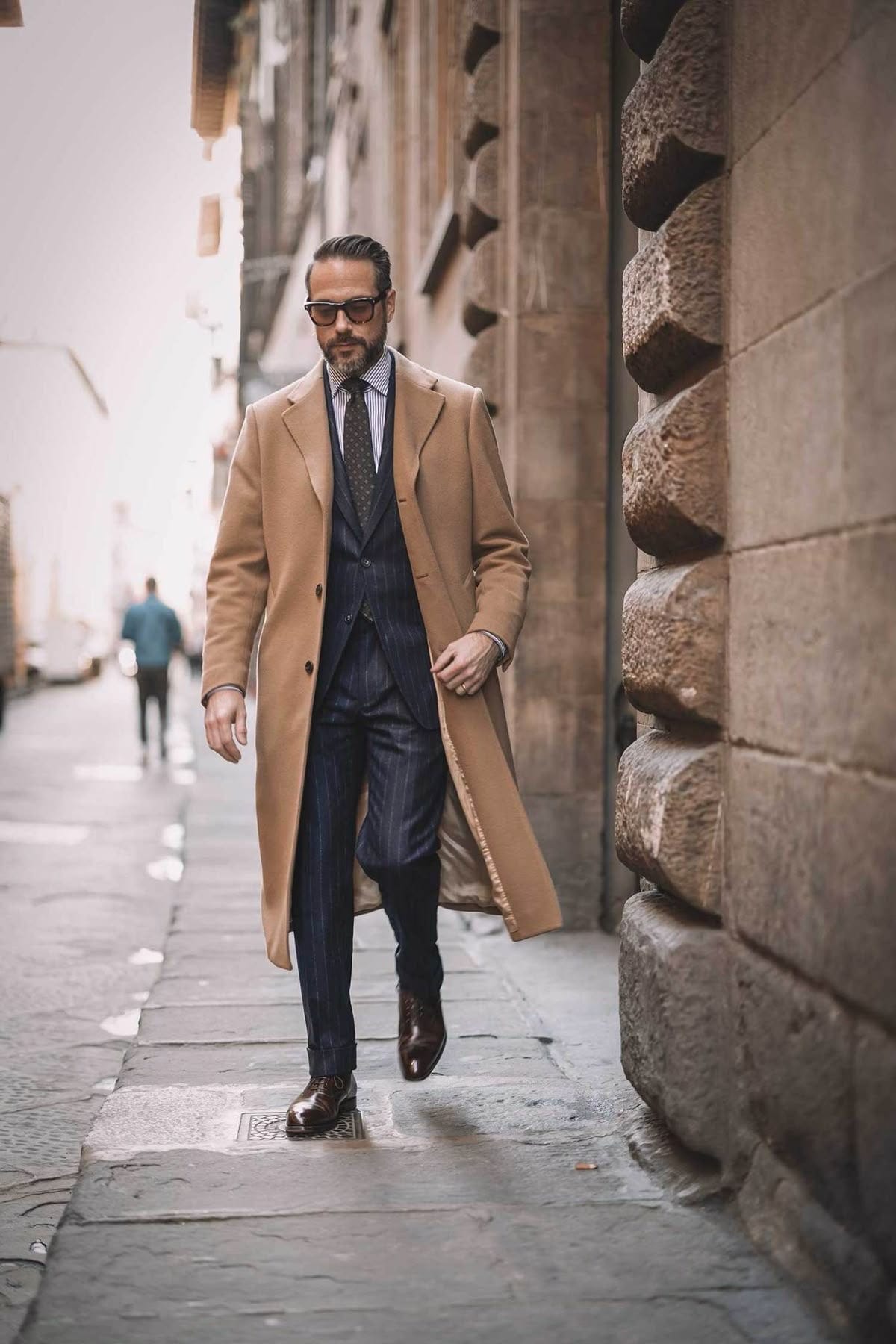
The most powerful wardrobes are built on pieces that do multiple things exceptionally well.
The camel overcoat does three things simultaneously:
1. It signals refinement.
Camel is a color associated with heritage tailoring houses and European sophistication. It reads warm, confident, and elevated without being flashy.
2. It frames the entire outfit.
Outerwear is often the first and last thing people see. The right overcoat creates a clean silhouette that instantly improves the appearance of everything underneath.
3. It separates you from the crowd.
Most men default to black or navy coats. The camel overcoat communicates a deeper understanding of menswear while still remaining conservative and professional.
For executives who understand the value of subtle differentiation, this matters.
The Ideal Camel Overcoat
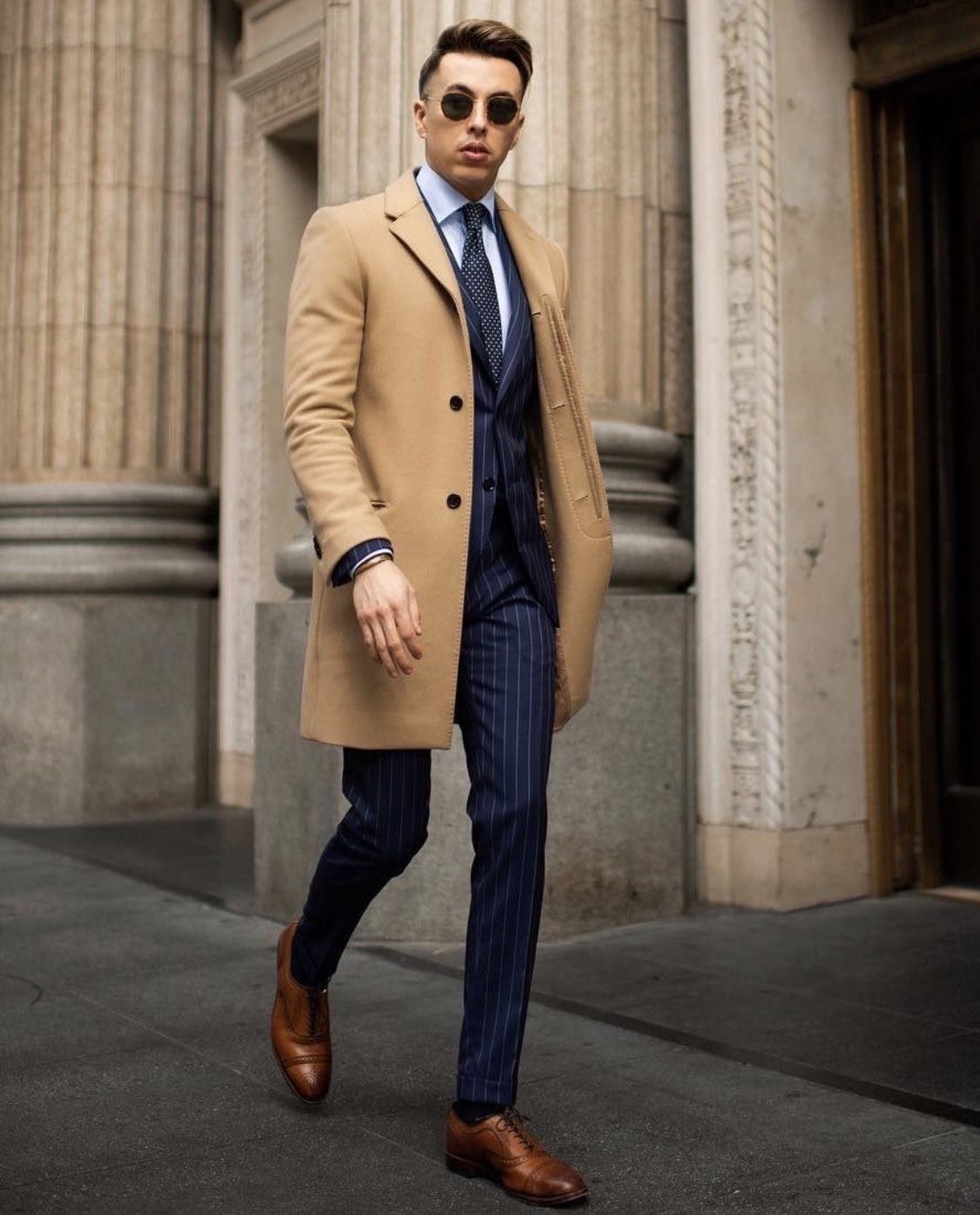
Not all camel coats are created equal. The executive version should be structured, minimal, and timeless.
Look for the following details:
Fabric
A wool or wool-cashmere blend is ideal. The coat should have weight and structure without feeling stiff.
Length
The coat should fall to roughly knee length. This elongates the silhouette and properly covers a suit jacket.
Structure
A structured shoulder creates presence. Avoid overly soft, robe-like coats unless the design intentionally calls for it.
Closure
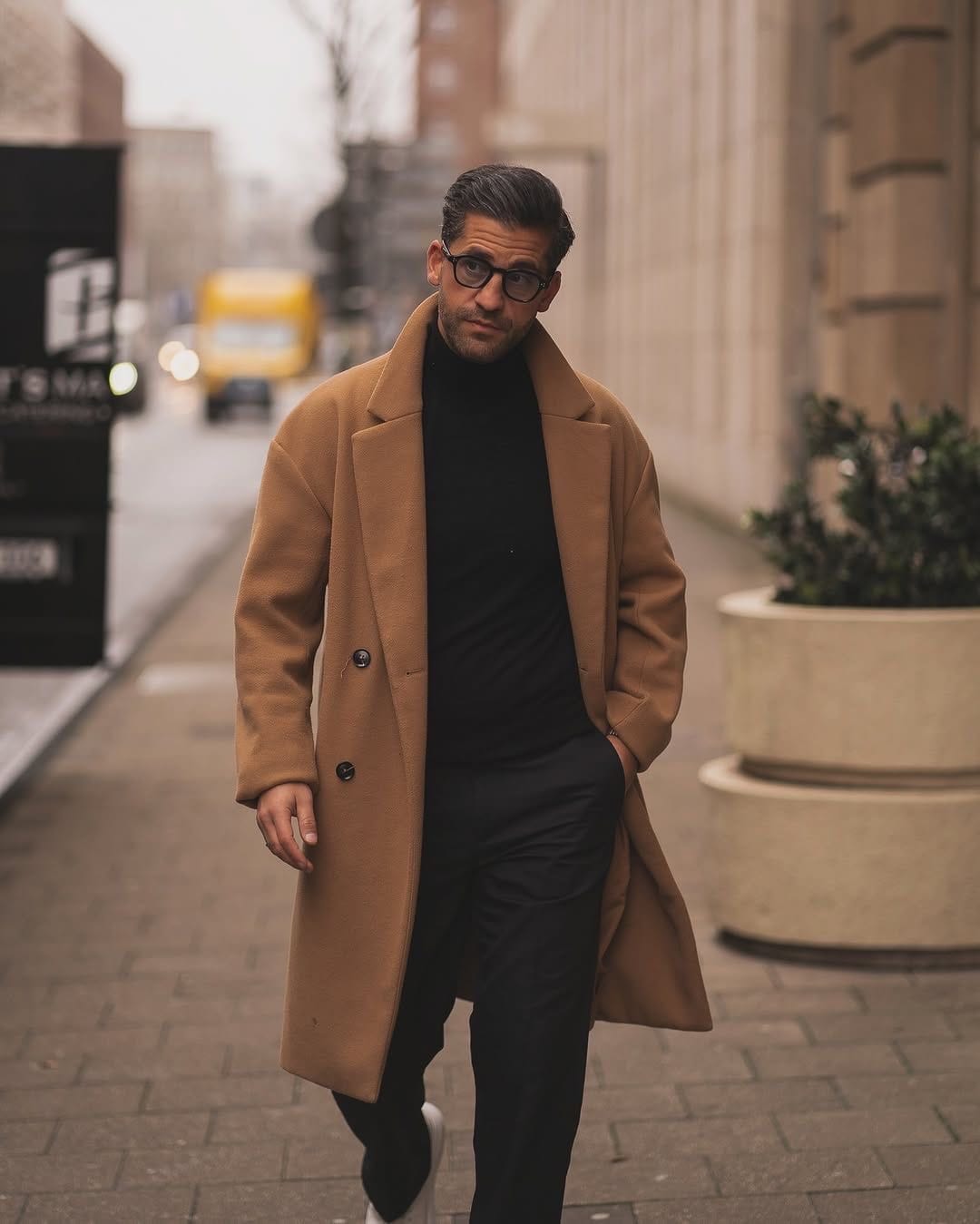
Single-breasted three-button or double-breasted six-button designs both work. Double-breasted coats often feel slightly more authoritative.
Color tone
The ideal shade sits between camel and light caramel—not too yellow and not too dark.
Clean lines
Minimal ornamentation is key. No excessive belts, toggles, or oversized lapels.
This coat should look as relevant twenty years from now as it does today.
How Executives Wear It
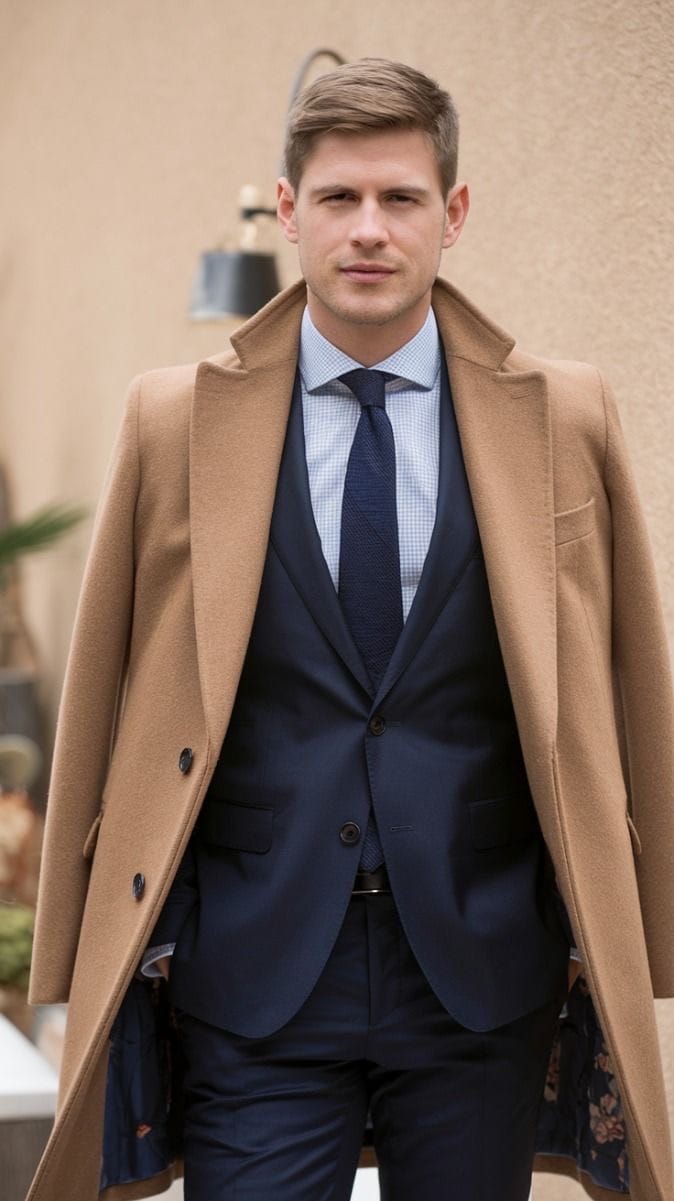
The camel overcoat works because it integrates seamlessly into a professional wardrobe.
Here are the three most effective ways to wear it.
1. Over a Navy Suit
This is the classic combination.
The warm tone of camel contrasts beautifully with navy tailoring, creating one of the most elegant pairings in menswear. Add a white shirt, dark tie, and brown shoes for a look that feels effortlessly authoritative.
2. With Charcoal Trousers and a Sweater
For business-casual environments, the camel coat pairs perfectly with grey flannel trousers and a fine-gauge sweater.
The result feels relaxed yet polished—ideal for travel days or client meetings.
3. With a Monochrome Base
A black or charcoal outfit underneath allows the camel coat to become the focal point.
This combination works especially well in urban environments and during evening engagements.
The Psychology of Camel

Color influences perception more than most men realize.
Black outerwear communicates seriousness.
Navy suggests professionalism.
Camel, however, communicates something more nuanced:
Confidence without rigidity.
It suggests that the wearer understands tradition but is not confined by it. It signals maturity and discernment—qualities that naturally reinforce executive presence.
This is one reason the coat appears so frequently in the wardrobes of architects, designers, financiers, and creative leaders.
Fit Principles That Matter

A camel overcoat should feel commanding, not oversized.
Pay attention to three areas:
Shoulders
The shoulder seam should align cleanly with your natural shoulder.
Sleeves
Sleeves should end just above the base of the thumb.
Body
The coat should comfortably fit over a suit jacket without looking bulky.
If necessary, a tailor can refine the waist slightly to create a sharper silhouette.
Where to Find One

A quality camel overcoat exists at many price points.
Reliable options include:
Entry Level
Spier & Mackay
SuitSupply
Mid Range
Reiss
J.Crew Ludlow line
Luxury Tier
Ralph Lauren Purple Label
Canali
Loro Piana
The key is fabric quality and structure—not brand name alone.
Why It Earned Its Place in the 30-Piece Executive Wardrobe
The purpose of the 30-Piece Executive Wardrobe is not to create excess.
It is to build a system of garments that work together to project credibility, competence, and clarity.
The camel overcoat accomplishes something rare:
It makes every outfit underneath it look better.
For executives who travel frequently, attend meetings across industries, and want a wardrobe that consistently reinforces their presence, this coat becomes indispensable.
It is a piece that quietly announces taste the moment you enter a room.
And in the world of executive style, that quiet signal often speaks the loudest.