The 30-Piece Executive Wardrobe No. 2
The Charcoal Suit
Authority, Discretion, and Executive Gravitas

The charcoal suit is the boardroom’s quiet enforcer.
You don’t wear it to be noticed — you wear it to be taken seriously.
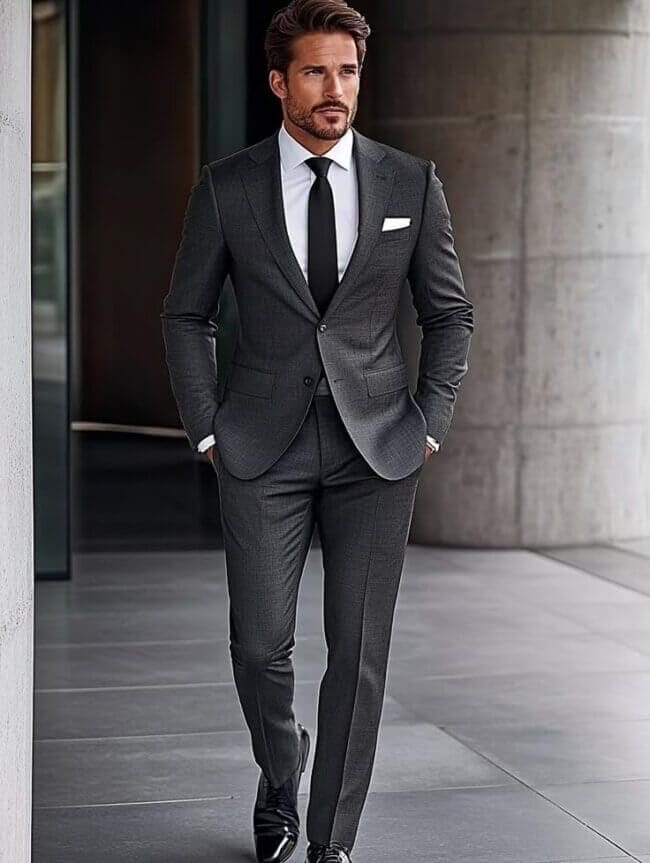
Charcoal occupies a unique position in the professional wardrobe: formal without flourish, neutral without indifference. Senior professionals rely on it not to impress, but to signal consequence. When your role involves high-stakes matters — legal, financial, institutional — charcoal removes noise from the visual field and allows the work to speak.
This is Issue #2 of The 30-Piece Executive System, a practical wardrobe architecture designed for executives, attorneys, consultants, financiers, and professionals operating in environments where optics matter. Each issue isolates one piece, explains why it exists, and shows how it functions inside a serious wardrobe.
Why Charcoal Exists in the System
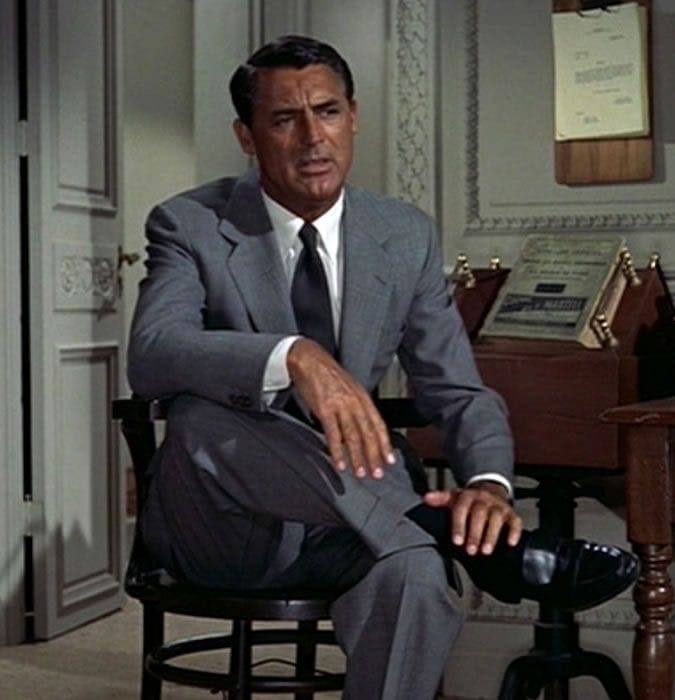
If navy communicates confidence, charcoal communicates consequence.
It serves a separate purpose in the executive arsenal — one rooted in:
responsibility
scrutiny
stewardship
representation
restraint
A charcoal suit is not there for social optics. It’s there for institutional optics. When you are representing a firm, a client, a fund, or the interests of other stakeholders, charcoal converts ambiguity into seriousness without spectacle.
If navy persuades, charcoal prosecutes.
When to Deploy Charcoal
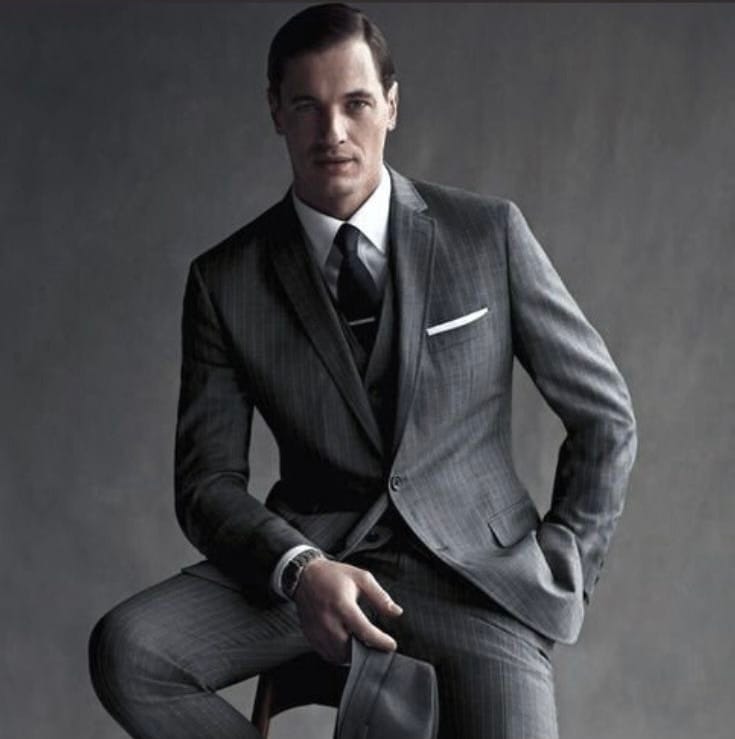
Charcoal is the correct choice when:
stakes are high
optics matter
senior stakeholders are present
you are representing a client or institution
cameras, analysts, or press are involved
the subject matter is sensitive
the outcome has consequences
Finance & corporate scenarios where charcoal excels:
Board briefings
Investor presentations
Earnings calls
Restructuring & layoffs
M&A negotiations
Risk committee sessions
Valuation reviews
Refinancing or debt discussions
Institutional client stewardship
High-pressure offsites
In these environments, charisma is secondary to competence. Charcoal communicates the latter.
Charcoal vs. Navy — The Professional Distinction
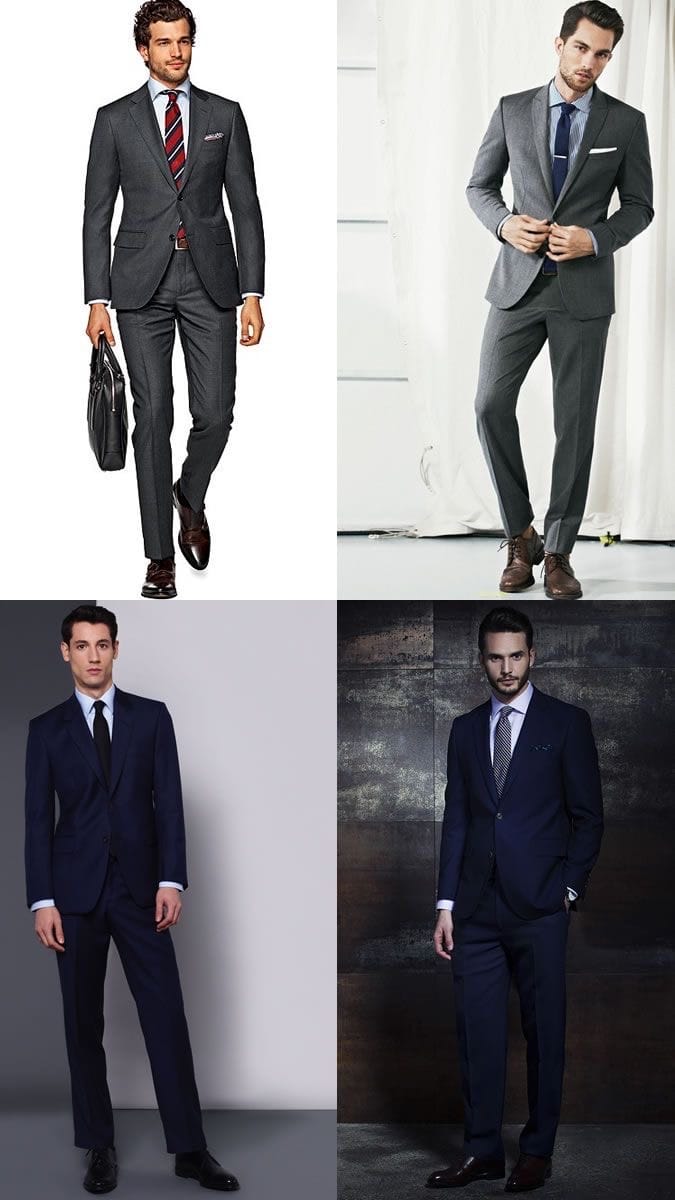
Most working professionals begin with navy and stop there.
But navy and charcoal are not interchangeable.
A simple filter:
Wear navy when building rapport
Wear charcoal when handling responsibility
Shade & Tone Selection

Not all charcoals perform equally.
Optimal characteristics:
Dark charcoal
Matte finish
Worsted wool (4-season)
Minimal patterning
Avoid:
Light grey (reads social, lacks gravitas)
Sheen or shine (reads inexpensive or fashion)
Heavy heathering (looks dusty under office lighting)
Loud patterns (compete with seriousness)
A deep matte charcoal holds authority in person and on camera — a key detail for earnings calls and investor days.
Fabric & Construction

Charcoal rewards restraint in materials and build.
Recommended:
Fabric: Worsted wool (4-season)
Super Number: 110–130 for durability and drape
Construction: Half canvas minimum; full canvas ideal
Shoulder: Light structure or soft-structured for modern finance environments
Lining: Full lining for clean lines and mobility
Texture belongs to navy.
Authority belongs to matte.
Fit Standards for Authority

In finance and corporate governance, seriousness collapses when fit becomes loud.
Fit priorities:
Clean shoulders (non-negotiable)
Slight waist suppression (avoid “sprayed-on” look)
Standard jacket length (covering the seat)
Modest lapel width (2.75”–3.5” depending on frame)
Slight or no trouser break
If a charcoal suit looks tight, it reads as insecure.
Seniority wears ease.
Shirts That Pair Correctly
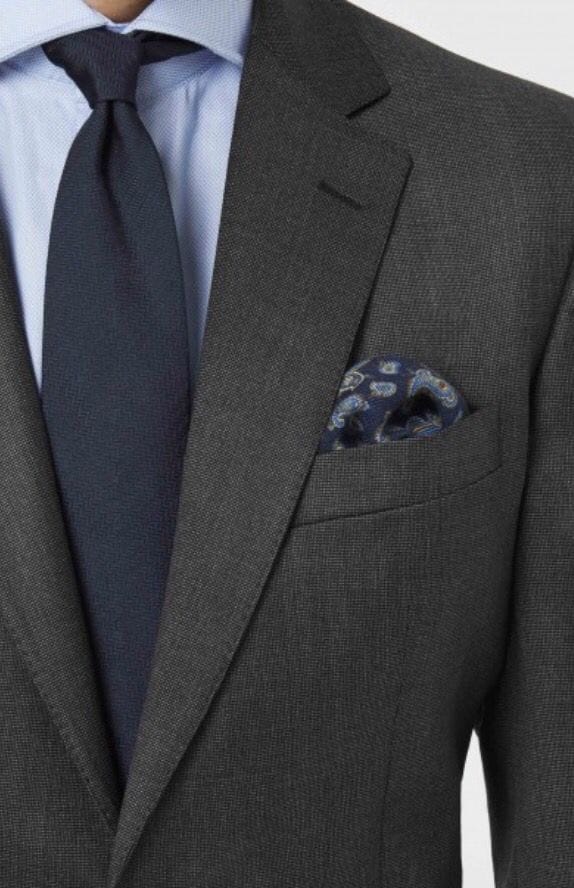
Charcoal needs contrast to retain authority.
Correct shirts:
White spread collar (default)
Light blue spread collar (secondary)
Avoid:
Button-down collars (too casual for high-stakes finance/legal)
Low-contrast shirts (too soft visually)
Pastels (read social, not institutional)
Collar geometry matters more in formal finance environments than most realize — it frames the face and the tie knot, which is where attention lives during presentations.
Tie Selection
Charcoal is a canvas for maturity — let the tie remain understated.
Works best:
Navy grenadine
Deep burgundy
Black grenadine (formal, evening)
Grey or silver foulard
Avoid:
Loud patterns
Bright novelty colors
High-contrast stripes
Trend silk textures
Texture > pattern > color.
This hierarchy preserves seriousness.
Footwear & Accessories
Finance-specific guidance:
Shoes:
Black cap-toe Oxford (default)
Dark brown Oxford (acceptable outside legal/governance)
Socks:
Charcoal
Navy
Black (formal only)
Pocket Square:
- White TV fold or omit entirely
For serious meetings, omission often reads stronger.
The objective is not flair — it’s focus.
Who Needs It Most

A charcoal suit is effectively mandatory for professionals whose work intersects with:
capital allocation
corporate governance
law & regulation
institutional clients
risk management
public perception
investor relations
Which includes:
CFOs
CEOs & COOs
Partners & MDs
IB & PE professionals
Consultants
Risk officers
Investor relations teams
Corporate counsel
Accountants & auditors
Wealth advisors
If your work touches money, law, or institutional trust, charcoal earns a permanent position in the system.
Common Errors
Avoid the following credibility killers:
Shiny cloth
Tight tailoring
Short jackets
Brown shoes in legal/governance settings
Pattern competition (shirt + tie + cloth)
Loud socks
Novelty ties
Visible branding
High-contrast topstitching
The fastest way to look unserious is to look decorative.
Why Charcoal Still Matters
Formalwear isn’t disappearing — it’s concentrating.
As wardrobes contract, the pieces that remain carry more weight:
fewer suits,
higher rotation quality,
higher stakes per wear.
Charcoal is not about variety or personality.
It’s about competence, stewardship, and situational awareness.
Executives don’t wear charcoal to stand out.
They wear it so nothing distracts from the work.
If you want to follow the construction of this wardrobe from the inside, consider subscribing so you don’t miss the next installment of The 30-Piece Executive System.
If you work in law, finance, or consulting and want private wardrobe calibration, reply with “Assessment” and I’ll send next steps.