The 30-Piece Executive Wardrobe No. 1
The Navy Suit
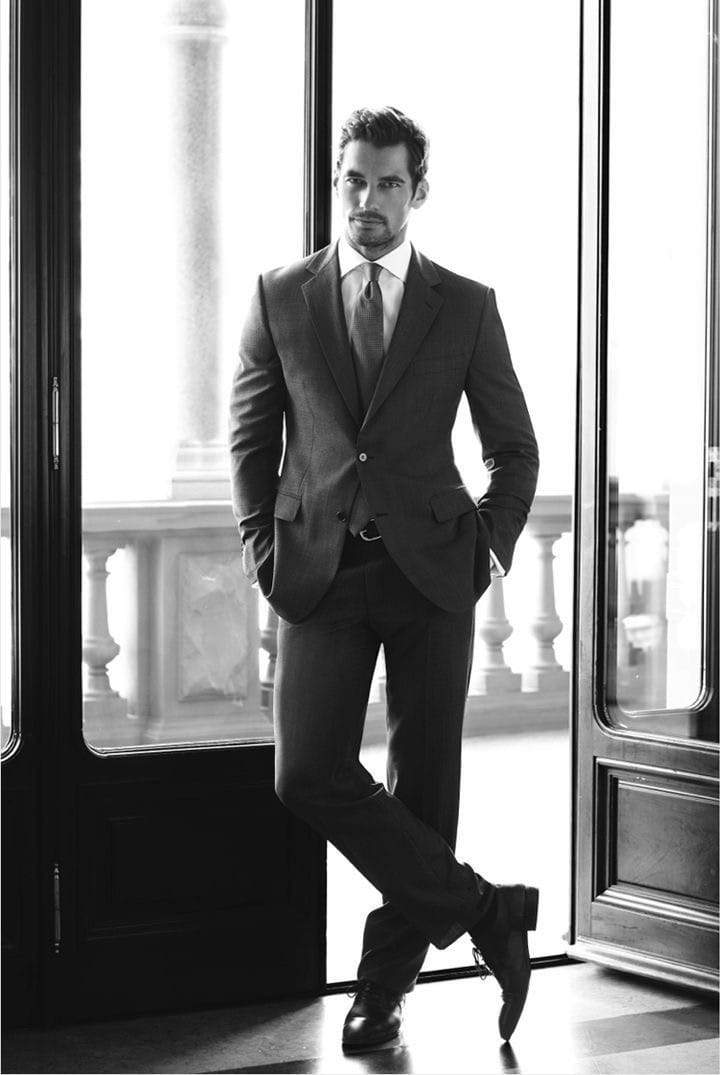
What This Series Is
Most wardrobes are built accidentally—piecemeal, reactive, and dependent on whatever seemed appropriate at the time. Executives don’t have that luxury. Their environments—courtrooms, board meetings, investor calls, strategy sessions—are structured, hierarchical, and visual. Looking credible isn’t vanity, it’s leverage.
The 30-Piece Executive Wardrobe is a thirty-issue series about building a modern wardrobe with purpose. Not to impress people, but to communicate the things that matter in business: competence, authority, taste, and self-control. This isn’t a list of trends or brand recommendations, and it’s not about being “stylish.” It’s about optics—how to look like you belong in the rooms you’re already trying to enter.
Here’s what to expect each week:
• The garment’s role in modern business culture
• How it changes the way you’re perceived
• Fit rules and tailoring cues you can act on
• What separates cheap from executive-grade
• Industry-specific variations (law ≠ consulting ≠ finance)
• How it connects to the other 29 pieces
• How to buy once and buy correctly
By the end, you won’t just own better clothes—you’ll own a system. A wardrobe that works in winter and summer, domestic and international travel, peak deal seasons and quiet periods, client dinners and quarterly reviews.
Thirty pieces. Thirty issues. One coherent, modern executive wardrobe.
The Navy Suit: Business Authority in Modern Form

There are few garments in a modern professional’s wardrobe more decisive than a navy suit. It is the single most versatile piece a man can own, and more importantly, it is the garment that quietly communicates competence, trustworthiness, and control in the environments that matter most — boardrooms, conference calls, investor meetings, strategic lunches, and cross-border negotiations.
Executives tend to underestimate how much of their perceived professionalism rides not on “fashion,” but on optics. And in optics, navy is a language of power: darker than the default blue worn by sales teams, but not as austere as charcoal or black. It suggests confidence rather than dominance. Intelligence rather than intimidation. Modernity rather than tradition.
If you only owned one suit, let it be navy — not for stylistic reasons, but for strategic ones.
⸻
I. Optics: What Navy Signals in Executive Environments
Clothing in business is semiotics — each choice signals something about how you see yourself and how you intend to be read. Navy carries three important messages:
1. Competence
Navy is the default color of uniforms not because it blends in, but because it reassures. In a suit, it becomes the visual language of functional confidence.
2. Trust
Banks, consulting firms, regulatory bodies, airlines, and militaries all converge on navy because it signals reliability. In client-driven sectors, this is invaluable.
3. Restraint
Charcoal can feel severe. Black can feel ceremonial or funereal. Navy communicates seriousness without rigidity — a subtle but meaningful distinction.
Executives in law, finance, consulting, wealth management, private equity, and real estate rely heavily on this signal set, particularly when interacting across industries or in environments where dress codes vary.
When you need one suit that will not embarrass you in any room, navy wins.
⸻
II. Fit Standards — Where Authority Comes From
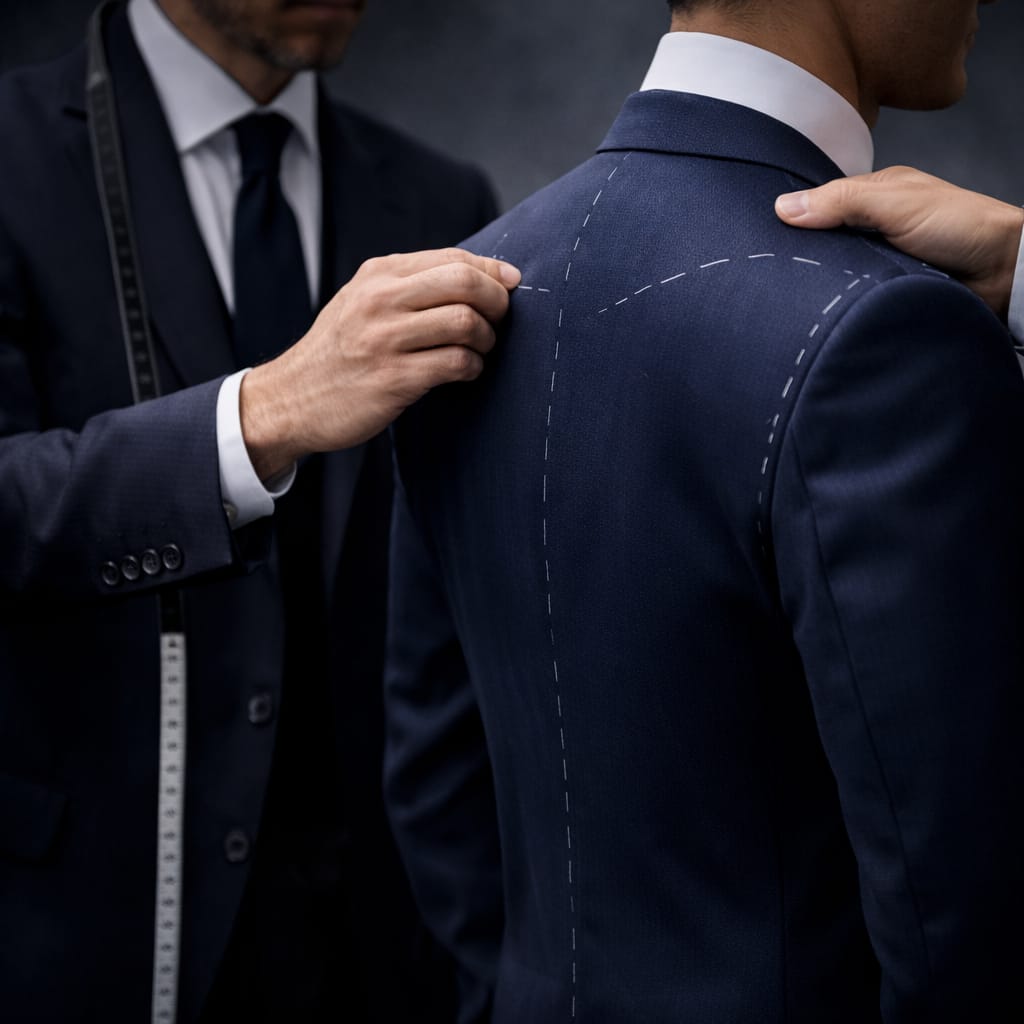
The difference between “a guy in a suit” and “an executive in control” is fit. Most men go wrong here, not because they don’t understand style, but because they don’t understand proportion. Executives should aim for the following high-level benchmarks:
Jacket
• Shoulders: Clean line, no divots, no collapse. Shoulder fit is the most expensive to fix — get this right off the rack.
• Chest: Gentle suppression; the lapel should not bow or pull.
• Waist: Moderate taper; avoid the shrink-wrapped look of tech sales reps.
• Length: The jacket should cover the seat, roughly mid-hand when arms rest naturally.
Trousers
• Rise: Medium rise for a clean shirt line when seated.
• Seat: No pulling across the back; fabric should drape, not stretch.
• Leg: Slim-straight or tailored straight; avoid skinny or wide.
• Break: Minimal or no break for modern professionalism. Longer breaks add age visually.
Sleeves & Details
• Sleeve Length: ¼” to ½” of shirt cuff visible.
• Buttoning Point: Should not visually shorten the torso.
• Lapels: Notch lapel, medium width (3”–3.5”) to align with business norms.
These details are not “fashion rules” — they are signals of belonging. They tell the room you understand the culture of corporate professionalism.
⸻
III. Fabric & Construction — What Makes It Executive-Grade
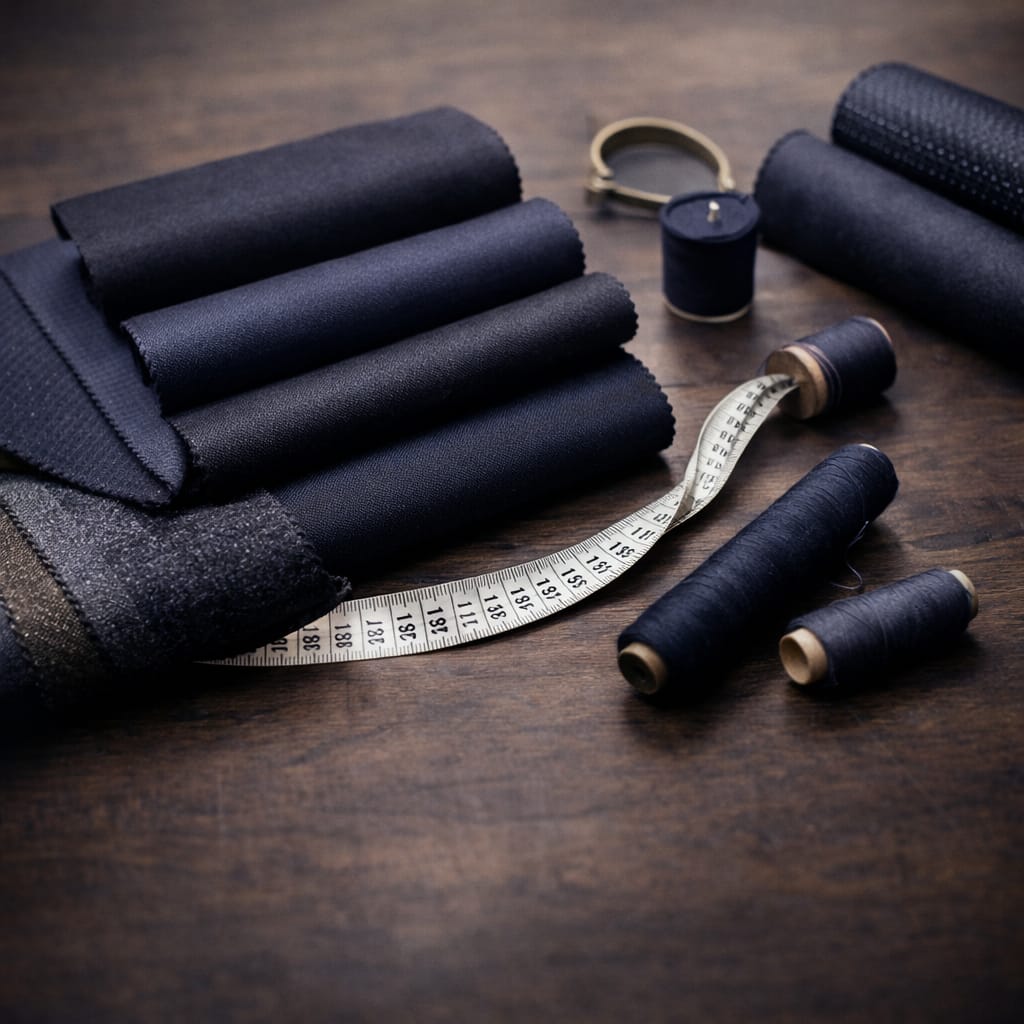
You can diagnose whether a suit is “executive suitable” before ever trying it on. Look for:
Fabric Weight
• All-season wool (Super 100s–130s) is ideal for year-round performance.
• Super 150s and above often look beautiful but wear poorly for daily use.
Weave & Texture
• Serge or twill weaves offer a clean, authoritative finish.
• Avoid high sheen and overly saturated blues that read “wedding suit.”
Canvas Construction
You’re aiming for:
• Full canvas if budget allows (best drape, longevity).
• Half canvas as the ideal cost-performance ratio.
Fused suits are fine for occasional wear but lack longevity and status optics.
⸻
IV. Industry-Specific Variations
Different industries read clothing through different cultural lenses. A navy suit adapts well across all, but details matter:
Law (Litigation & Corporate)
• Slightly darker navy.
• Minimal shoulder padding.
• Conservative notch lapel.
• Crisp white or pale blue shirt.
Finance & Banking
• Dark navy, structured shoulder.
• Subtle pinstripes acceptable for senior roles.
• High-gauge merino knits for travel days.
Consulting & Tech Consulting
• Medium-to-dark navy.
• Deconstructed shoulders for mobility.
• Knit polos or turtlenecks acceptable in non-client settings.
Real Estate & Private Wealth
• Dark navy with Italian mid-structure.
• Slight sheen acceptable (but not glossy).
• Pocket square optional depending on market (NY vs Miami differs).
Context is everything. The same garment can telegraph very different messages depending on the environment.
⸻
V. Pairing Logic — How Navy Unlocks the Wardrobe
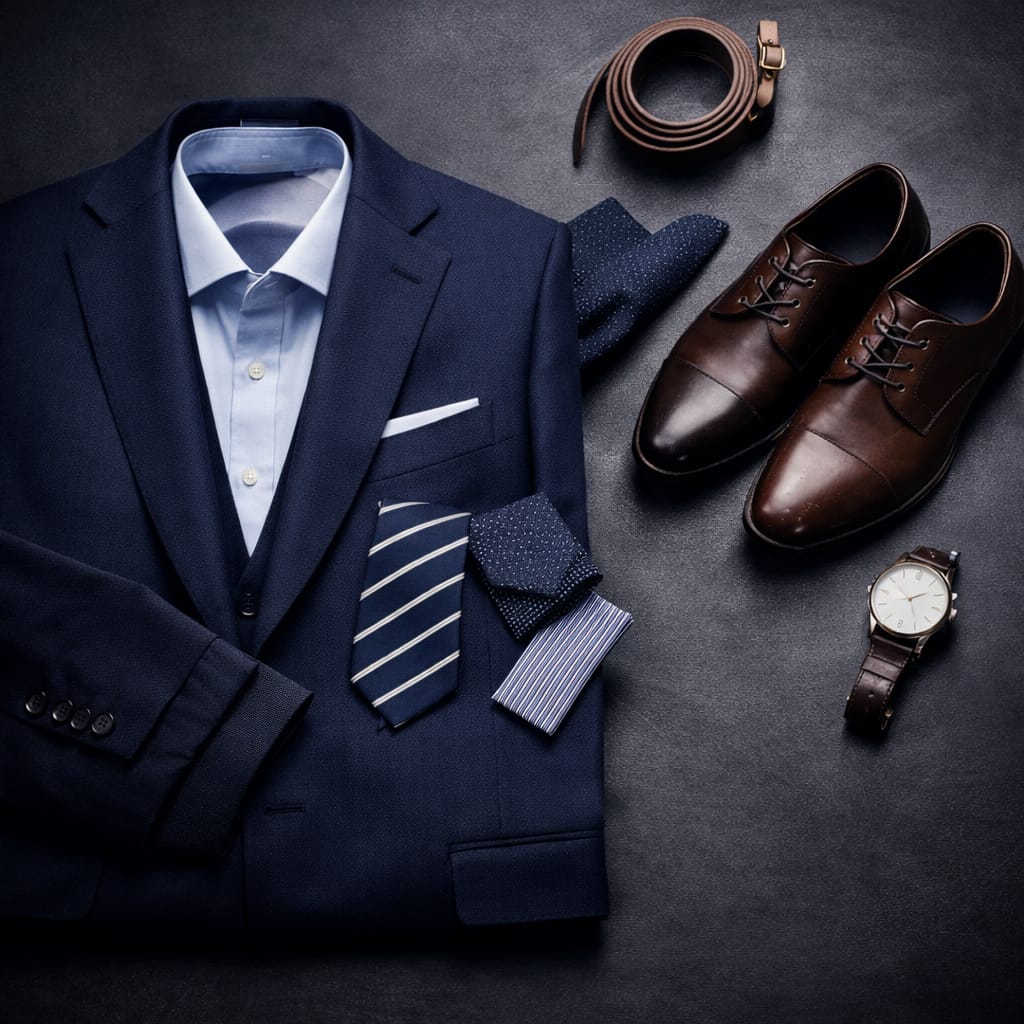
Here’s why navy is Piece #1 in the 30-Piece Executive Wardrobe: it unlocks the modularity of everything else.
A navy suit pairs cleanly with:
Shirt
Effect
White
Authority, formality, legal/financial
Light Blue
Approachability, consulting, sales
Oxford Stripe
Subtle intellect, board meetings
Light Pink
Continental, PE/VC, founder optics
And with ties:
Tie
Signal
Navy Knit
Modern, understated
Burgundy Silk
Private banking classic
Navy Grenadine
Journalists and diplomats
Black Knit
International travel minimalism
Even shoes can alter the signal:
Shoe
Interpretation
Dark Brown Oxford
Modern executive
Black Oxford
Courtroom, ceremony, Manhattan
Dark Brown Derby
Consulting & European offices
VI. Acquisition Strategy — How To Buy Smart
To build an executive wardrobe efficiently, you need to buy with intention:
Tier 1 — Entry (for new professionals)
• Prioritize fit + wool fabric + navy tone
• Skip high “Super numbers”
• Invest in tailoring, not brand
Tier 2 — Mid (for managers & client-facing roles)
• Half canvas minimum
• All-season wool
• Neutral shoulder padding
Tier 3 — Executive (for partners & principals)
• Full canvas
• Higher twist worsted wool
• Refined shoulders (soft Italian or structured British depending on role)
Budget matters less than optics & longevity.
⸻
VII. Tailoring Checklist — Fast Standardization
When taking a navy suit to a tailor, hand them this exact list:
• Sleeves shortened to show ¼”–½” of shirt cuff
• Trousers hemmed with no break or slight break
• Jacket waist suppressed slightly
• Back collar flattened (no collar roll)
• Trousers cleaned up at seat and thigh
Executives should standardize tailoring the way they standardize pitch decks — consistent, repeatable, effective.
⸻
VIII. Care & Maintenance — How to Make It Last 10+ Years
This is where most men destroy their suits:
Rule #1: Do not dry clean after every wear.
Dry cleaning is fabric abrasion, not cleaning.
Follow this cadence instead:
• Steam after each wear
• Brush weekly
• Dry clean once per season or after travel
Rotate between suits. Let wool rest.
Executives who travel should use a garment bag with shoulder support — it makes a bigger difference than you think.
⸻
IX. Conclusion — Why This Piece Matters First

The navy suit isn’t about dressing up. It’s about owning the visual language of modern authority. When an executive enters a room, the first three things people subconsciously assess are:
1. Status
2. Competence
3. Taste
A well-tailored navy suit checks all three without flamboyance or self-conscious effort. It doesn’t demand attention — it earns it.
This is why it anchors the 30-Piece Executive Wardrobe.
Not because it is stylish, but because it is foundational.