The 30-Piece Executive Wardrobe No. 18
Grey Flannel Trousers
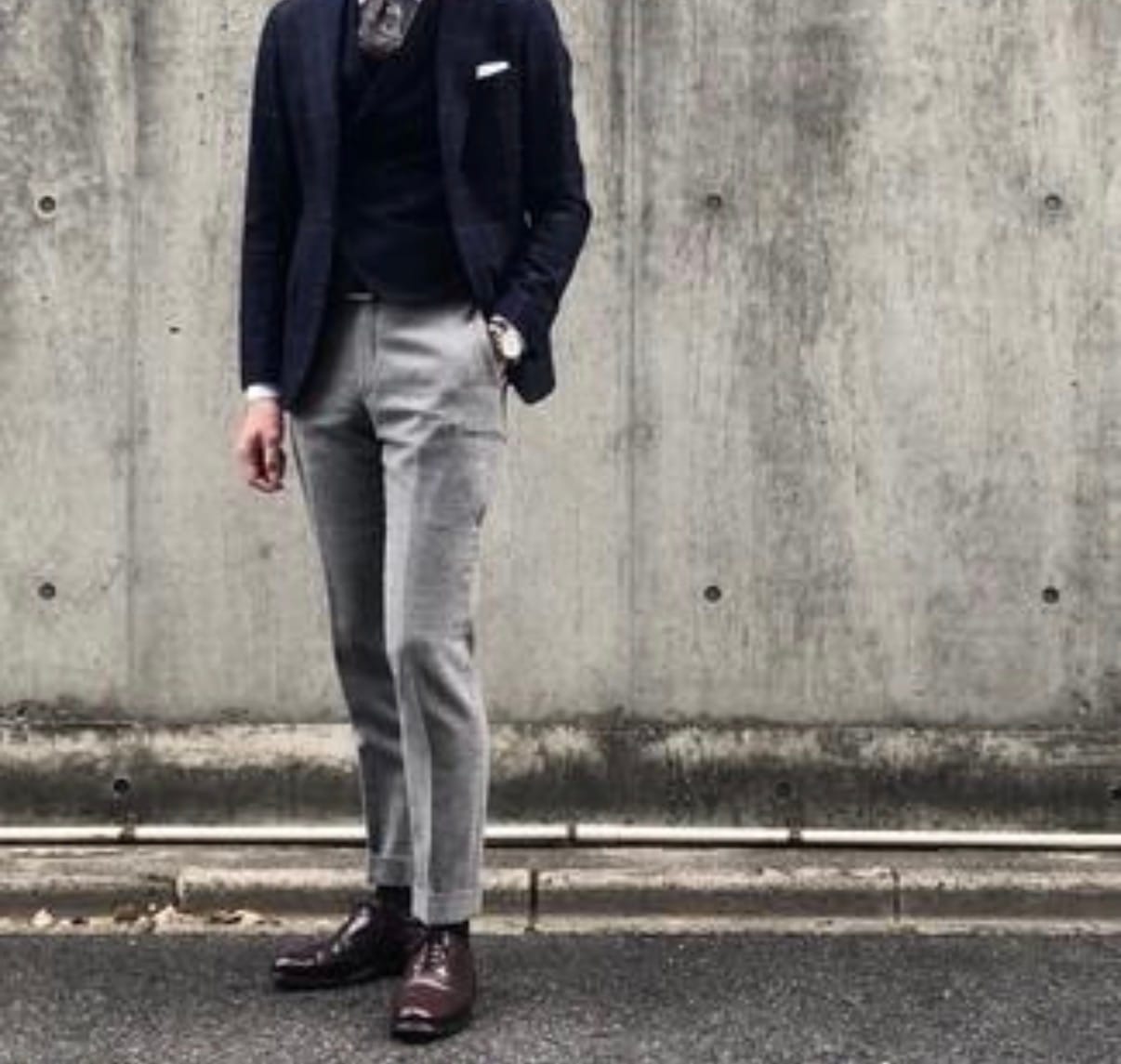
There are pieces in a wardrobe that attract attention.
And then there are pieces that create authority.
Grey flannel trousers belong firmly in the second category.
They do not announce themselves. They do not rely on trend, color, or novelty. Yet they underpin some of the most effective, respected, and enduring uniforms in modern professional life.
If the navy blazer is the signal, the grey flannel trouser is the foundation that makes the signal credible.
Why This Piece Exists
Most men default to one of two options:
Chinos — too casual, too thin, too forgettable
Suit trousers (broken apart) — too sharp, often mismatched, visually incomplete
Grey flannel sits precisely between these extremes.
It introduces:
Texture (soft, brushed wool)
Weight (visual and physical presence)
Restraint (no shine, no noise)
The result is something rare: a garment that elevates everything around it without ever competing for attention.
The Material Advantage
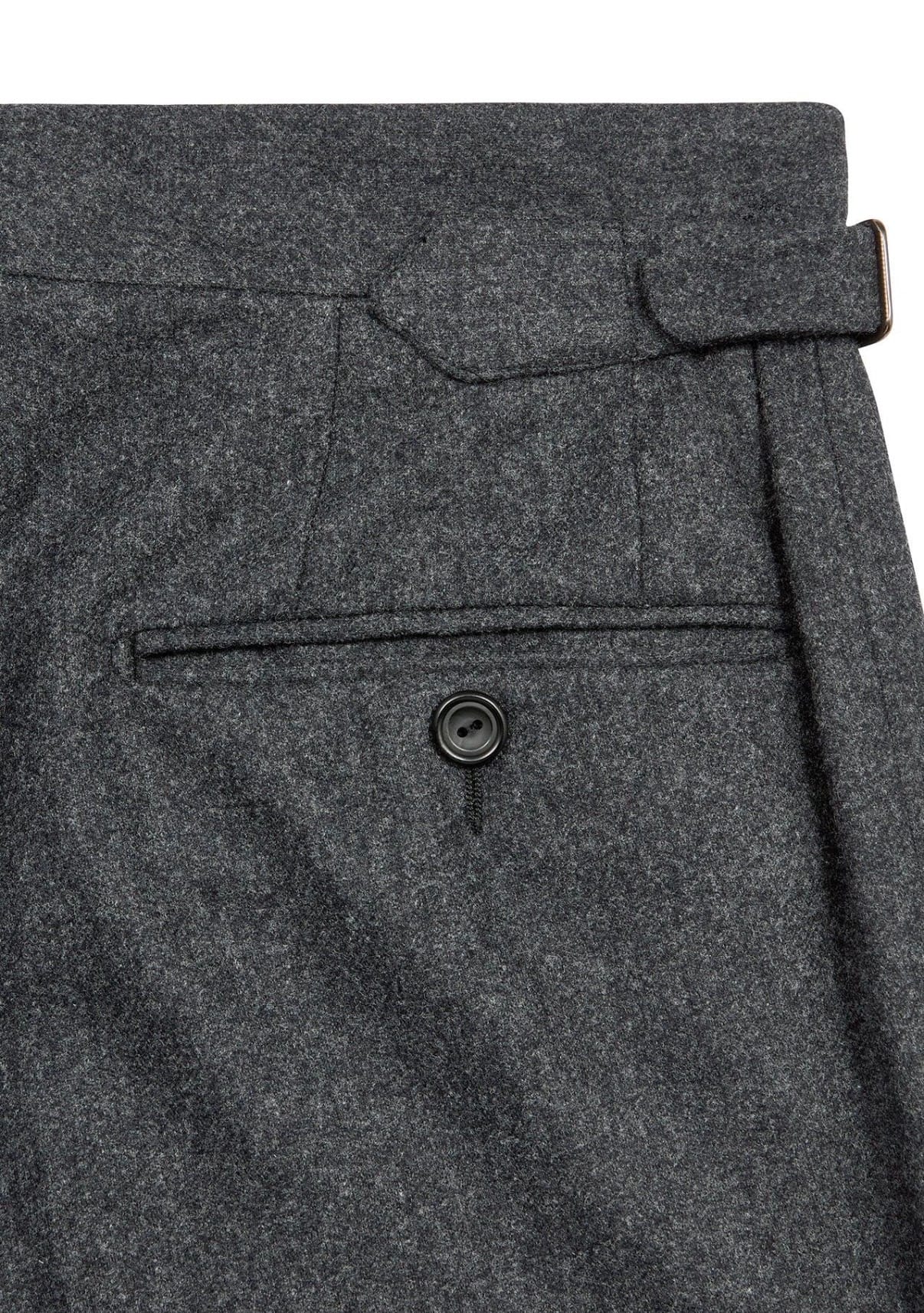
Flannel is not simply “grey wool.”
It is a brushed wool fabric that softens the surface, diffuses light, and creates depth.
Where worsted wool reflects light, flannel absorbs it.
That difference matters.
In practice, it means:
Your silhouette appears more grounded
Your outfit reads more intentional
Your presence feels more composed
This is not style.
This is signal control.
The Three Shades — And When to Use Them
Light Grey
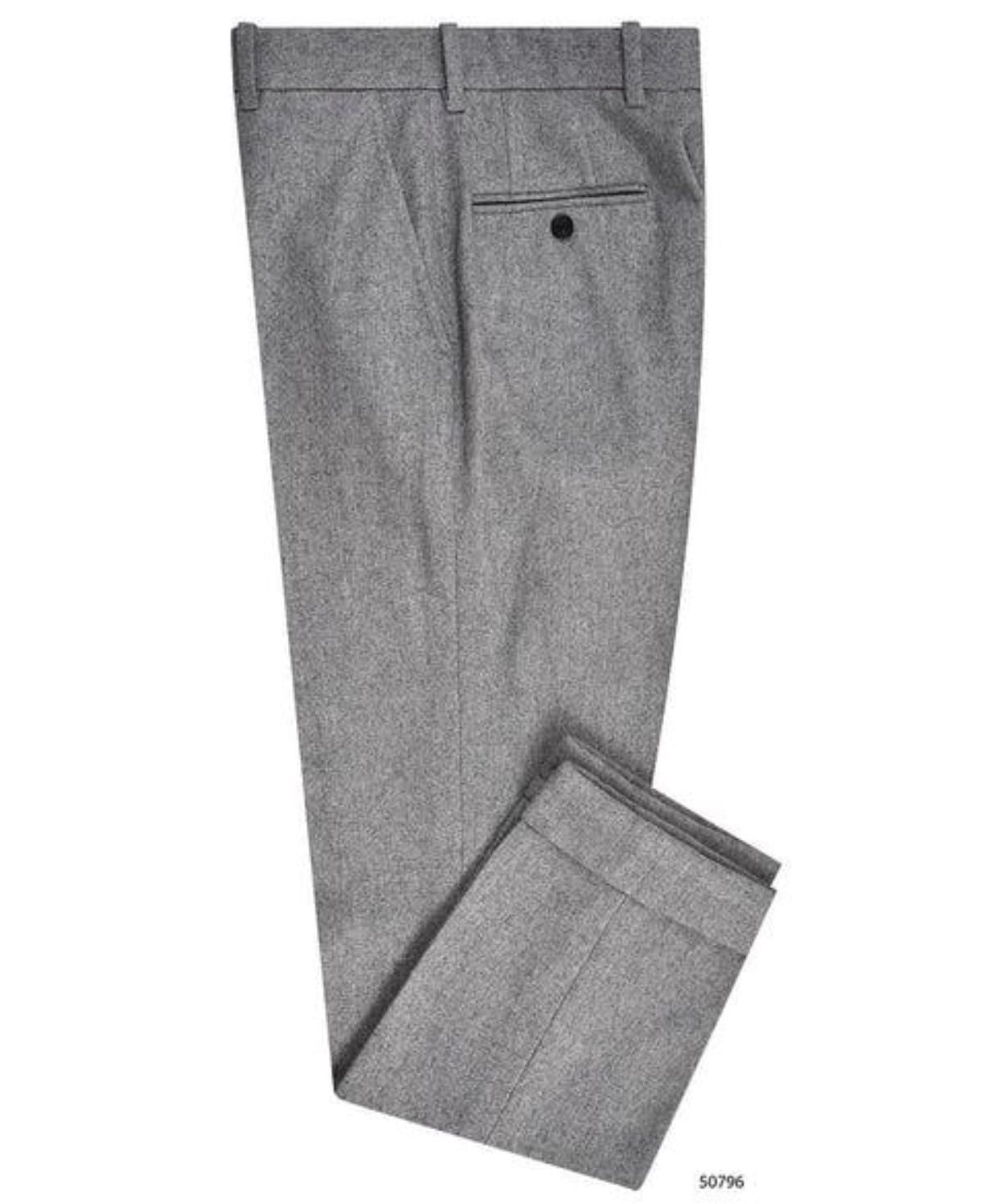
The most relaxed interpretation. Best in daylight, warmer climates, and less rigid environments.
Pairs naturally with navy, brown, and soft blues
Ideal for transitional settings (client meetings, internal days)
Mid Grey
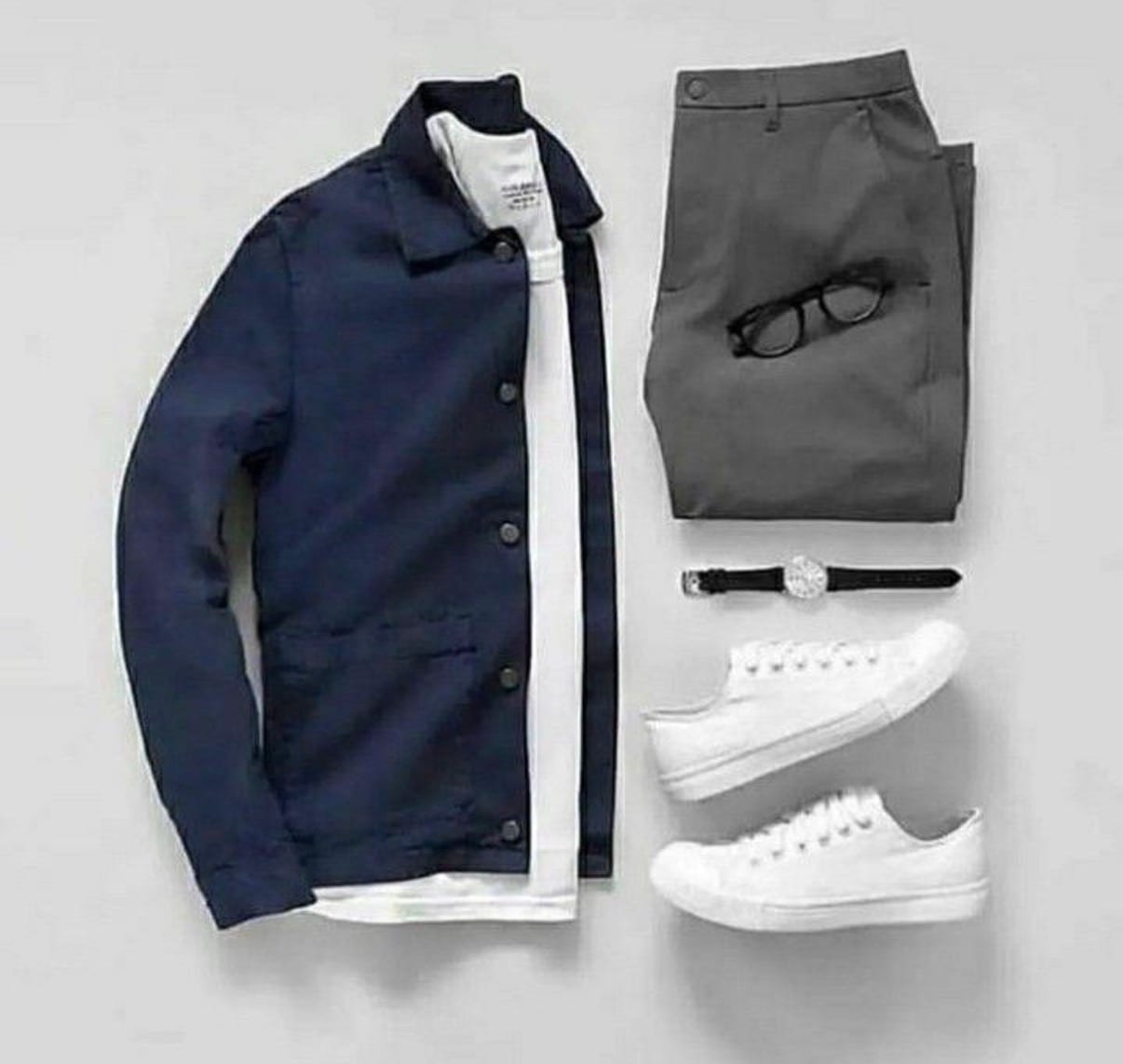
The default. The standard. The most versatile.
Works with nearly every jacket and shoe combination
Anchors both business and smart casual outfits
The correct first purchase
Charcoal
The most formal expression.
Strong with black shoes and darker tailoring
Best reserved for high-stakes or conservative environments
A well-constructed wardrobe does not choose one.
It builds across all three—intentionally.
Fit: Where Most Men Fail
The difference between average and exceptional is not the fabric.
It is the line.
Non-negotiables:
Mid to high rise — elongates the leg, stabilizes the silhouette
Clean waist — side adjusters preferred over belts
Controlled taper — shaped, not tight
Minimal break — no pooling, no collapse
Single pleat — adds movement without excess volume
What to avoid:
Low-rise cuts that shorten the frame
Excess fabric at the ankle
Overly aggressive tapering
A poorly fitted flannel trouser looks like a compromise.
A well-fitted one looks like intent.
The Uniform Applications
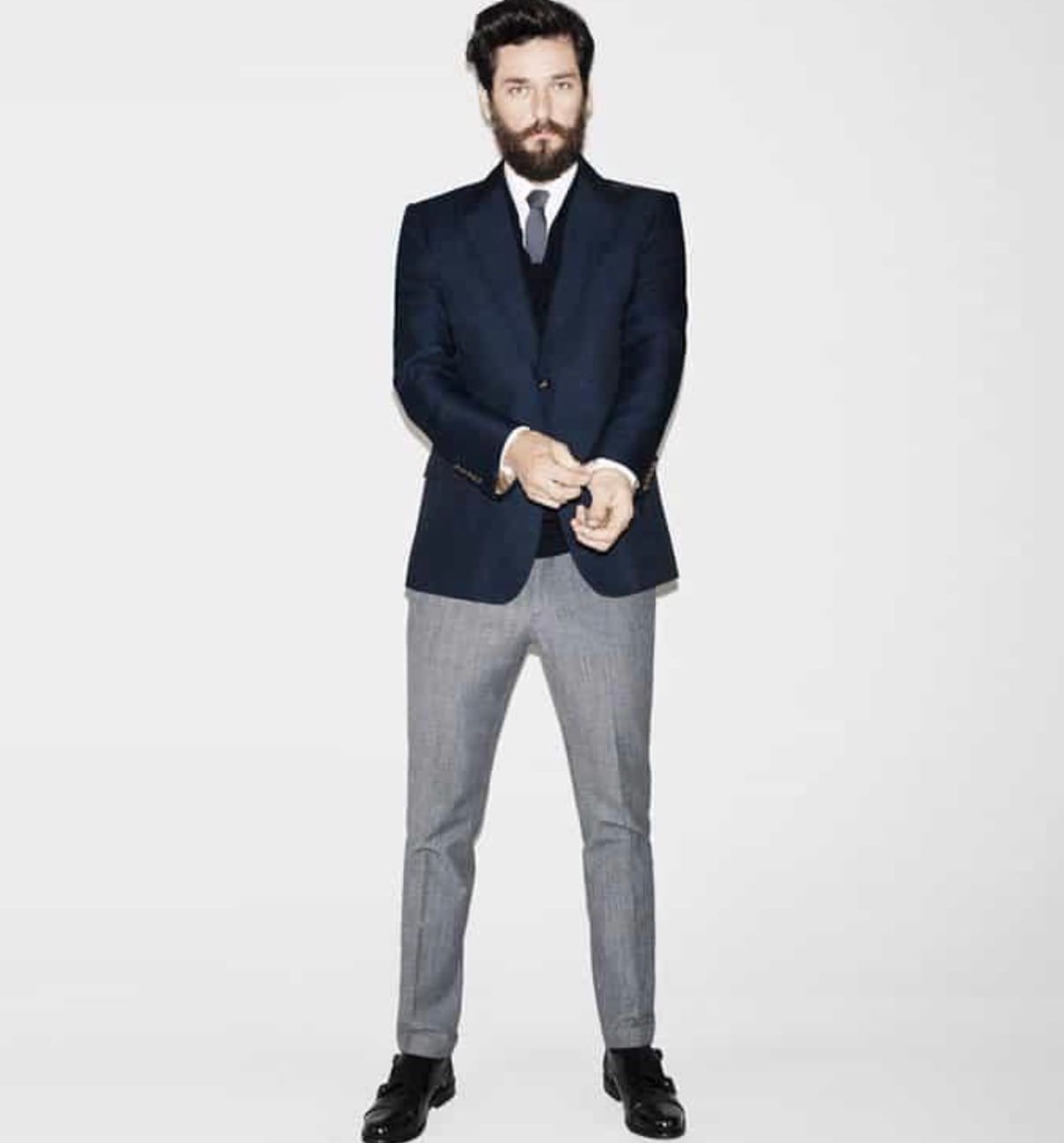
1. The Executive Baseline
Navy blazer
White or light blue Oxford
Grey flannel trousers
Black or dark brown leather shoes
This is the daily standard inside firms like FIS—whether formally stated or not.
It communicates:
Competence
Stability
Control
Without excess.
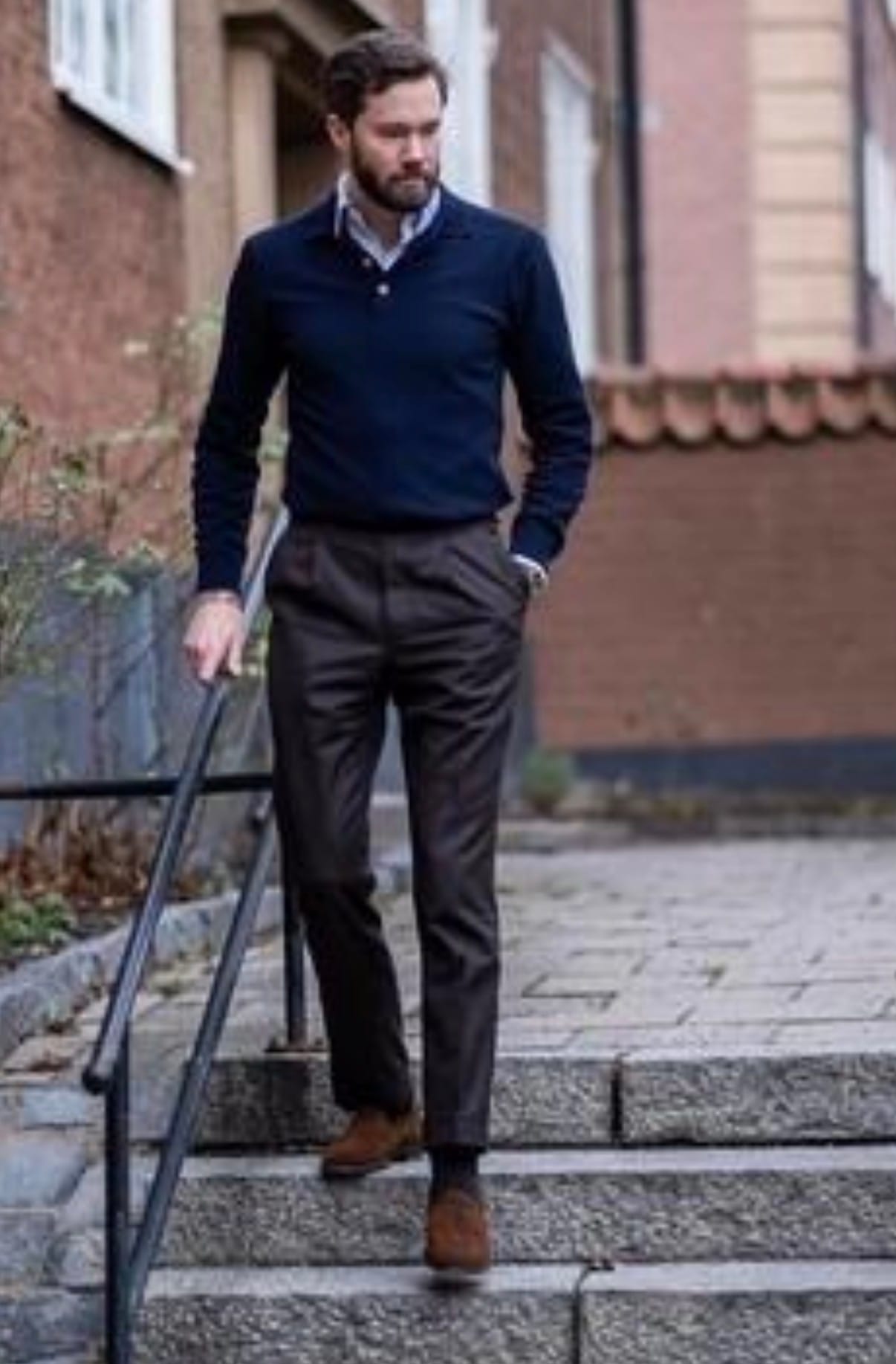
2. The Controlled Casual
Fine-gauge knit or turtleneck
Grey flannel trousers
Suede loafers or derbies
This is where most men reach for denim.
The flannel trouser quietly outperforms it.
3. The Winter Authority Layer
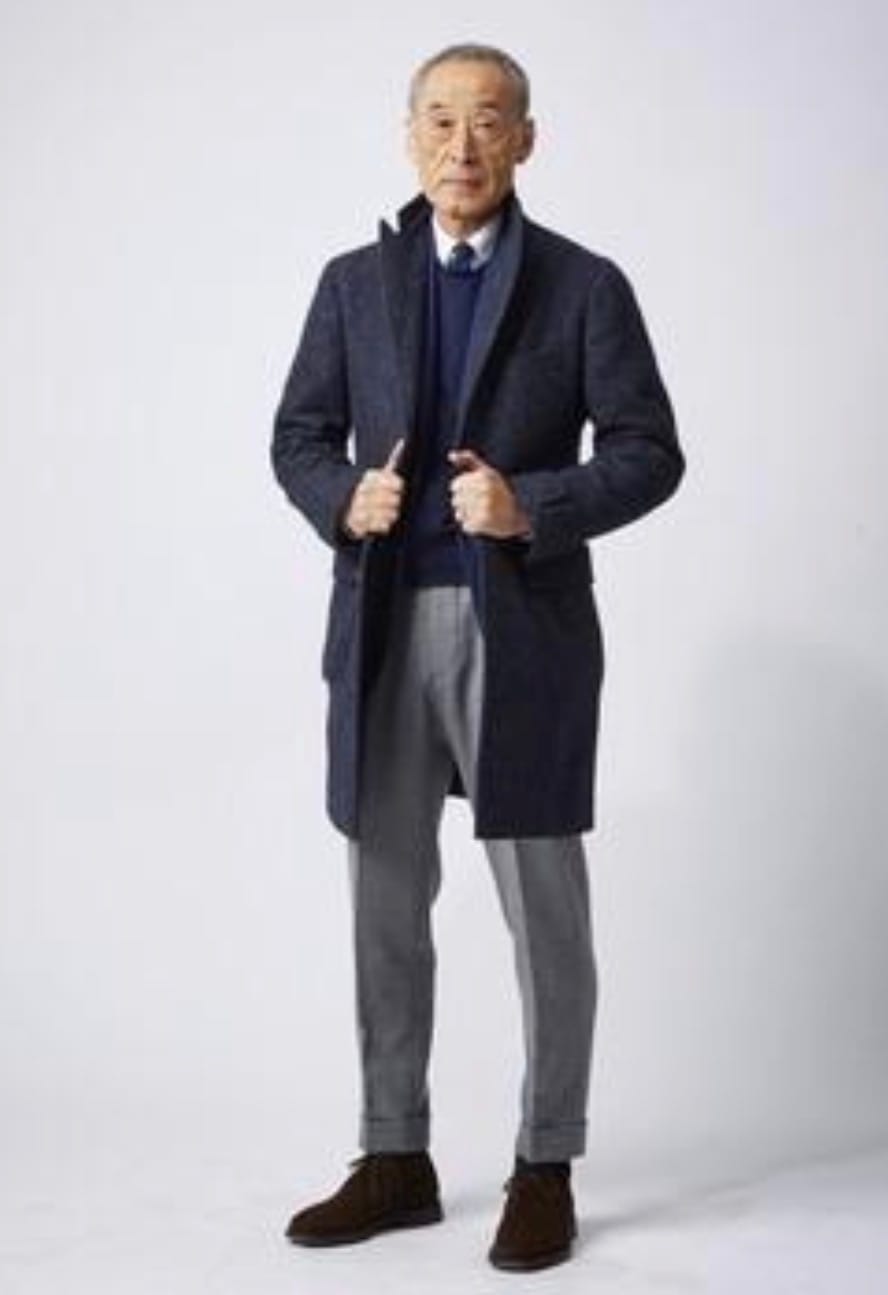
Overcoat (camel, navy, or charcoal)
Layered knit + shirt
Grey flannel trousers
Leather boots
Here, the texture of the flannel integrates seamlessly with heavier outerwear.
The entire system feels cohesive.
Footwear Discipline
Grey flannel trousers demand clarity in footwear.
Black leather → charcoal or mid-grey (formal environments)
Dark brown leather → all shades (most versatile)
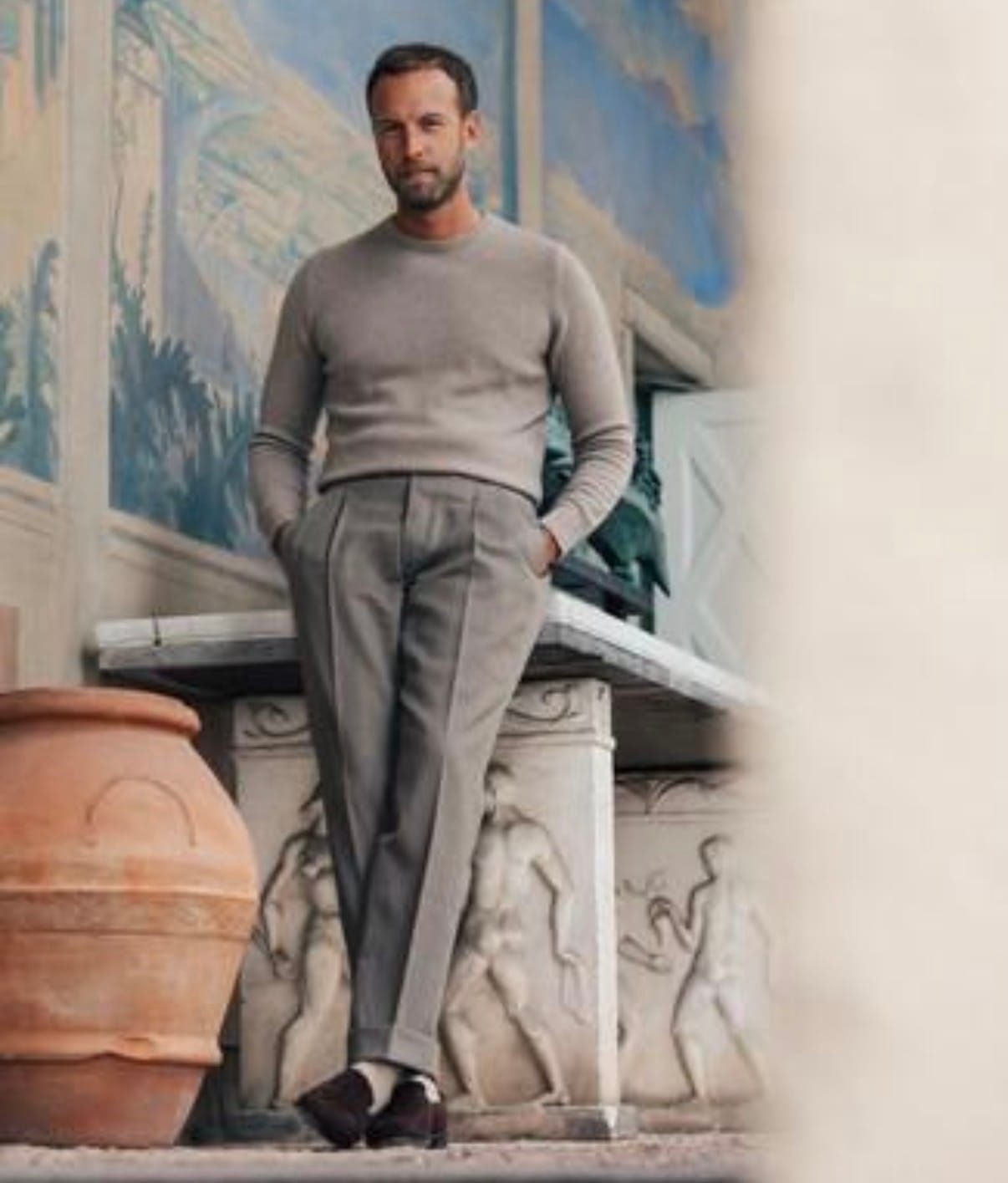
Suede → light to mid-grey (controlled casual use)
Anything overly casual breaks the line.
Acquisition Strategy
Start with:
Mid-grey
9–11 oz flannel
Single pleat
Side adjusters (if possible)
Then expand:
Add light grey for flexibility
Add charcoal for formal reinforcement
This is not about accumulation.
It is about coverage.
Final Principle
A strong wardrobe is not built on standout pieces.
It is built on reliable ones.
Grey flannel trousers do not elevate one outfit.
They elevate all of them.
Quietly. Consistently. Indisputably.