The 30-Piece Executive Wardrobe No. 17
Dark Denim
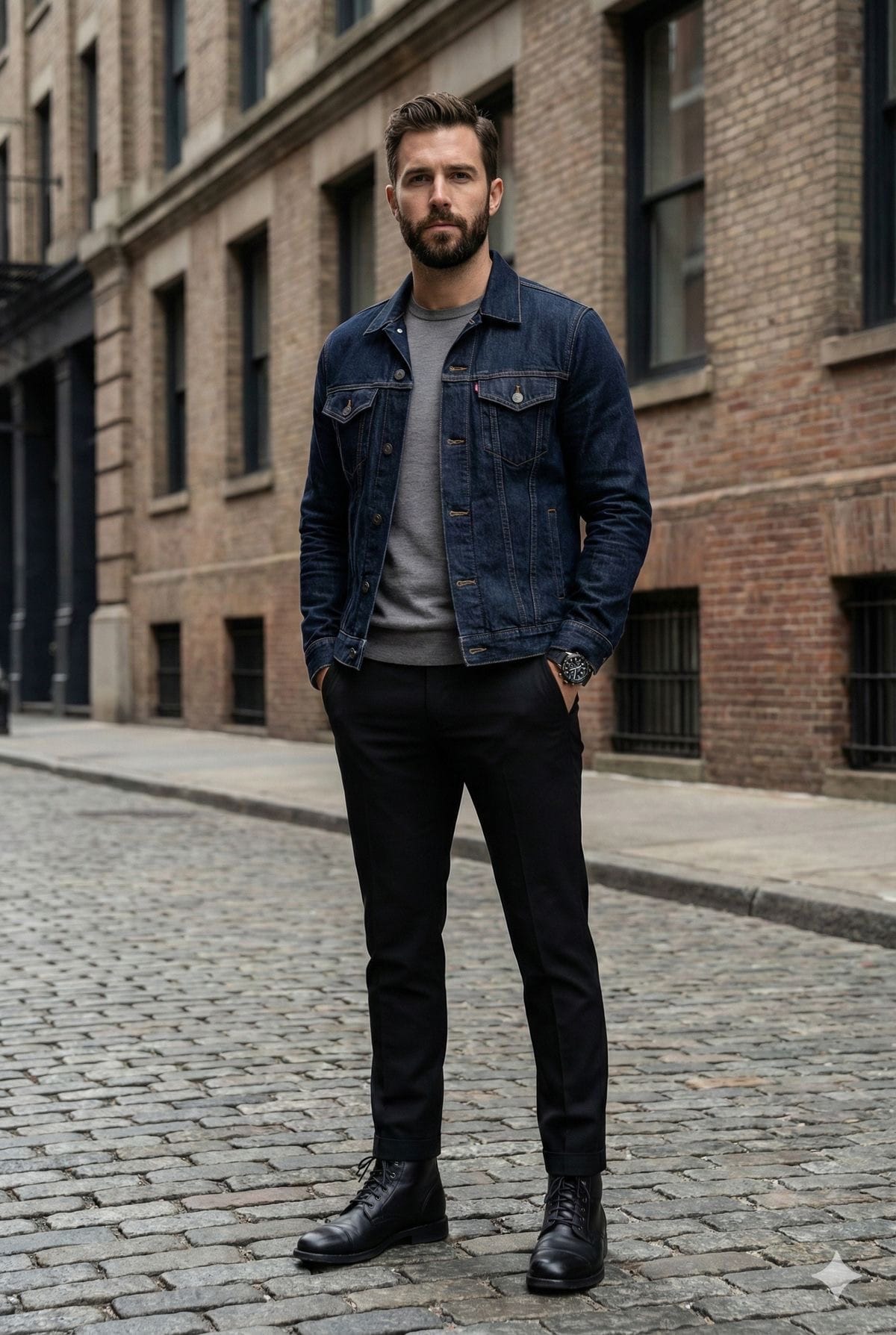
There are garments that signal effort.
And there are garments that signal control.
Dark denim belongs to the latter.
It is one of the few pieces in a man’s wardrobe that, when executed correctly, reads as both relaxed and deliberate—casual without surrender, refined without rigidity. In the modern professional environment, where strict dress codes have softened but expectations have not, dark denim operates as a quiet advantage.
This is not about jeans.
This is about disciplined informality.
What Dark Denim Does (When Done Correctly)
Dark denim solves a specific problem:
How to appear approachable without sacrificing authority.
It functions in environments where a full suit is excessive—but where standards still exist:
Creative offices
Founder-led companies
Client travel days
Off-site meetings
Evenings that require presence, not ceremony
The wrong denim makes you look off-duty.
The right denim makes you look intentional.
The Standard
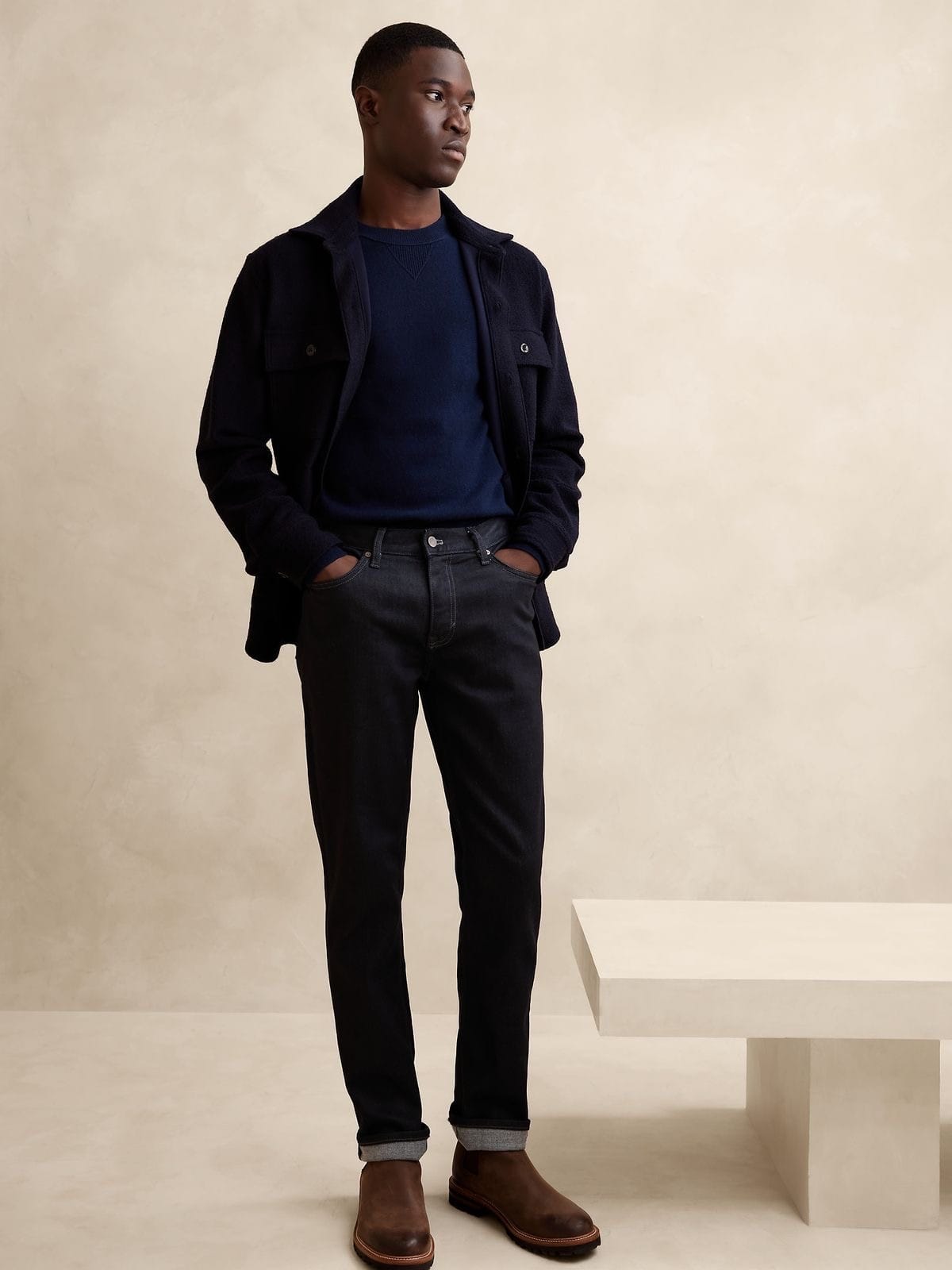
Not all denim qualifies.
The Executive Standard™ for dark denim is non-negotiable:
Color: Deep indigo to near-black
Wash: Clean. No fading, whiskering, or distressing
Fit: Tailored—neither slim nor relaxed; precise through the leg
Rise: Mid-rise (anchors the silhouette under jackets)
Break: Minimal to no break
Fabric: Structured with slight stretch (for movement, not drape)
Anything that introduces visual noise—rips, heavy fading, exaggerated taper—removes the garment from the executive category.
Fit Is the Entire Game
Dark denim succeeds or fails at the hem.
* Too long: collapses into casual
* Too tight: reads trend-driven
* Too loose: loses structure
The correct execution:
* Clean line from hip to ankle
* Slight taper, but not aggressive
* Hemmed to sit just above the shoe with a minimal break
If tailoring is required, tailor them.
Denim is not exempt from precision.
⸻
How It’s Worn
Dark denim does not stand alone—it integrates.
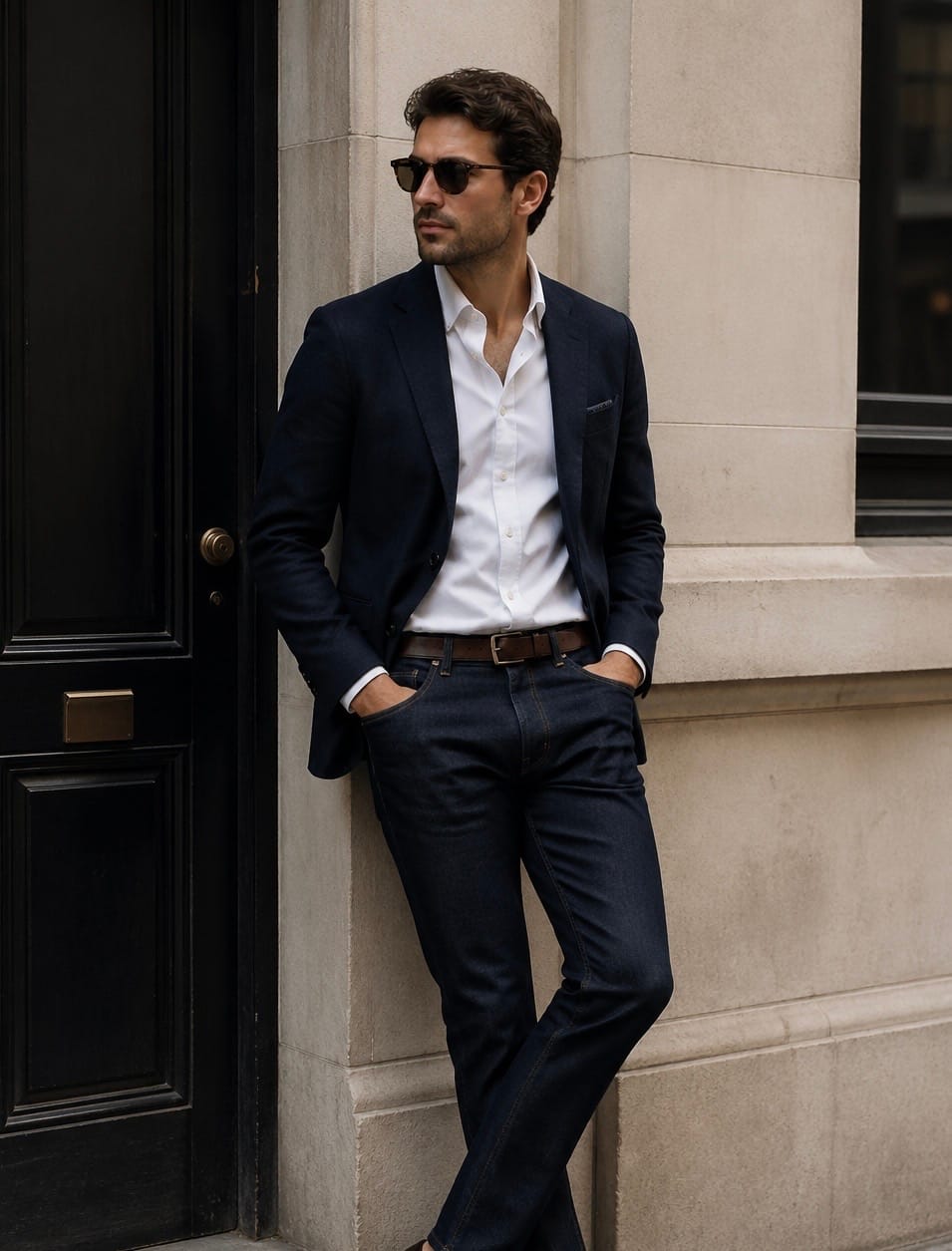
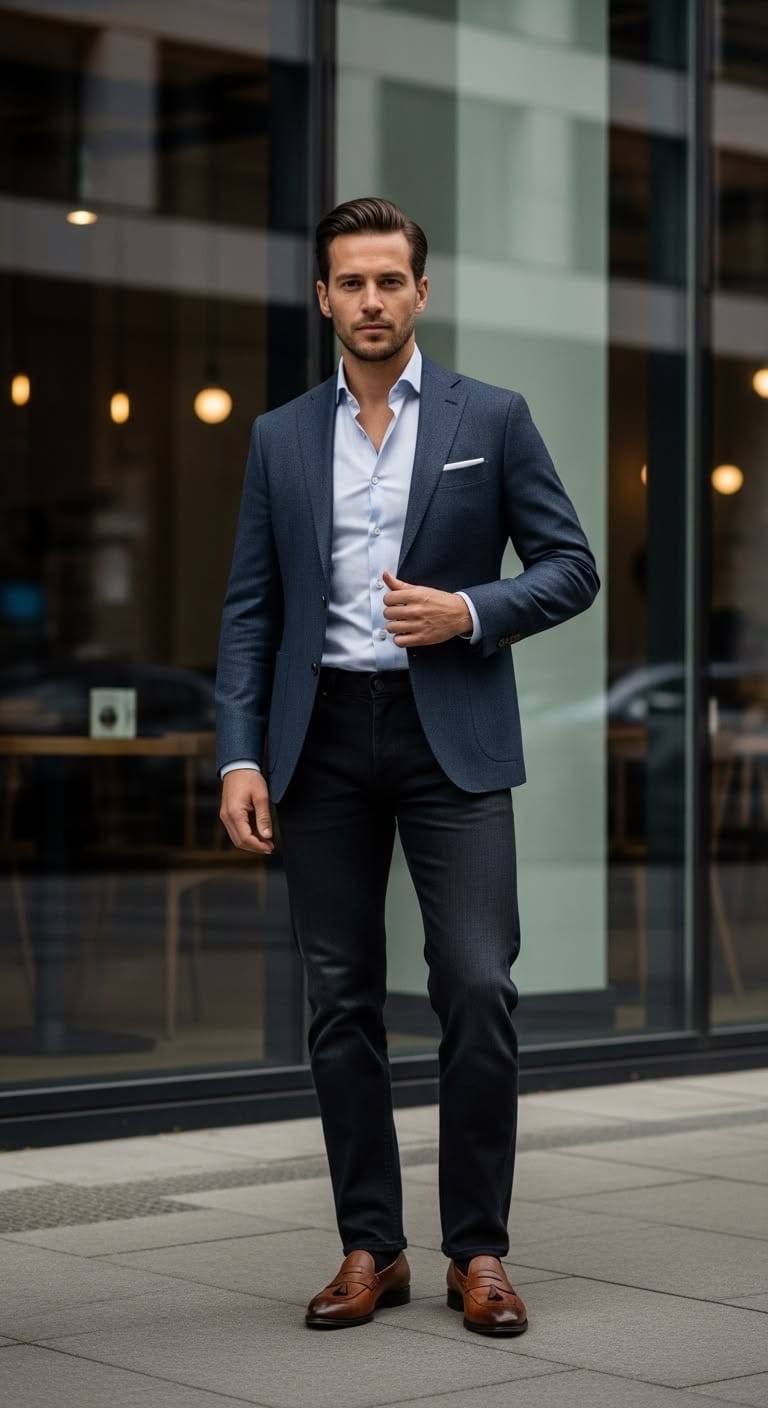
1. The Elevated Casual Uniform
* Dark denim
* White Oxford shirt
* Navy blazer
* Brown loafers
This is the modern baseline for smart casual authority.
⸻
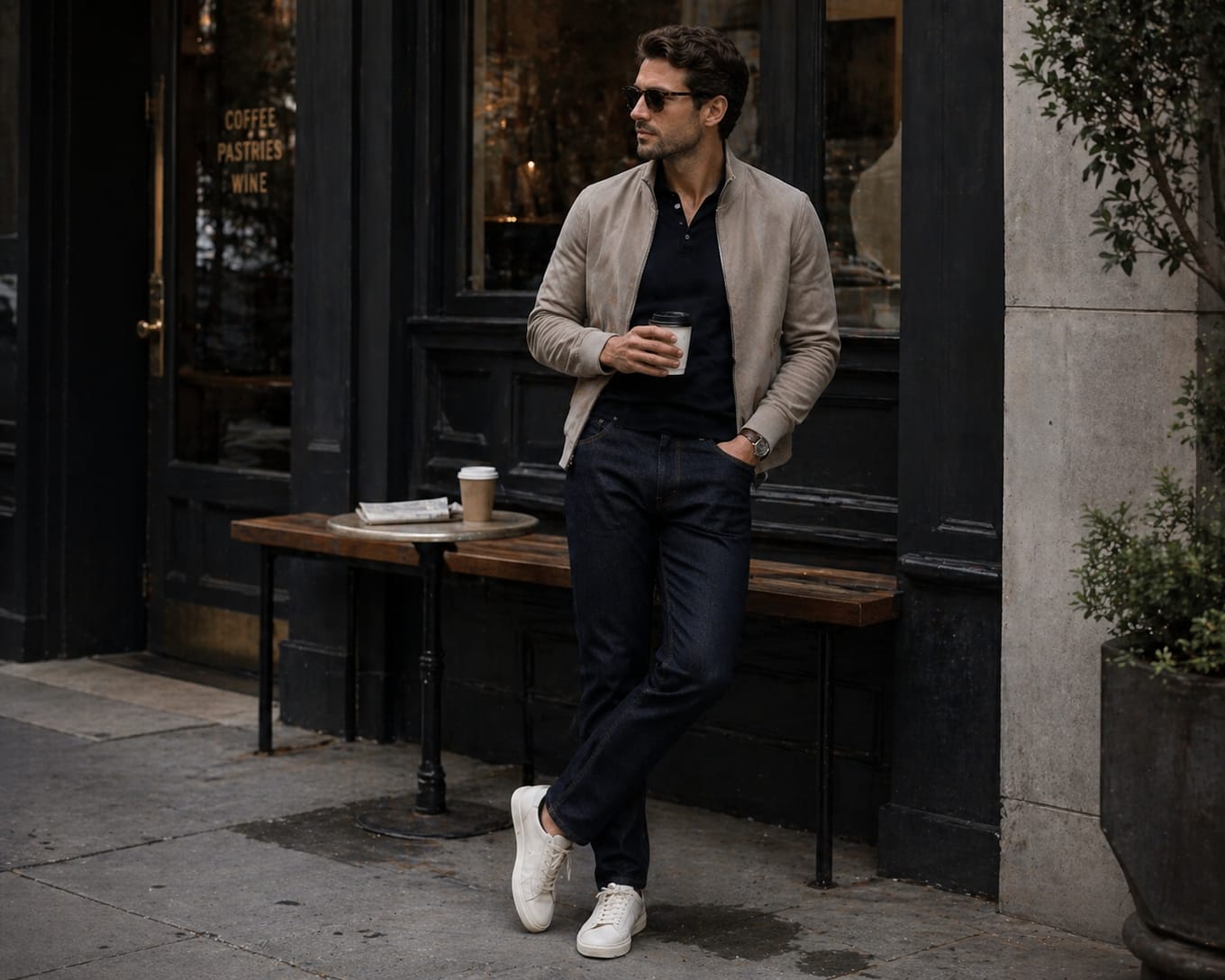
2. The Founder Configuration
* Dark denim
* Fine-gauge knit or polo
* Suede jacket or minimal outerwear
* Clean leather sneakers
Effortless, but controlled. Casual, but not careless.
⸻
3. The Evening Standard
* Dark denim
* Black or charcoal shirt
* Structured coat
* Black leather shoes
Understated. Intentional. Quietly dominant.
⸻
Footwear Matters More Than the Denim
Dark denim is highly responsive to what sits below it.
Loafers: elevate instantly
Leather sneakers: controlled casual
Dress shoes: sharpen the entire look
Boots: add structure and weight
The same pair of jeans can read three different ways depending on footwear alone.
Choose accordingly.
What to Avoid
Most men fail here—not from lack of effort, but from lack of restraint.
Avoid:
Light washes (too casual)
Distressing or rips (visually undisciplined)
Excess stacking at the ankle
Overly tight, trend-driven silhouettes
Overly relaxed, shapeless cuts
Dark denim is not a trend piece.
It is a precision tool.
Why It Belongs in the 30

The 30-Piece Executive Wardrobe is built on versatility, longevity, and control.
Dark denim earns its place because it:
Bridges formal and casual environments seamlessly
Requires minimal variation to remain effective
Works across seasons and industries
Enhances—not competes with—other garments
It is not a replacement for trousers.
It is a strategic alternative.
Final Word
Most men treat denim as default.
Executives treat it as deliberate.
The difference is visible immediately.
When done correctly, dark denim does not lower the standard—it reframes it.
And in the modern professional landscape, that distinction is everything.