The 30-Piece Executive Wardrobe No. 16
The Fine-Gauge Turtleneck
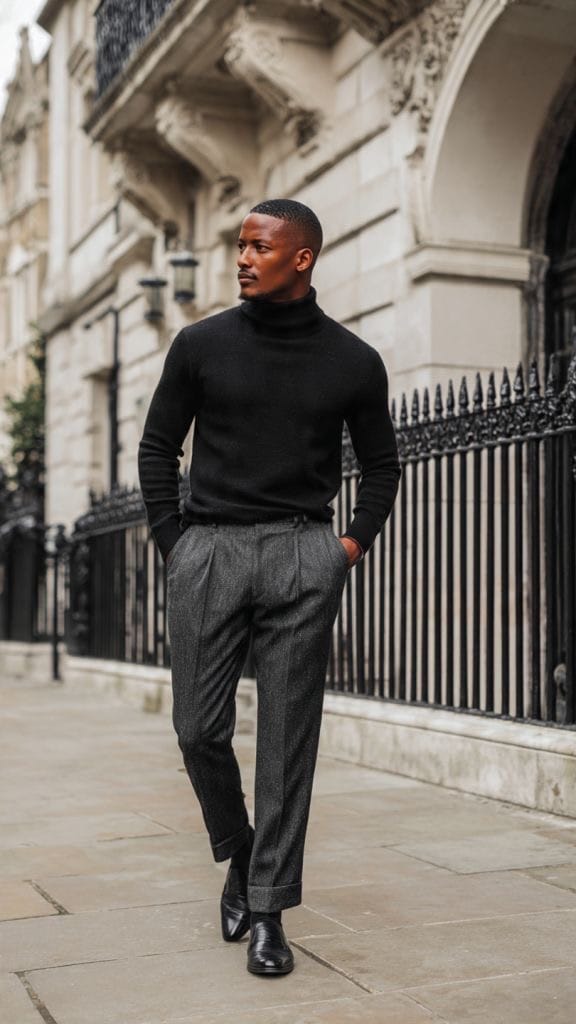
There are garments that signal competence. There are garments that signal taste. And then—rarely—there are garments that signal command without effort.
The fine-gauge turtleneck belongs firmly in the third category.
It is not loud. It does not seek attention. But when executed properly, it reframes the man wearing it as someone who has already arrived.
This is not a trend piece. It is a strategic asset.
What It Is
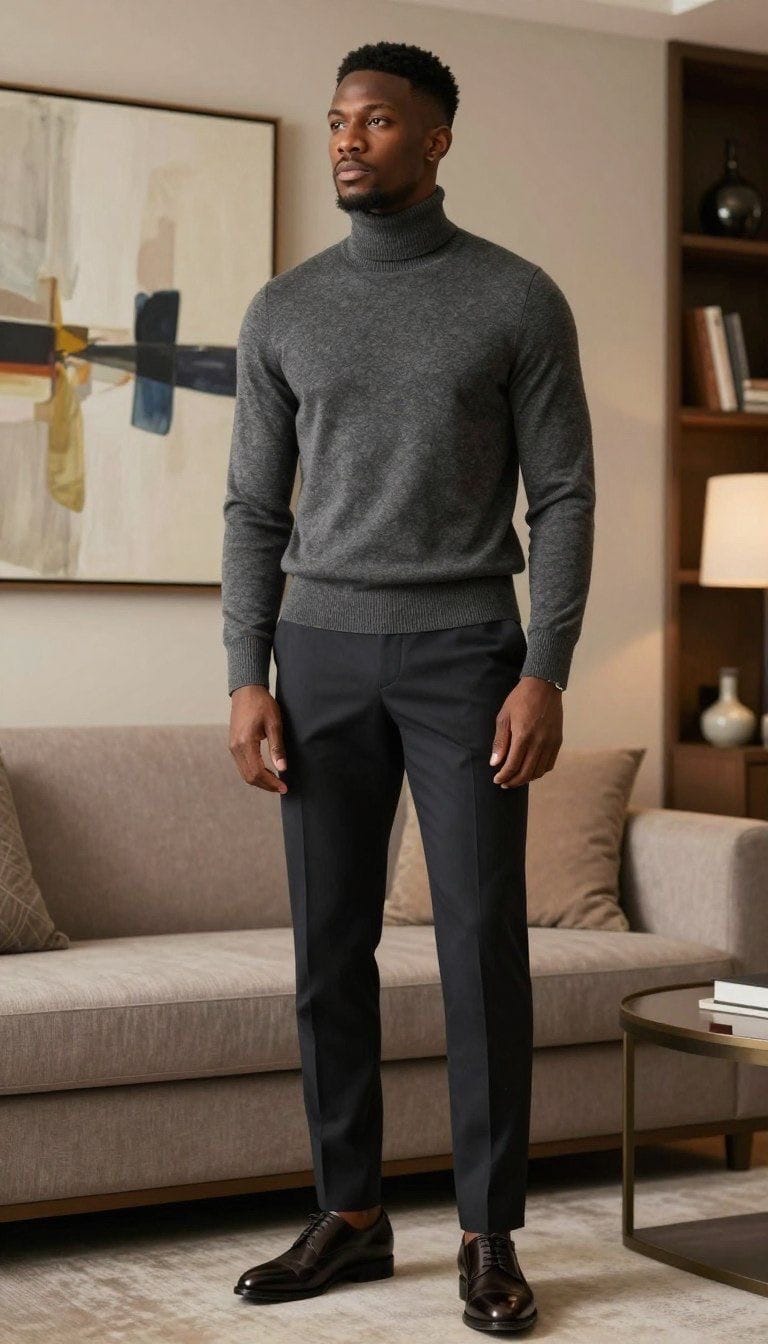
The fine-gauge turtleneck is a lightweight knit—typically merino wool, cashmere, or a high-quality blend—constructed with a tight weave and minimal texture.
It is defined by three characteristics:
A clean, close fit through the torso and sleeves
A refined neckline that sits neatly without collapsing
A smooth surface that layers seamlessly under tailoring
This is not the chunky, casual turtleneck of weekends. This is the version designed for rooms where decisions are made.
Why It Earns Its Place
The executive wardrobe is built on versatility, efficiency, and authority. The fine-gauge turtleneck delivers all three.
1. It Replaces the Dress Shirt—Without Losing Authority
In the right context, a fine-gauge turtleneck under a tailored jacket carries the same authority as a dress shirt and tie—while appearing more modern, more deliberate, and more composed.
It removes visual noise. What remains is structure, proportion, and presence.
2. It Signals Cultural Awareness

The man who wears a turtleneck well understands more than dress codes—he understands context.
From Steve Jobs to Michael Fassbender, the turtleneck has long been associated with precision thinkers and controlled aesthetics.
It communicates that you are not confined by convention—you choose it.
3. It Simplifies Cold-Weather Dressing
Where layering often introduces bulk and inconsistency, the fine-gauge turtleneck creates a clean, uninterrupted line.
No collar points. No tie adjustments. No visual clutter.
Just a single, continuous frame.
The Correct Colors
The power of the turtleneck is directly tied to restraint.
Build around these:
Black – The most authoritative and versatile
Charcoal Grey – Slightly softer, equally refined
Navy – Understated and highly wearable with grey tailoring
Dark Brown – An advanced option that pairs exceptionally well with navy and camel
Avoid bright colors. Avoid patterns. This is a garment of control, not expression.
Fit: Where Most Fail
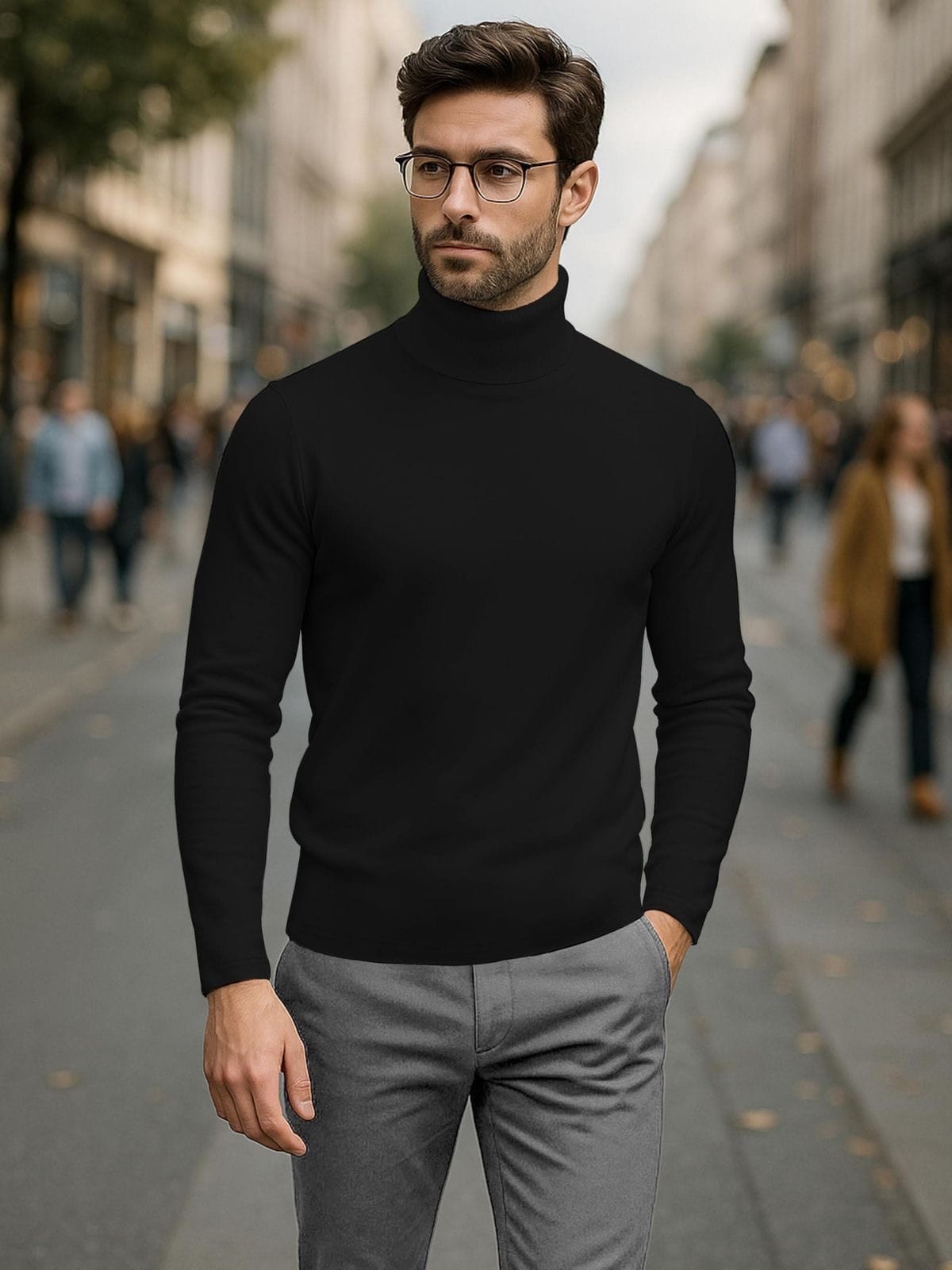
The difference between elevated and ineffective is almost always fit.
A proper fine-gauge turtleneck should:
Sit close to the body without pulling
Have sleeves that end cleanly at the wrist (no bunching)
Feature a collar that holds its shape—not slouching, not overly tight
Layer under a jacket with zero visible bulk
If it looks even slightly oversized, it becomes casual. If it is too tight, it becomes distracting.
Precision is the standard.
How to Wear It
1. Under a Tailored Suit
Replace the shirt and tie entirely.
Charcoal or navy suit
Black or charcoal turtleneck
Black Oxford shoes
The result is sharp, modern, and controlled.
2. With a Blazer and Trousers
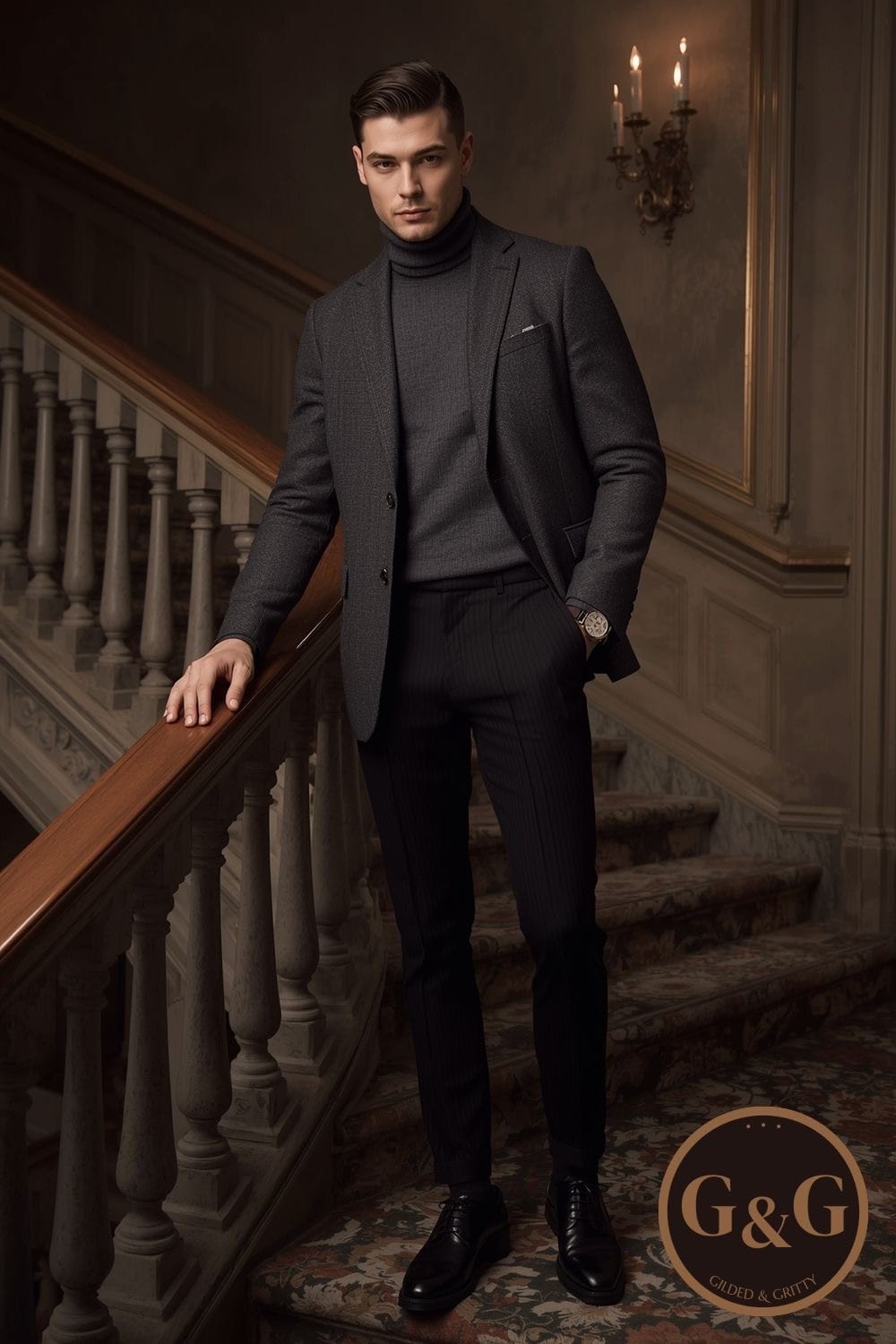
This is where versatility shines.
Navy blazer
Grey wool trousers
Black or navy turtleneck
Dark brown or black leather shoes
Appropriate for client meetings, dinners, and travel.
3. With an Overcoat
The turtleneck excels in outerwear layering.
Camel or navy overcoat
Charcoal or black turtleneck
Structured trousers
The neckline integrates seamlessly—no competing collars, no excess fabric.
Fabric Matters
This is not the place to economize.
Prioritize:
Merino wool for durability and breathability
Cashmere for elevated softness and finish
High-twist blends for structure and longevity
A poor fabric choice will pill, stretch, or lose shape—undermining the entire look.
Common Mistakes
Chunky knits disguised as “dressy”
Loose collars that collapse throughout the day
Wearing it without structure (no jacket, no framework) in professional settings
Over-layering that creates bulk
The turtleneck is not casual comfort—it is controlled minimalism.
When to Use It
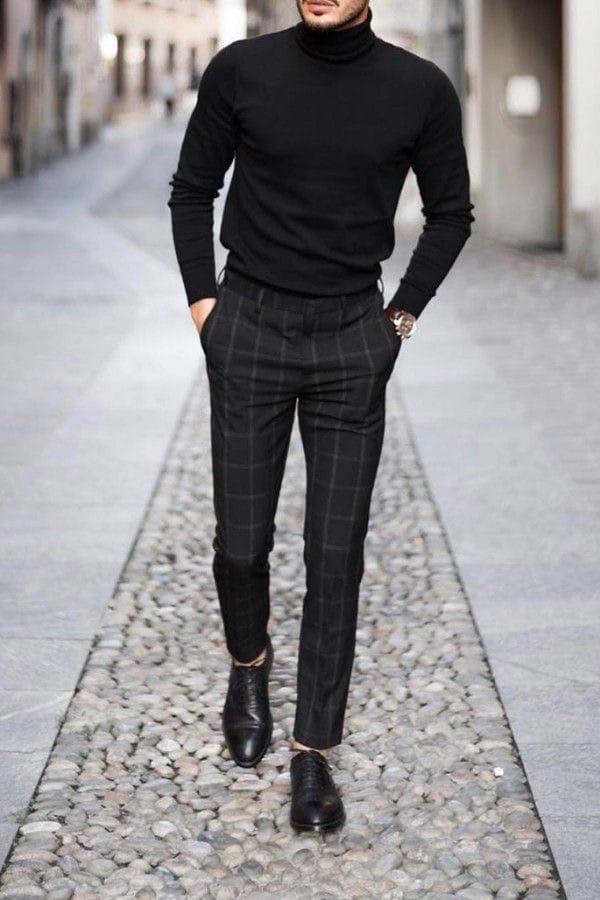
The fine-gauge turtleneck is most effective in:
Fall and winter client meetings
Evenings and formal-adjacent settings
Travel days where efficiency matters
Creative or modern corporate environments
It is not a universal replacement for the dress shirt. It is a calculated alternative.
The Principle
The fine-gauge turtleneck operates on a simple principle:
Remove what is unnecessary. Strengthen what remains.
No tie. No collar points. No excess.
Only line, proportion, and presence.
Final Word
In a wardrobe built for performance, every piece must justify its inclusion.
The fine-gauge turtleneck does so quietly—but completely.
It is not worn to stand out. It is worn when standing out is no longer required.