The 30-Piece Executive Wardrobe No. 4
Gray Trousers
The Quiet Spine of Smart Tailoring
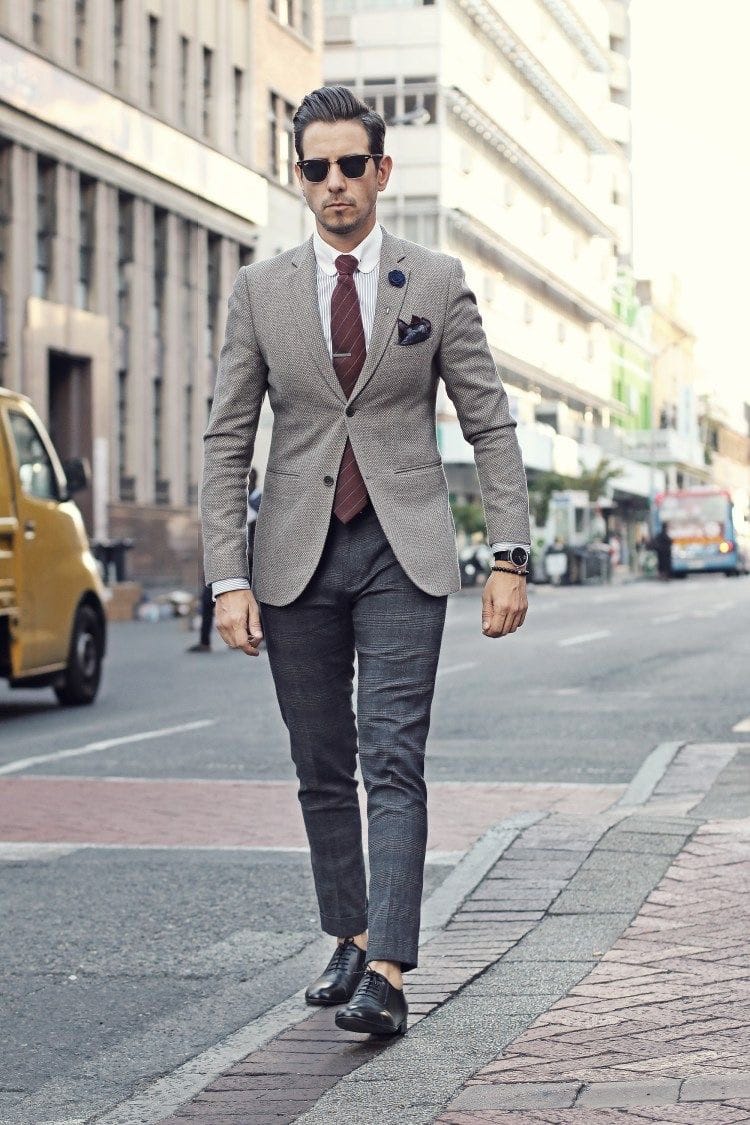
There are pieces in the executive wardrobe that announce themselves: the charcoal suit, the navy blazer, the double-monk shoe. And then there are the pieces that quietly make everything else look better.
The gray trouser is the latter.
Often overlooked, rarely discussed, and almost never hyped, gray trousers are one of the highest-leverage separates a professional man can own. They upgrade sweaters. They sober up sport coats. They add credibility to casual shirting. And most importantly, they create clean visual lines without competing for attention.
If the executive wardrobe had a quiet CFO, it would be the gray trouser.
Why Gray Trousers Matter
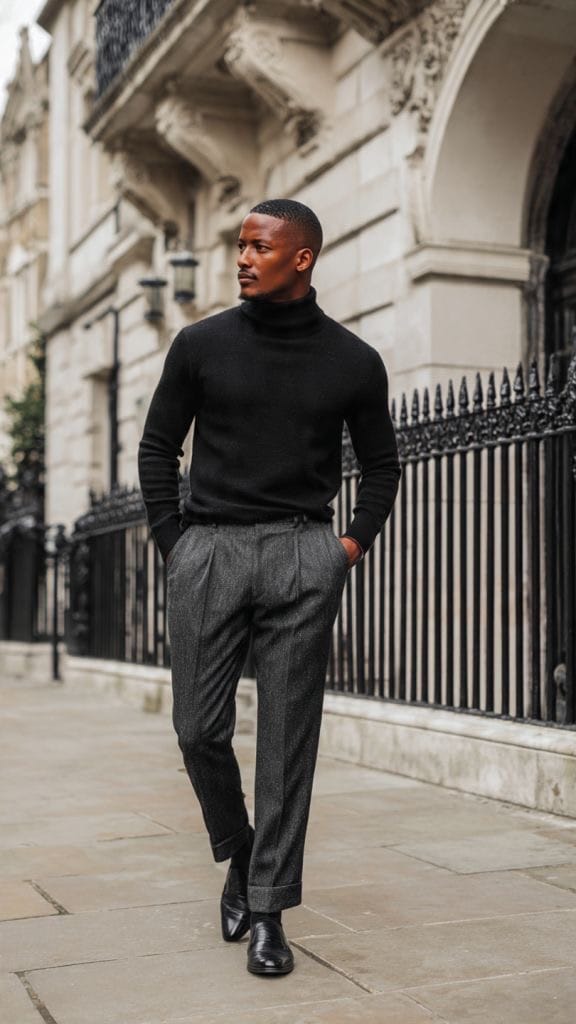
Gray occupies a special space in menswear. Unlike navy and black—which carry cultural or formality baggage—gray simply exists. It doesn’t signal “corporate,” “fashion,” or “evening.” It just provides a neutral, structured canvas for everything else.
A great pair of gray trousers achieves three outcomes:
Bridges Formality Ranges Gray pairs up to tailoring and down to elevated casual — a rare trick.
Balances Saturated Colors Burgundy, navy, forest green, camel, charcoal, and black all sit comfortably against gray.
Enhances Proportions Because gray visually recedes, it elongates the silhouette and lets structure lead.
In a modern executive environment where style codes are fuzzy and roles blend (boardroom → client lunch → airport), versatility is the true currency. Gray trousers pay dividends.
Which Gray? Tone Matters
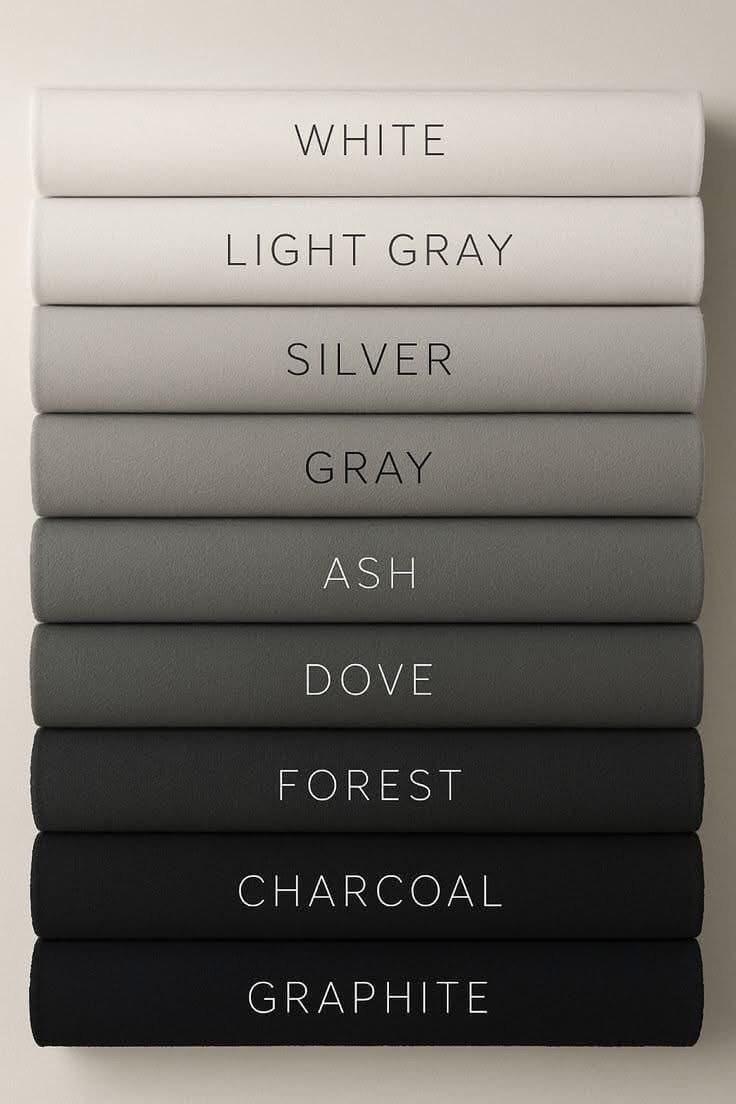
Just as “blue” is not one fixed shade, “gray” spans a spectrum. Choosing the right tone is strategic.
Here’s the executive breakdown:
Light Gray Best for spring/summer, daytime meetings, and pairing with darker jackets or navy knits. Pros: visually fresh, modern Cons: less forgiving with dirt & wear
Medium Gray (the universal sweet spot) Works year-round with almost every jacket color. Pros: balanced, adaptable, never loud Cons: none — this is the safest buy
Charcoal Gray More formal, almost suit-like, ideal for winter + tailored environments. Pros: serious, authoritative Cons: less contrast with navy jackets
All three warrant a place, but if you’re only buying one, medium gray wins every time.
Fabric: The Real ROI
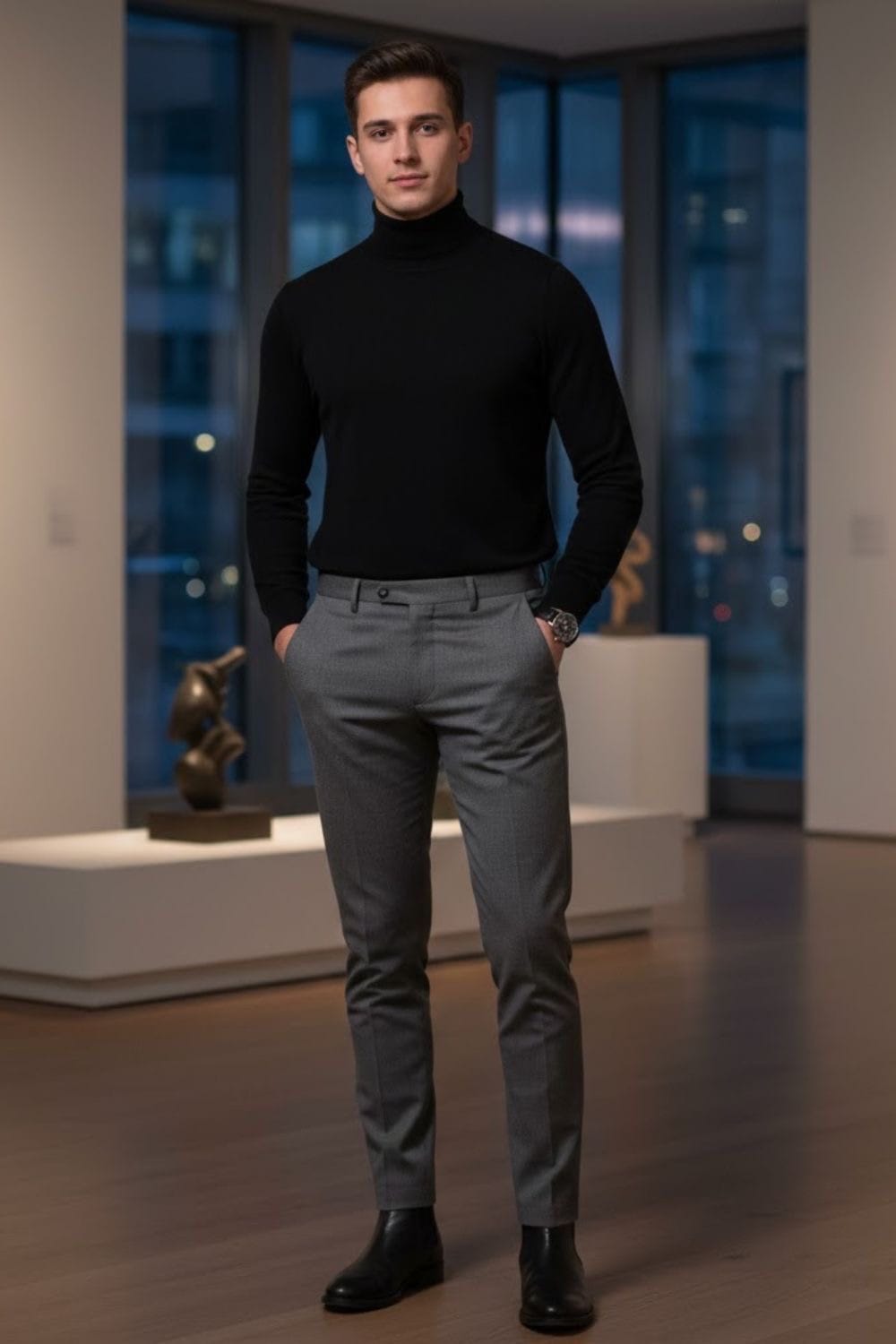
Like all tailoring, fabric dictates performance and lifespan. Recommended executive fabrics:
Wool Flannel (Fall/Winter)
Warm, softly structured, slightly matte
Pairs brilliantly with knitwear, tweeds, and navy blazers
Tropical Wool (Spring/Summer & Travel)
Breathable, crease-resistant, lightweight
Ideal for frequent flyers and warmer climates
High-Twist Wool (Year-Round Workhorse)
Naturally elastic, crease-resistant, drapes beautifully
The closest thing to an “executive uniform” fabric
Avoid synthetic blends for professional use — they age poorly, shine under artificial light, and rarely tailor cleanly.
Fit: Clean and Intentional
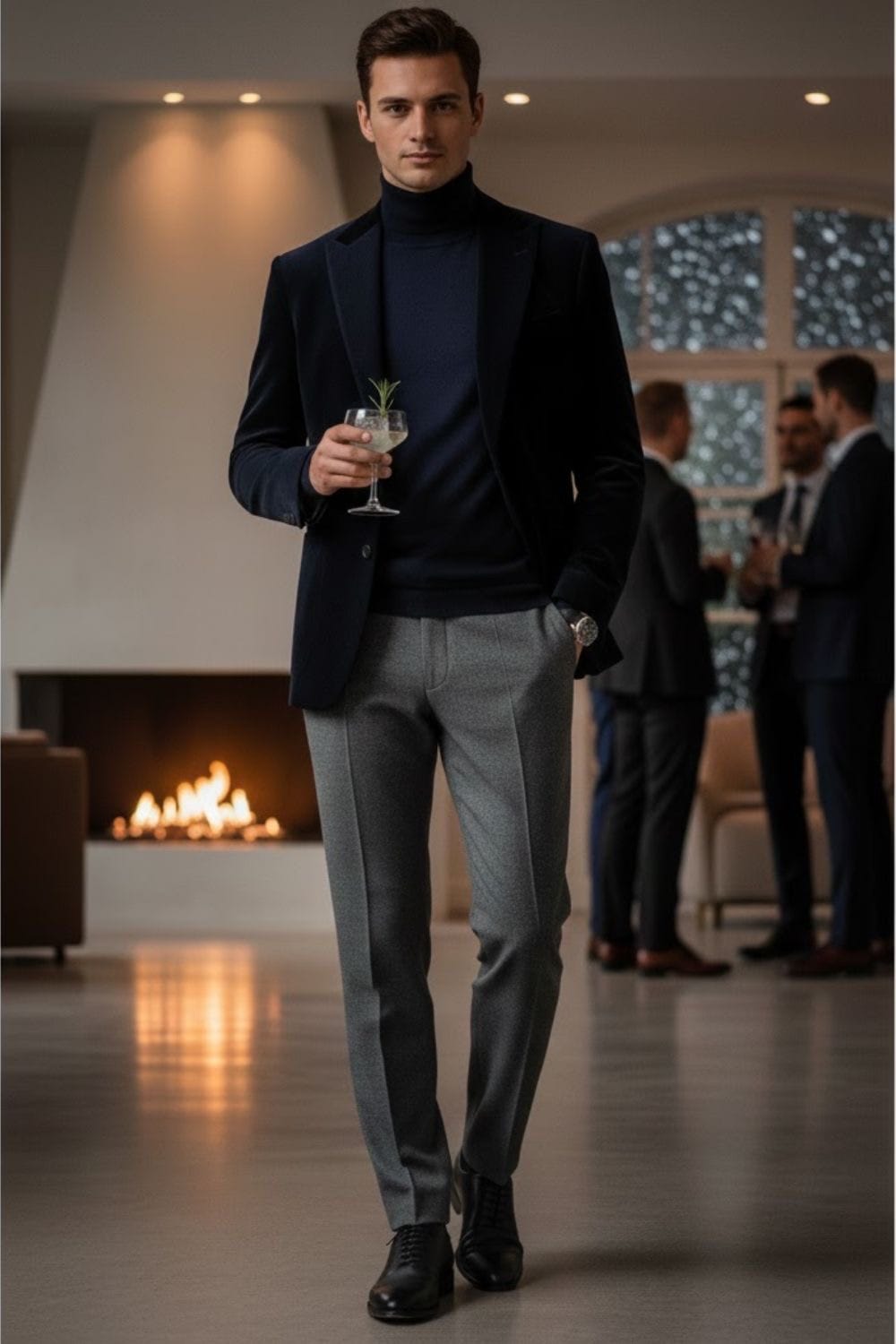
The executive profile should read as:
Slim, not tight. Clean, not skinny. Structured, not rigid.
Key notes for proper fit:
Waist sits at natural waist or slightly below — never low-rise
Seat clean but not pulling
Legs shaped with slight taper (no stovepipes, no leggings)
Break: no break to slight break depending on personal style
Cropped, ankle-length trousers—while trendy—bleed authority in white-collar environments. Leave them to fashion creatives.
How to Wear Them: Executive Combos
Below are tested, client-safe, office-legible combinations that always work:
1. Gray Trousers + Navy Blazer
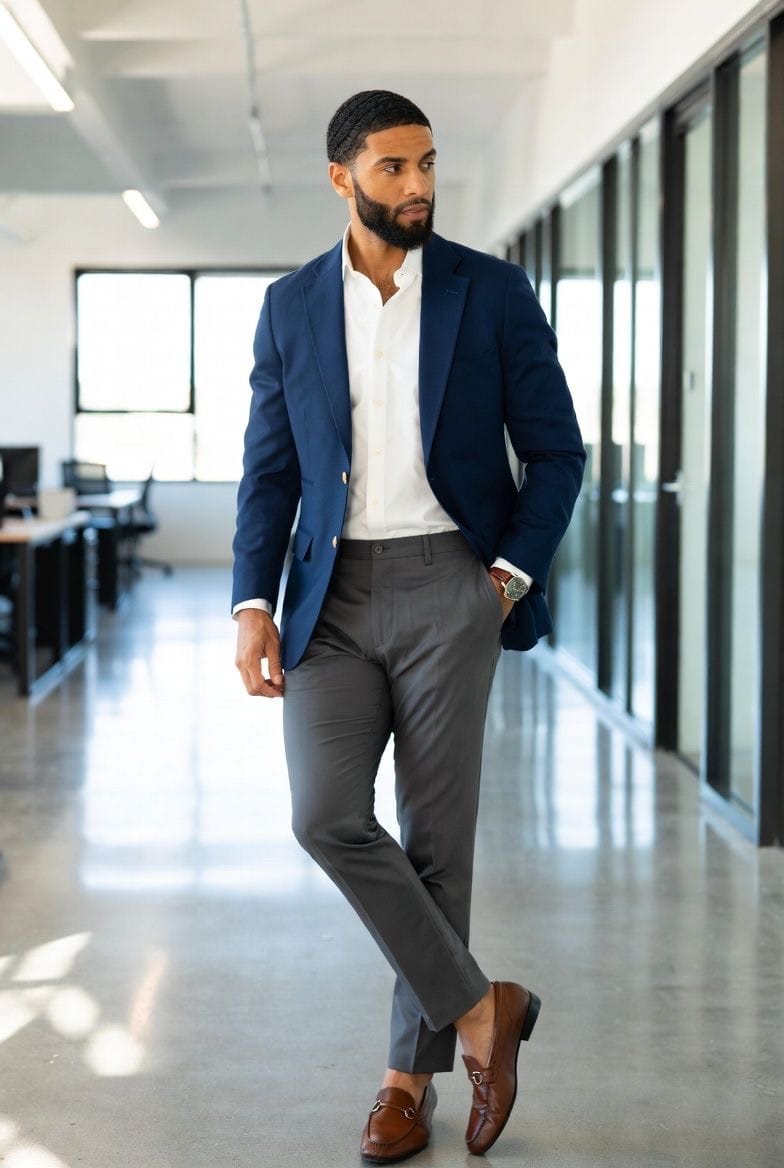
Context: board meetings, prospect pitches, conferences
Why it works: The most universal pairing in modern menswear — calm, professional, international.
2. Gray Trousers + White OCBD
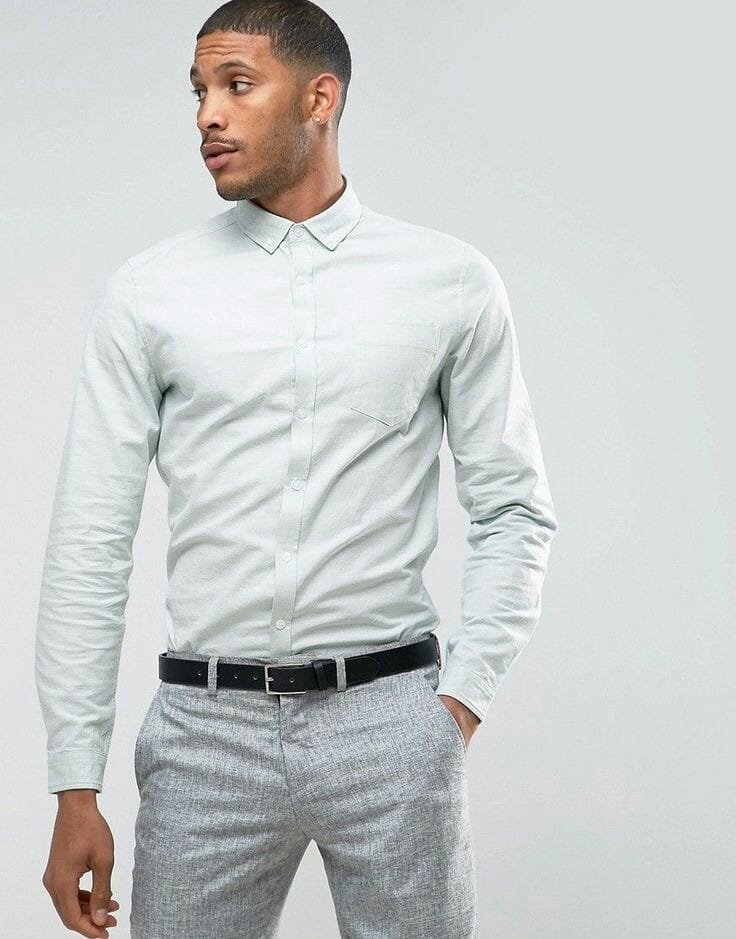
Context: hybrid offices, travel days, client lunches
Why it works: Softens tailoring without losing credibility. Works with loafers or derbies.
3. Gray Trousers + Black Knit Polo
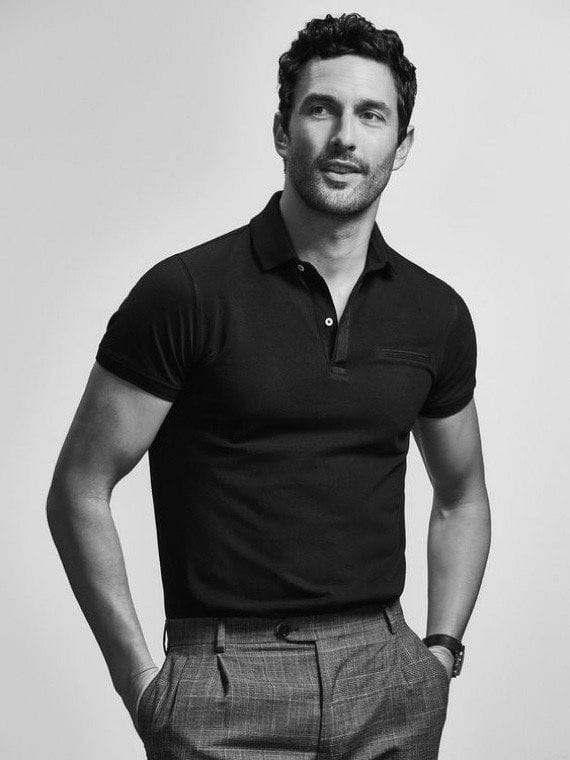
Context: tech/finance crossover, evenings, creative firms
Why it works: Minimal, modern, confident — especially with black loafers.
4. Gray Flannel + Brown Tweed Jacket
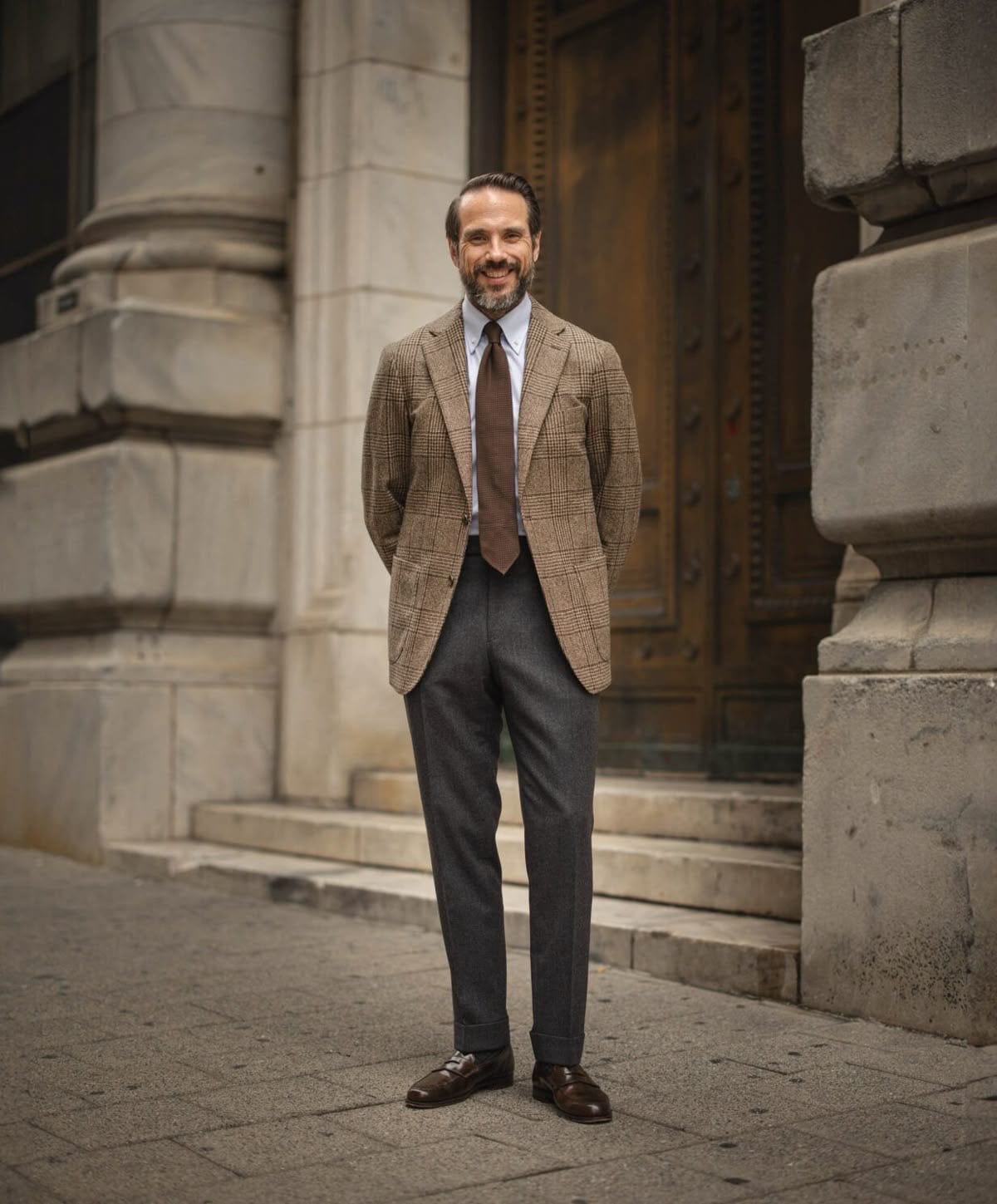
Context: winter, law/finance, academic settings
Why it works: Classic Anglo-American tailoring move — warm, textural, intelligent.
5. Gray Trousers + White Poplin Shirt + Navy Tie
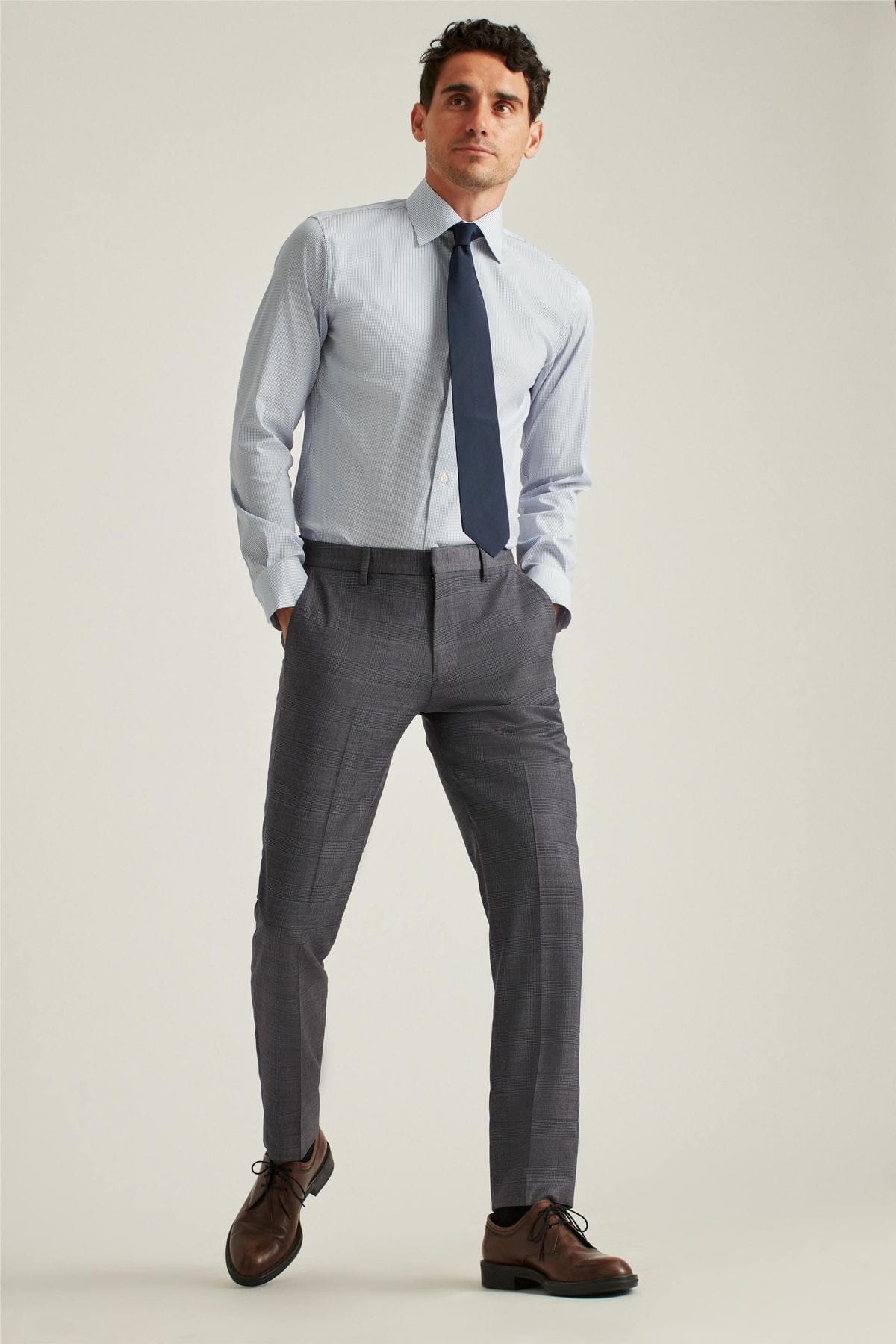
Context: formal client work, chambers, presentations
Why it works: This is suit-adjacent formality without being a full suit.
Shoes: What Works
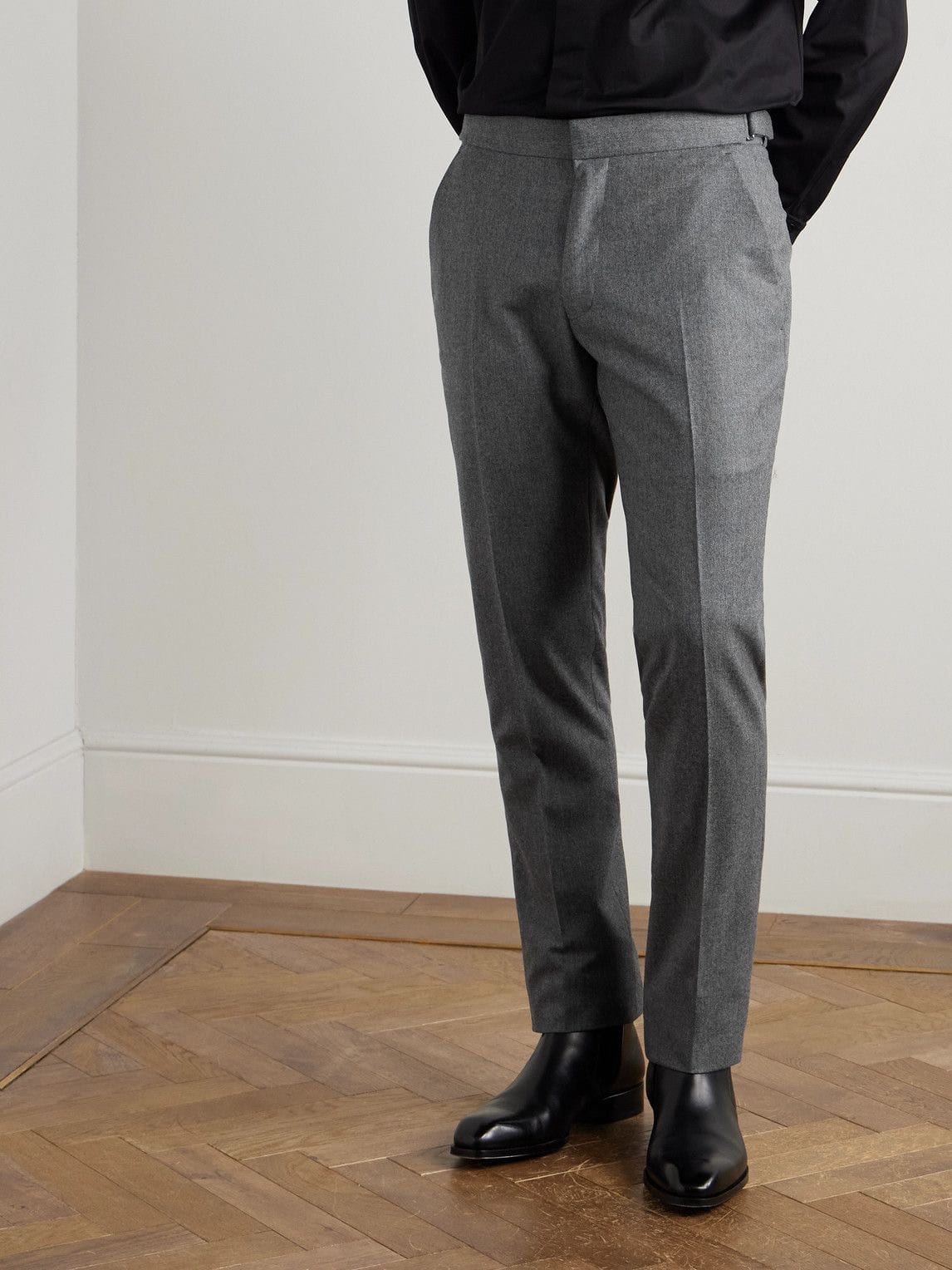
The most reliable pairings:
Black Cap-Toe Oxfords (formal)
Black Penny Loafers (modern & versatile)
Dark Brown Derbies (business casual)
Dark Brown Penny Loafers (warmer tone)
Oxblood/Color 8 Loafers (executive personality)
Avoid tan leather with gray trousers — the contrast is too sharp for professional settings.
Seasonality & Strategy
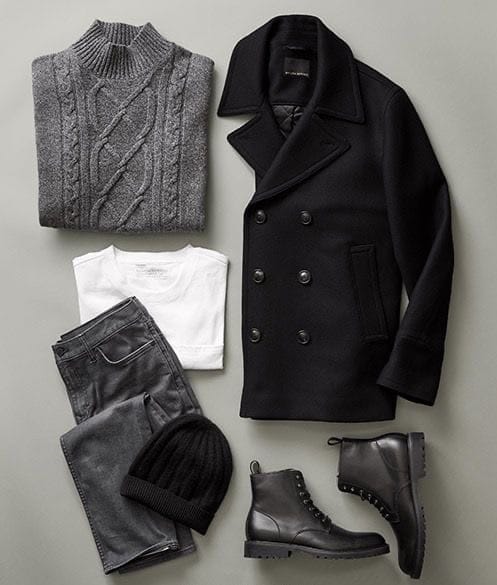
One of the secrets of stylish executives is owning seasonal duplicates:
High-twist medium gray for spring/summer/travel
Flannel medium or charcoal gray for fall/winter
This creates visual continuity all year, while staying climatically appropriate — a subtle signal of mastery.
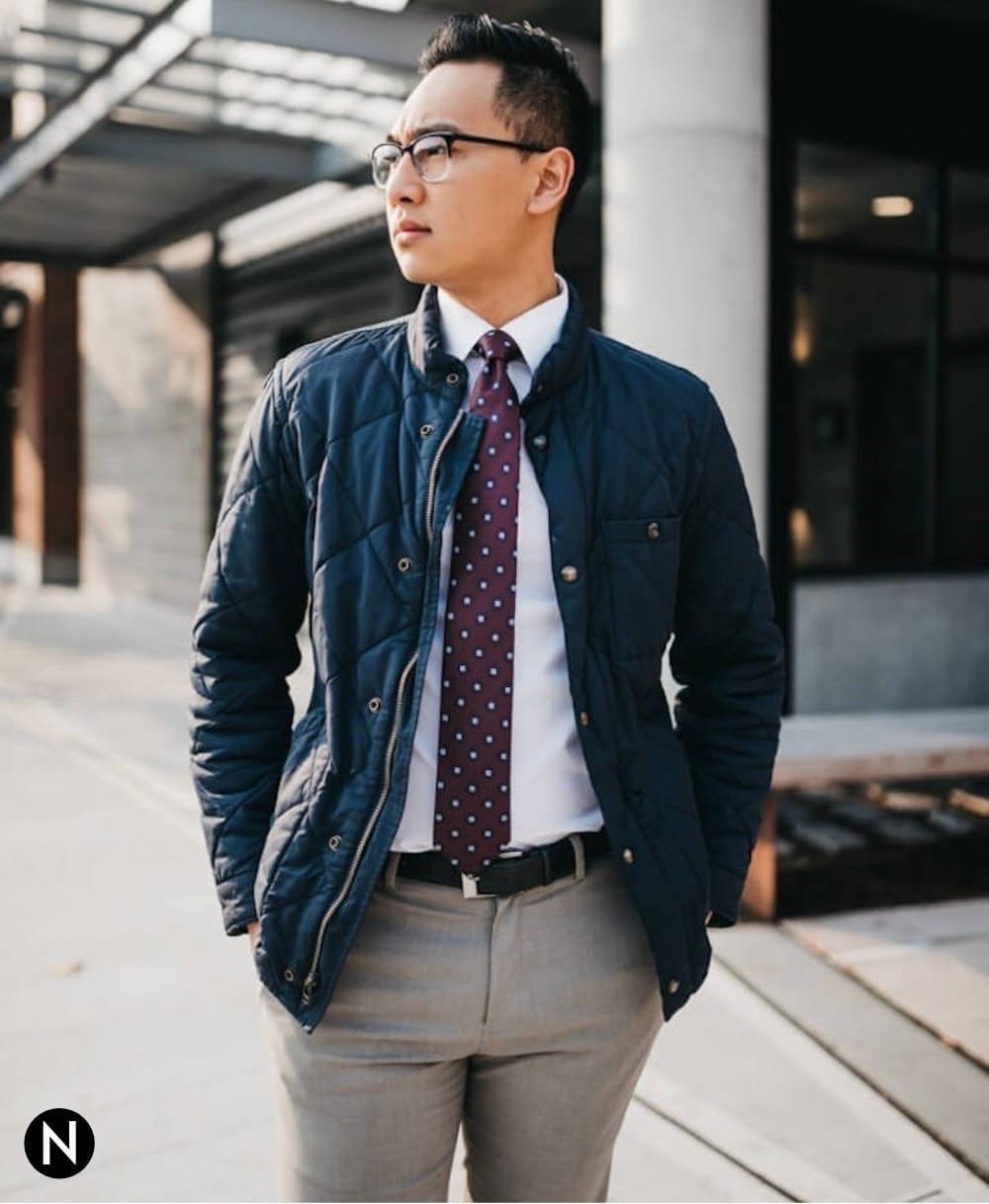
Where They Belong in the 30-Piece System
Within the macro wardrobe architecture, gray trousers play three roles:
Core Tailoring Separate Completes blazer-driven office uniforms
Formality Modulator Dials suits up/down depending on environment
Color Neutralizer Allows expressive pieces (ties, sweaters, jackets) to shine
Translated into the 30-piece matrix:
Category: Tailoring Separates
Usage: 2–3x weekly
Seasonality: Year-round (with fabric rotation)
Travel Value: Very high
Final Principle
In executive dressing, the goal isn’t to stand out — it’s to remove friction and create clarity.
Gray trousers do that without demanding attention. They are confident, quiet, and deeply competent.
Most men chase statement pieces. The best-dressed men invest in structure.
Gray trousers are structure.
You’re Reading The Modern Aesthete
If you’re enjoying The 30-Piece Executive Wardrobe series, consider:
Subscribing for future issues
Forwarding this to a colleague in law, finance, or consulting
Suggesting a workplace or industry for future tailored guides
See you next week.