The 30-Piece Executive Wardrobe No. 5
The White Oxford Shirt

There is no garment in a man’s wardrobe that carries more quiet authority than the white Oxford shirt.
It is not dramatic.
It is not seasonal.
It does not ask to be noticed.
And yet, it is one of the few pieces that functions across nearly every environment an executive inhabits: boardrooms, interviews, travel days, dinners, presentations, and the moments between.
If tailoring is the architecture of the executive wardrobe, the white Oxford is its foundation.
Why the White Oxford Earns Its Place

The white Oxford shirt is not simply a “white shirt.”
It is a specific tool.
Where poplin is sharp and formal, and twill is polished and smooth, the Oxford cloth offers something more durable and more forgiving: texture.
That texture is the difference.
Oxford cloth holds structure without stiffness. It reads professional without fragility. It signals competence without vanity. It is the shirt that looks appropriate at 8:30 a.m. and still grounded at 8:30 p.m.
In environments where credibility matters more than flair, this matters.
What the White Oxford Communicates

Clothing speaks before credentials do. The white Oxford says:
I understand standards
I am dependable
I am not trying to impress you—I expect to be taken seriously
It is the uniform of men who don’t need novelty to signal relevance.
This is why it appears again and again on men whose authority comes from position, experience, or intellect—not trend alignment.
Fit: Where Most Men Miss

A white Oxford only works if the fit is disciplined.
Shoulders
The shoulder seam must sit precisely at the shoulder point. Anything else reads careless.
Chest & Waist
There should be shape, not tension. If the fabric pulls when buttoned, it’s too small. If it billows, it’s too large.
Sleeves
Sleeves should end at the wrist bone, allowing ¼–½ inch to show under a jacket. Too long looks sloppy. Too short looks juvenile.
Collar
The collar must stand on its own when unbuttoned and sit cleanly under a jacket when closed. Weak collars undermine the entire look.
This is not optional. The white Oxford is unforgiving.
Collar Style: Keep It Conservative

For the executive wardrobe, only two collars belong here:
Classic button-down (American business tradition, relaxed authority)
Structured spread or semi-spread (for those pairing it frequently with tailoring)
Avoid extremes. No oversized collars. No aggressive cutaways. The goal is longevity, not novelty.
When to Wear It
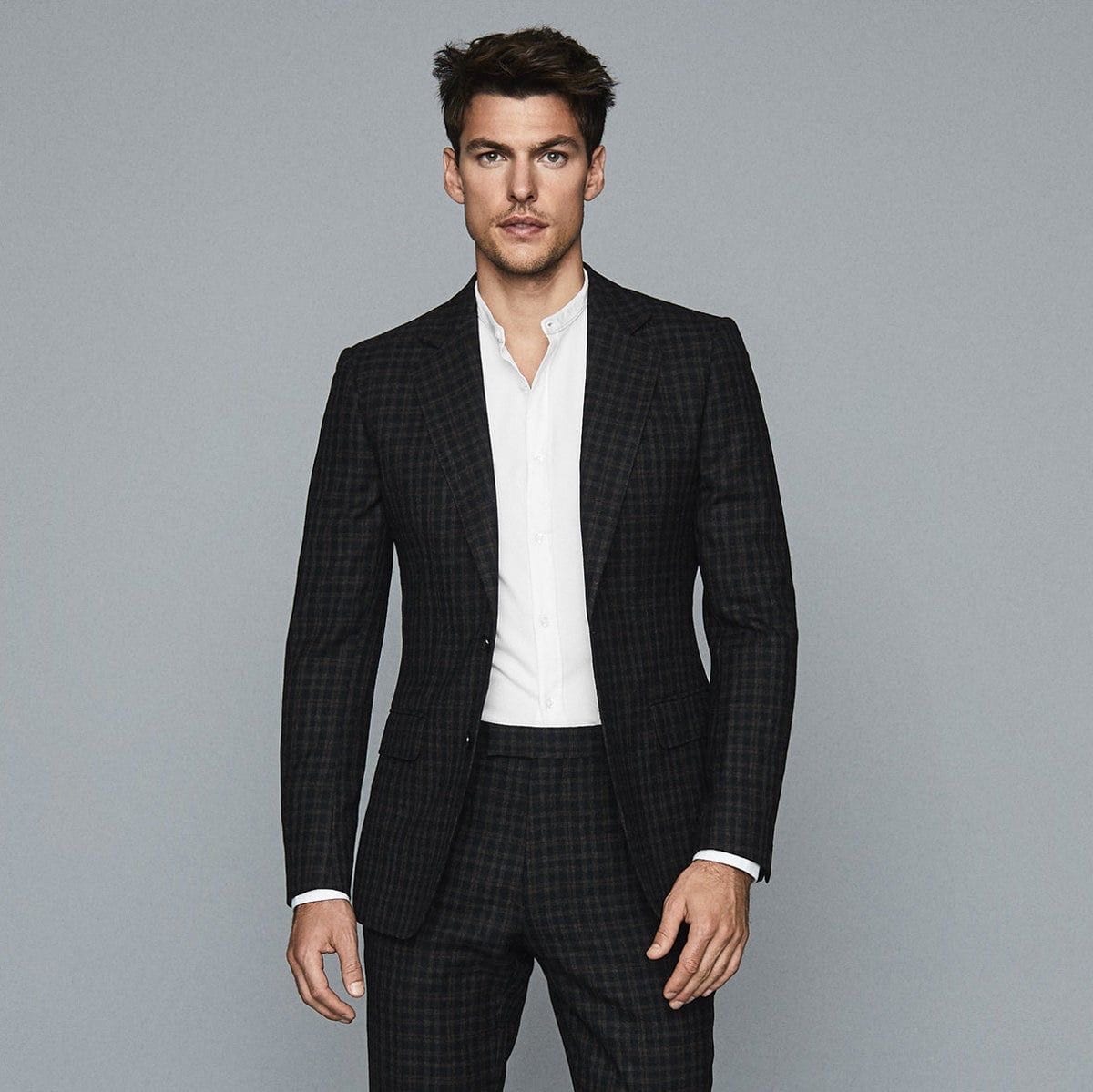
The white Oxford earns its keep because it works in nearly every executive scenario:
Under a navy or charcoal suit
With a blazer and gray trousers
With chinos on travel days
With dark denim in controlled casual environments
Open collar at dinners
Buttoned and tied for formal meetings
Few pieces transition this seamlessly without losing credibility.
The Mistakes That Cheapen It

Most white Oxford shirts fail not because of design—but because of shortcuts.
Paper-thin fabric (reads disposable)
Over-bright optic white (looks sterile and harsh)
Weak collars that collapse by noon
Boxy cuts that erase the body underneath
An executive wardrobe does not tolerate disposable garments. This is a piece meant to age well, not be replaced quarterly.
How Many You Need

For a true executive wardrobe:
Minimum: 2
Ideal: 3–4
Heavy rotation (travel or daily office): 5
White shirts absorb wear. Rotation preserves their authority.
Final Word

The white Oxford shirt is not exciting.
That is precisely why it belongs in the 30-Piece Executive Wardrobe.
It is the shirt you reach for when you don’t want your clothes to speak louder than your presence. The shirt that never apologizes for itself. The shirt that looks right even when everything else is uncertain.
Executives don’t build wardrobes around trends.
They build them around pieces that never betray them.
The white Oxford is one of them.