The 30-Piece Executive Wardrobe No. 9
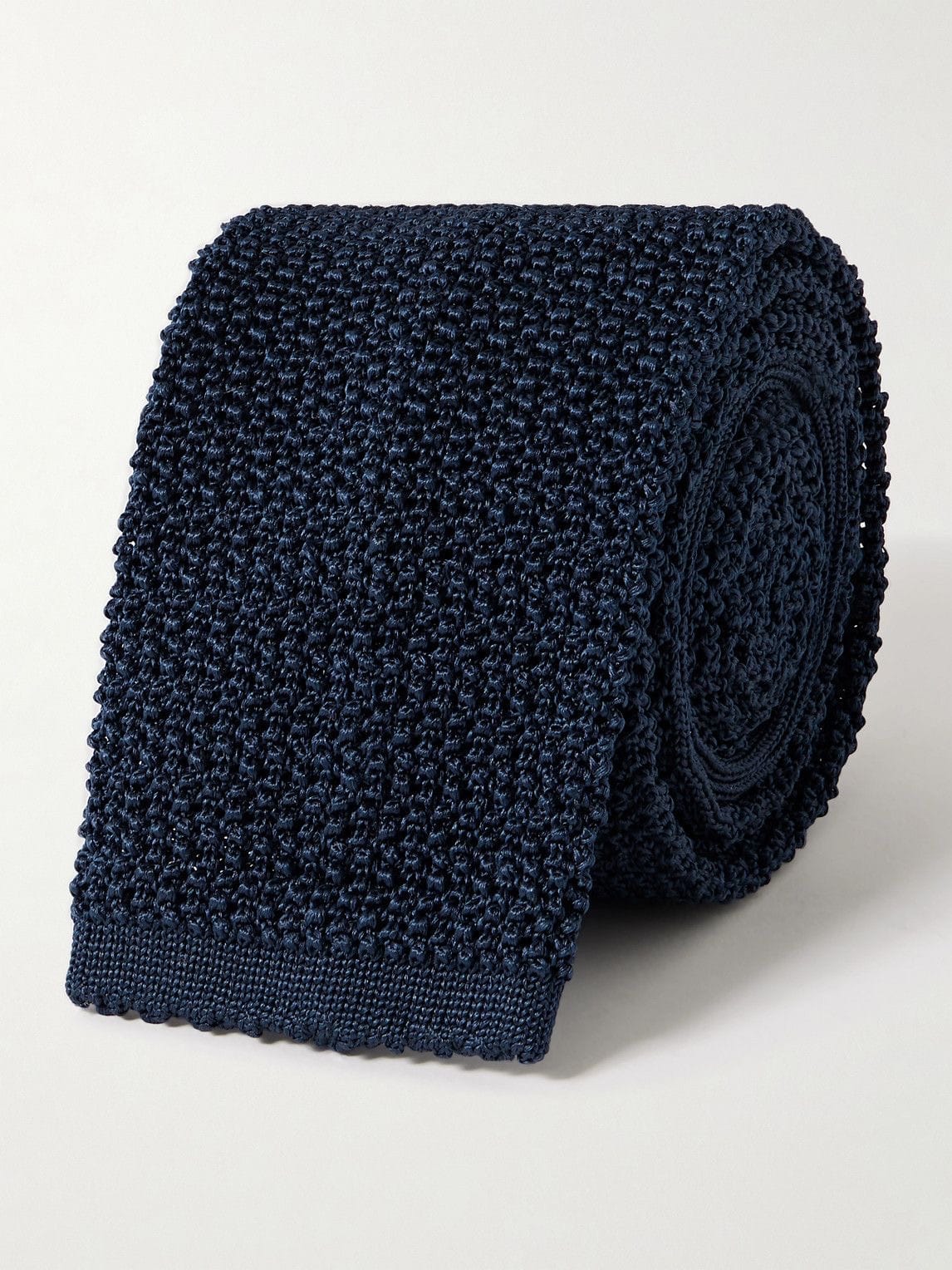
The Navy Knit Tie
There is the silk tie — polished, architectural, ceremonial.
And then there is the navy knit tie.
More relaxed.
More tactile.
Still disciplined.
If the silk tie is boardroom authority, the knit tie is intelligent confidence.
In the 30-Piece Executive Wardrobe, the navy knit tie exists for one reason:
To introduce texture without surrendering control.
Why Knit Belongs in an Executive Wardrobe
Many men misunderstand knit ties.
They treat them as trendy.
Or seasonal.
Or vaguely “European.”
Wrong.
The navy knit tie is not fashion. It is calibration.
It allows you to:
Soften a formal suit without looking casual
Elevate business-casual without looking corporate
Add depth to monochromatic outfits
Maintain authority in less rigid environments
It signals ease — but not looseness.
That distinction matters.
The Construction: What Makes It Different
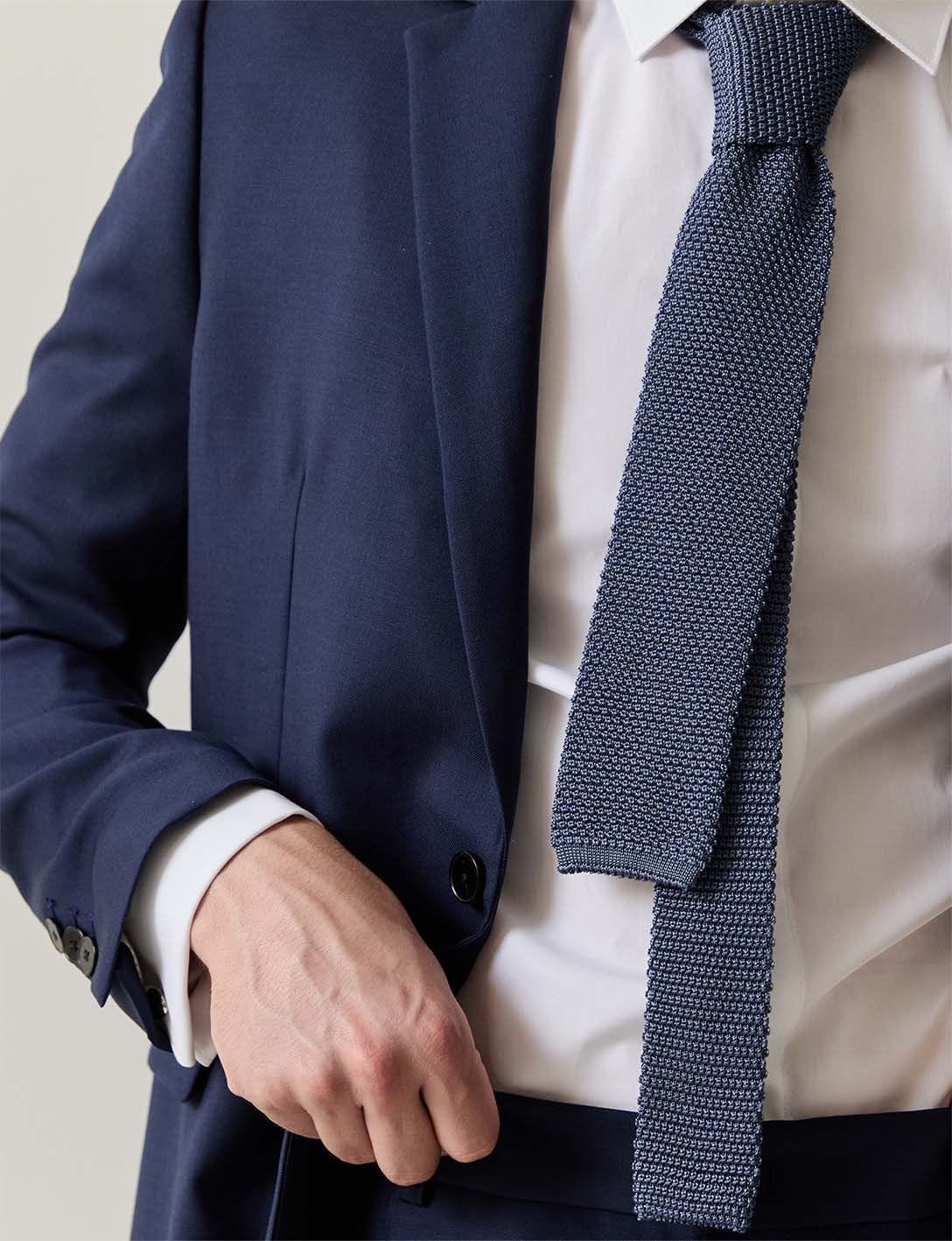
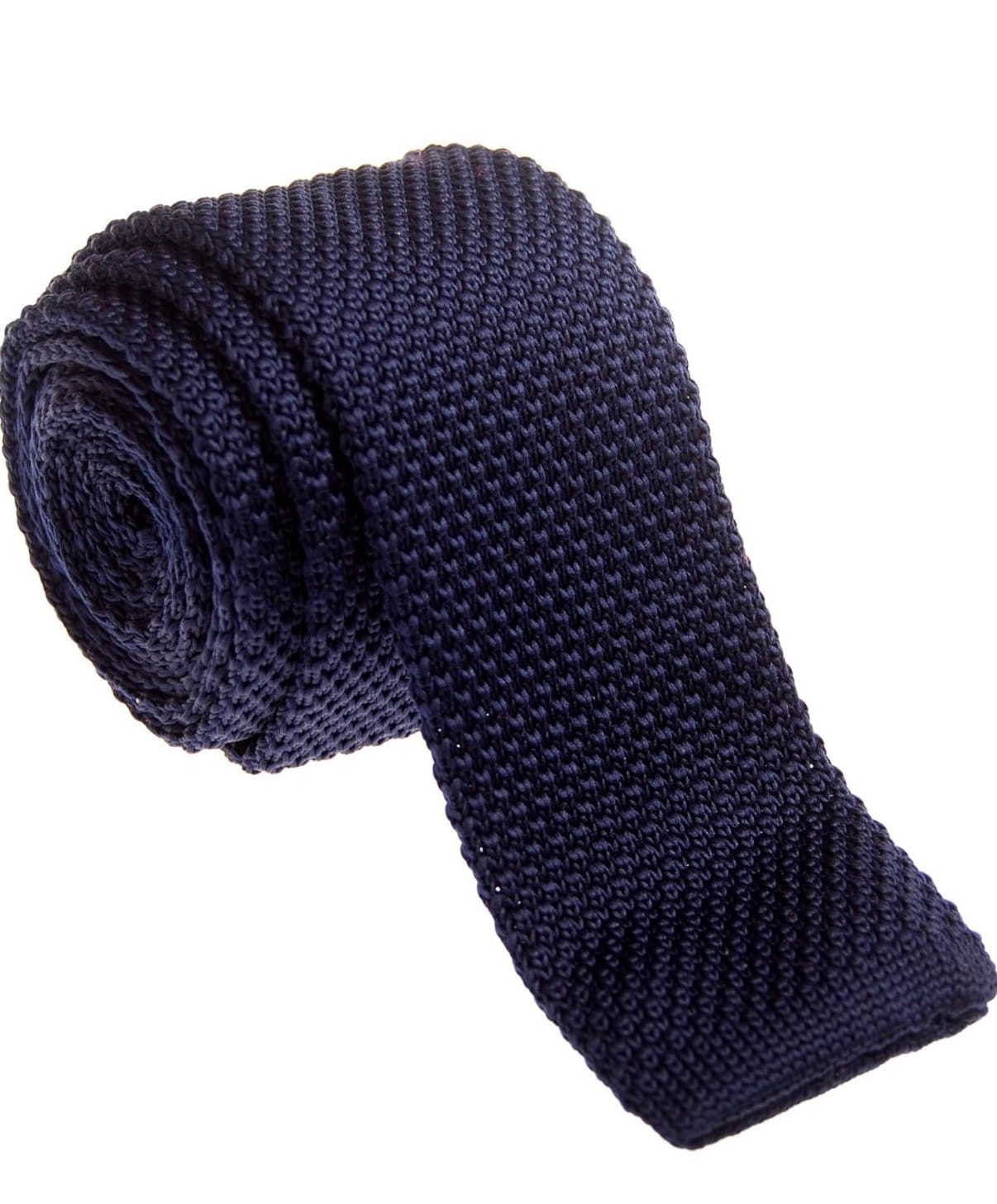
Unlike traditional woven silk ties, knit ties are… knit. The texture is visible. The surface has dimension. The light absorbs differently.
Three defining characteristics:
1. Texture Over Shine
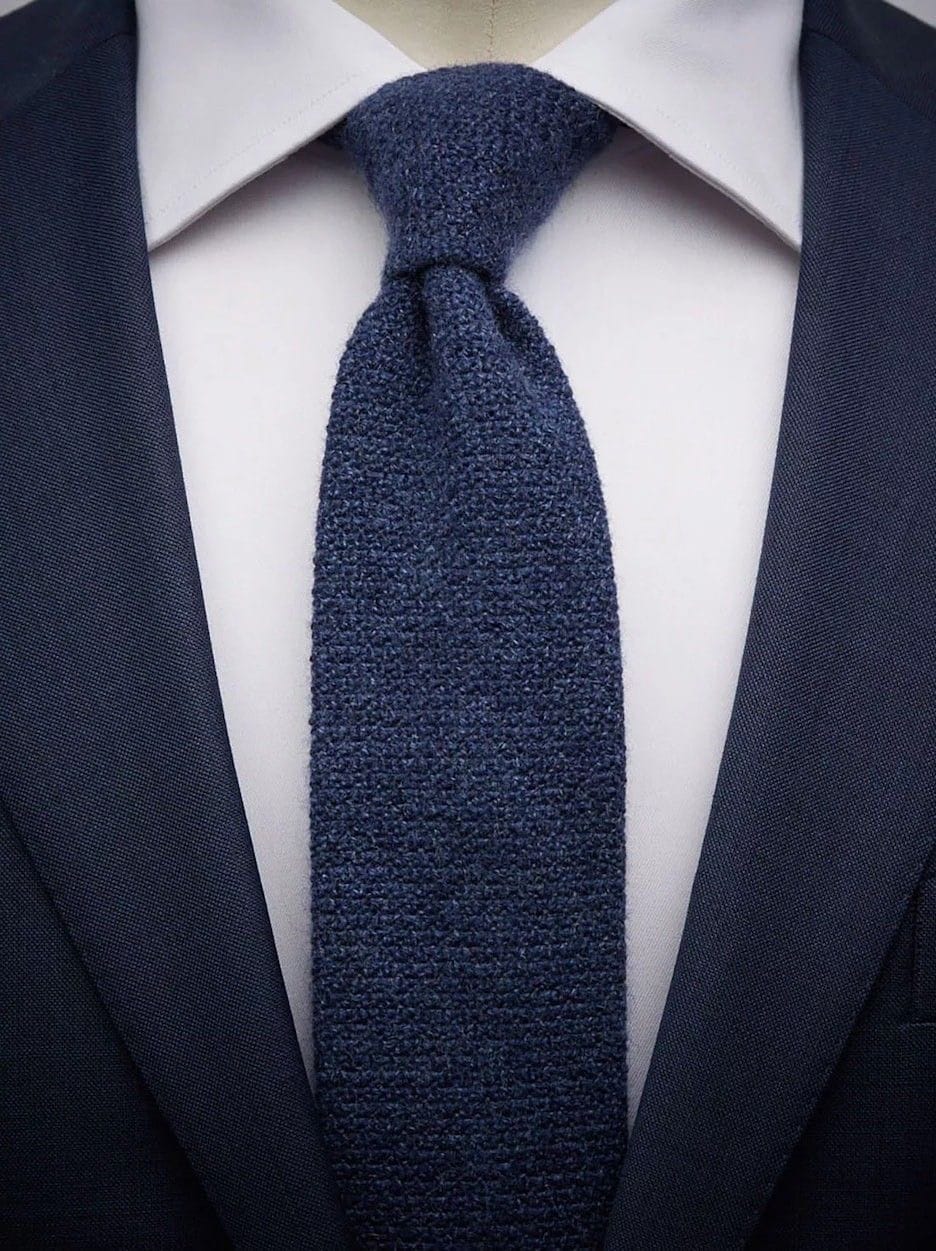
A navy knit tie absorbs light instead of reflecting it.
This creates visual depth without gloss.
2. Flat or Square End
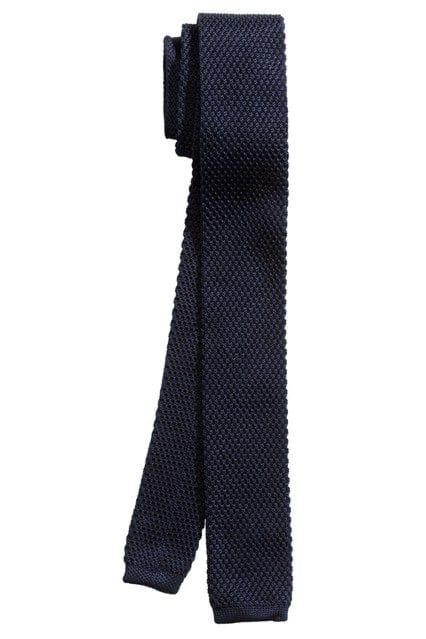
Most proper knit ties have a flat blade tip.
That squared finish is intentional — it separates it from traditional business ties.
3. Slightly Narrower Profile
Typically 2.5–3 inches wide.
Clean. Modern. Controlled.
Avoid overly skinny versions. Those belong to trend cycles, not executive systems.
When to Wear the Navy Knit Tie
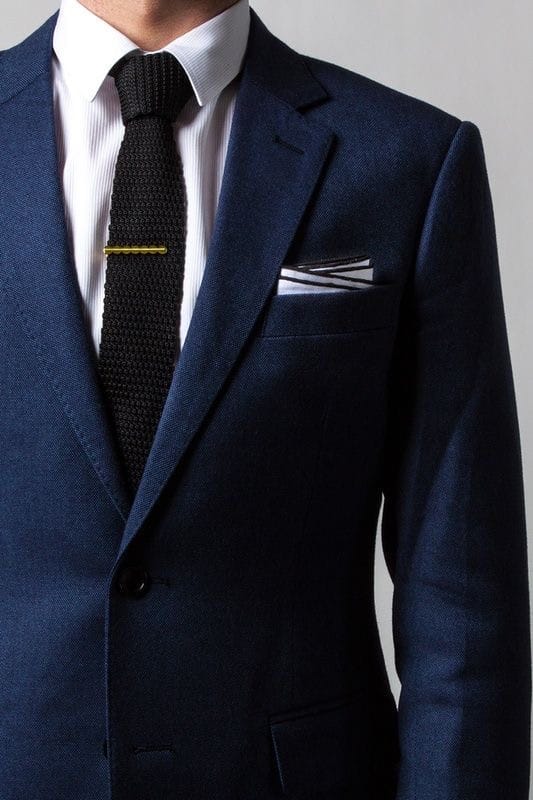
The knit tie thrives in environments where total formality feels stiff — but no tie feels underdressed.
Ideal settings:
Creative executive meetings
University speaking engagements
Client lunches
Private club environments
Consulting sessions
Friday boardroom appearances
It is especially strong in industries adjacent to luxury, advisory, and education — environments where intellect and presence intersect.
For EWI men, this is the tie of controlled approachability.
Knot Strategy
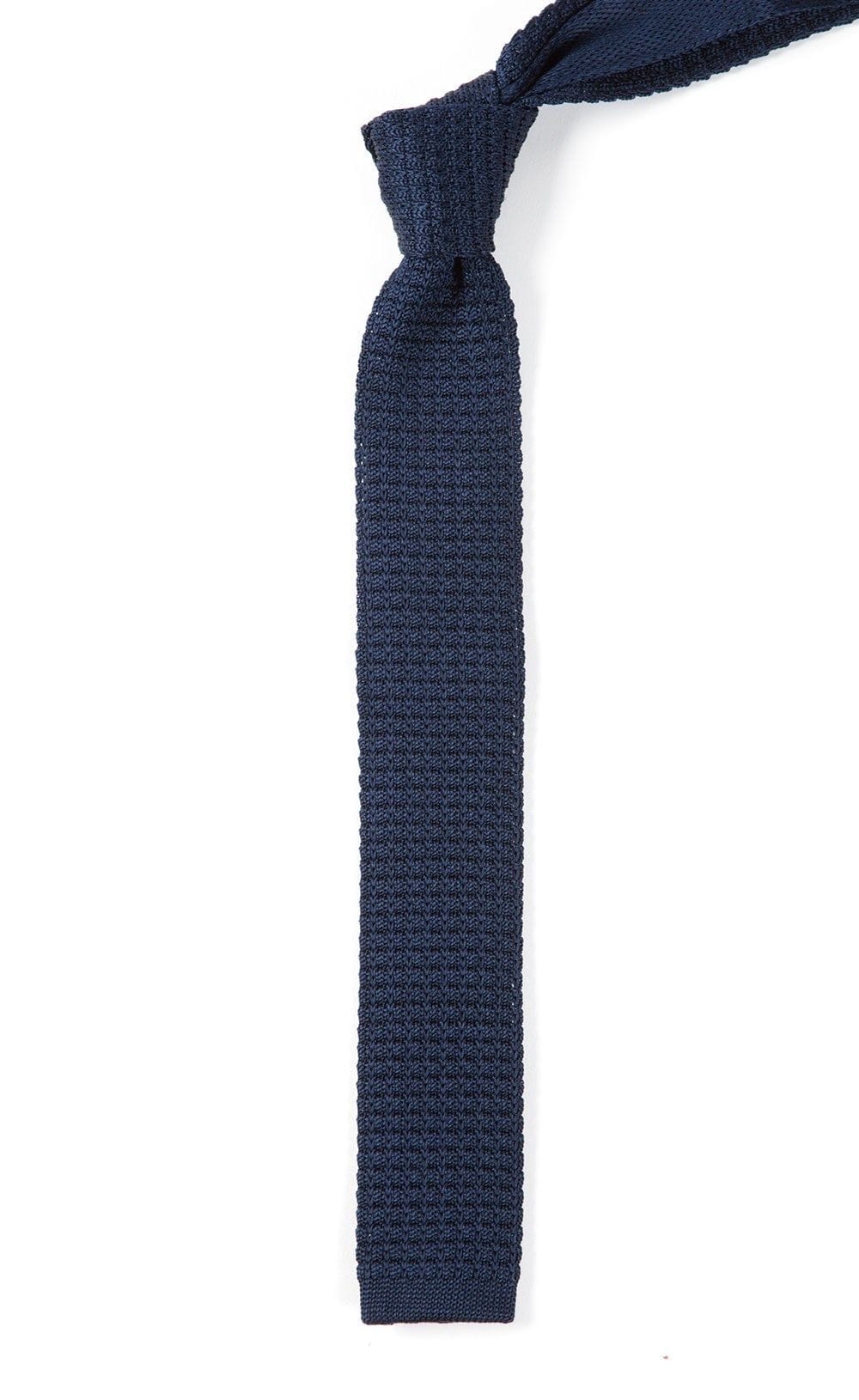
Keep it simple.
Four-in-hand only.
Slight asymmetry preferred.
Moderate dimple.
Do not over-engineer it. The knit tie is meant to feel effortless.
Silk Knit vs Wool Knit
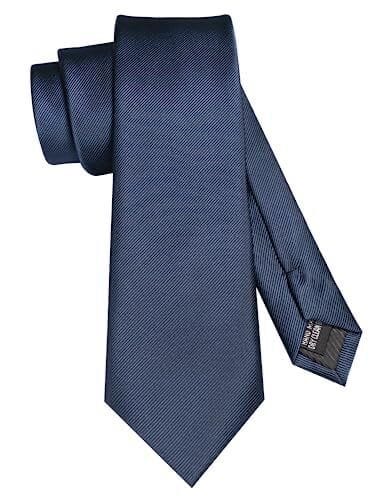
If you are building a disciplined 30-piece wardrobe:
Silk knit = year-round versatility
Wool knit = fall/winter texture
If you are buying only one, choose silk knit.
The goal is universality.
The Psychology of Texture
Texture communicates confidence.
Pattern asks for attention.
Color demands attention.
Texture earns attention slowly.
When someone looks at you twice and cannot immediately identify why the outfit feels refined — it is usually texture.
The navy knit tie adds dimension without visual noise.
That is executive dressing at its highest level.
Quality Markers
If you are purchasing correctly, look for:
100% silk
Dense, even knit
Clean bar tack at the back
Proper lining (not flimsy)
True navy — not washed-out blue
It should feel substantial in hand. Never flimsy.
One Is Enough
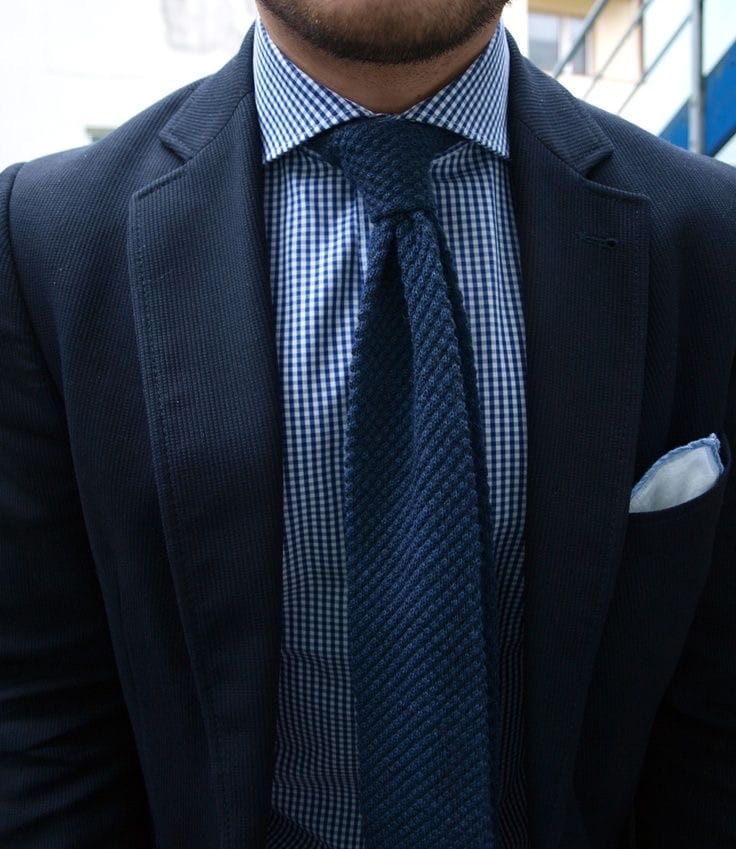
You do not need multiple knit ties in multiple colors.
You need one navy knit tie that integrates seamlessly with:
Your navy suit
Your charcoal suit
Your grey suit
Your navy blazer
The 30-Piece Executive Wardrobe is not about variety.
It is about precision.
Final Principle
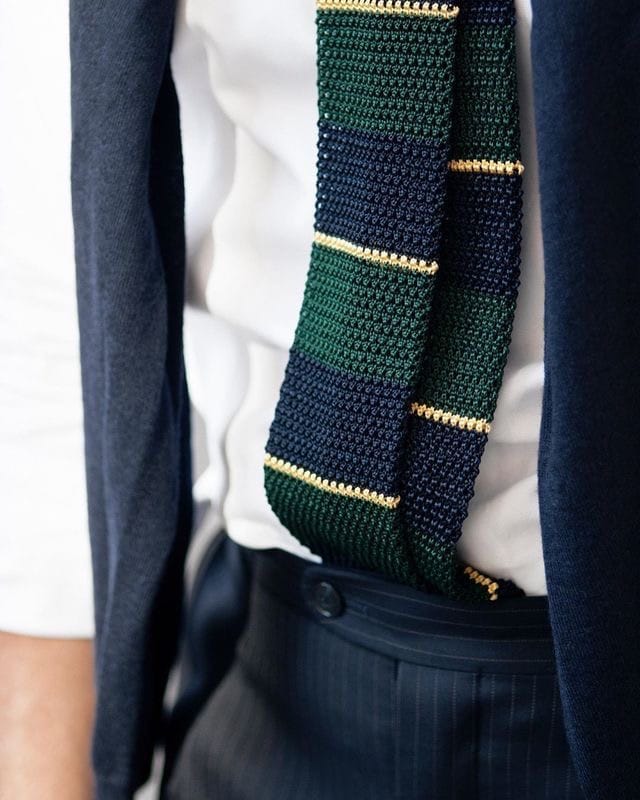
The navy knit tie says:
“I understand the rules — and I am relaxed enough to bend them slightly.”
Not rebellious.
Not casual.
Not trendy.
Just calibrated.
When properly paired with a structured jacket, crisp shirt, and polished dark brown Oxfords, the navy knit tie becomes the quiet differentiator.
It is not louder than silk.
It is more interesting than silk.
And in the right room — that subtle distinction is everything.
Next in the 30-Piece Executive Wardrobe:
The charcoal suit — the gravity anchor of institutional power.