The 30-Piece Executive Wardrobe No. 7
The Dark Brown Oxford Shoe
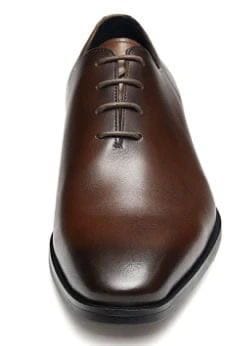
There is a point in every man’s wardrobe where progress stops being about adding more—and starts being about adding better.
Dark brown Oxford shoes sit precisely at that inflection point.
They are not flashy.
They do not announce themselves.
They simply resolve the outfit.
When chosen well, dark brown Oxfords become the most quietly powerful shoes in your rotation: formal enough for boardrooms, refined enough for high-stakes meetings, and versatile enough to carry you through most professional environments without friction.
This is the shoe executives graduate to when they no longer need to prove they know the rules—because they embody them.
Why Dark Brown Oxfords Belong in the Executive Core
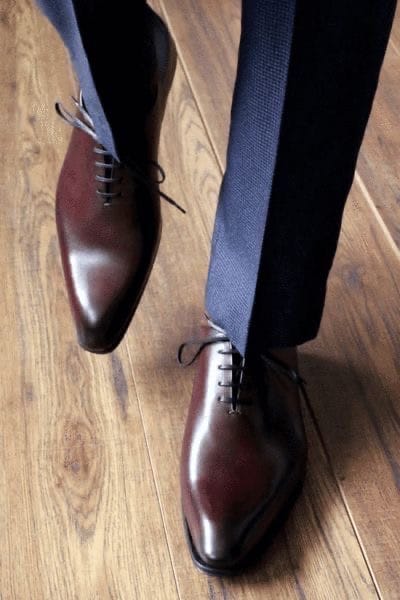
Most men default to black Oxfords for formal wear. That instinct isn’t wrong—but it’s incomplete.
Dark brown Oxfords offer something black cannot:
They soften authority without weakening it.
Where black can feel rigid, ceremonial, and severe, dark brown communicates discernment. It signals taste. It suggests that the wearer understands nuance, context, and proportion.
In practice, this means:
Dark brown Oxfords pair more naturally with navy, charcoal, mid-grey, flannel, and textured suiting
They feel less “corporate uniform,” more executive discretion
They transition better between formal meetings and modern professional environments
This is why dark brown Oxfords are standard issue among senior partners, private equity principals, and executives who dress for authority rather than attention.
What Defines a True Oxford (And Why It Matters)
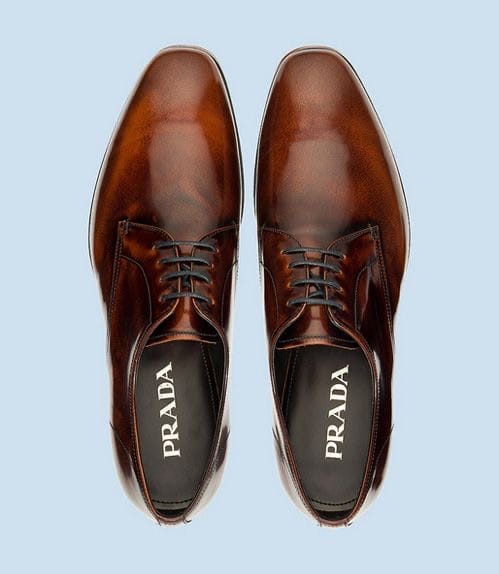
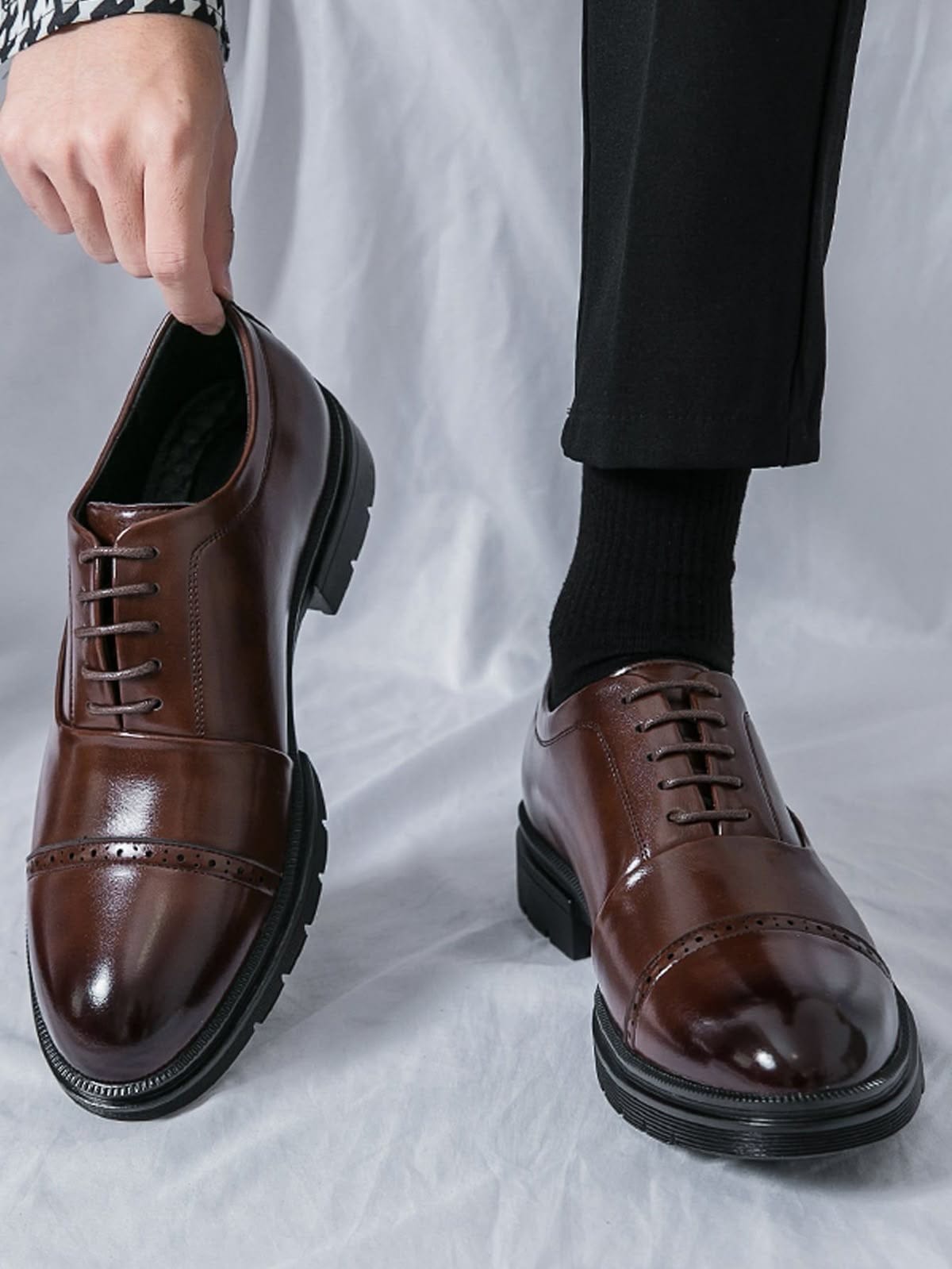
An Oxford is defined by its closed lacing system: the eyelet facings are stitched underneath the vamp. This creates a clean, continuous line across the shoe.
Why this matters:
Closed lacing reads as formal.
It creates visual discipline.
It pairs with tailored garments cleanly.
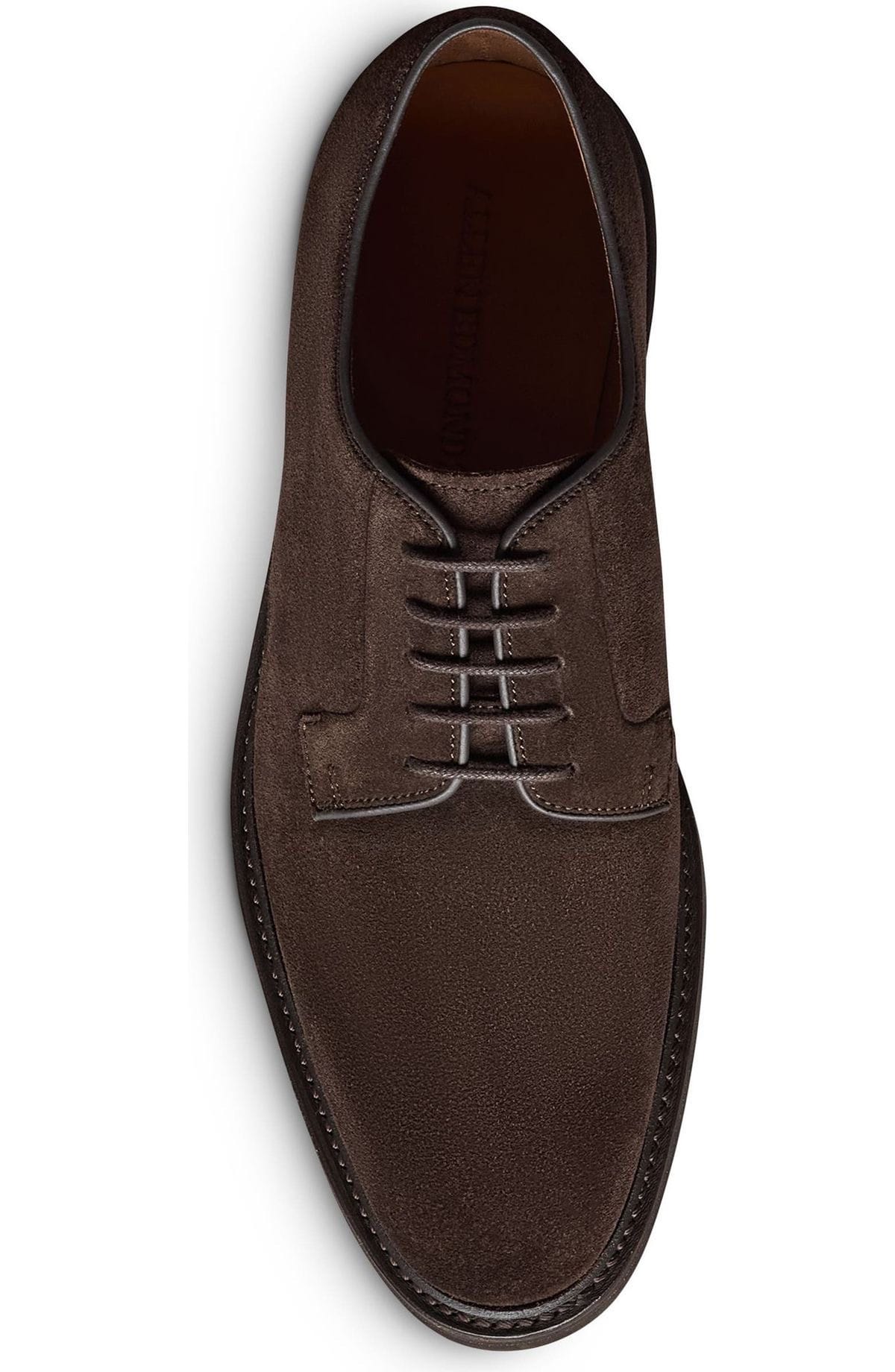
Many men mistakenly wear open-laced Derby shoes into environments that call for sharper lines. The difference is subtle, but the signal is not.
When the environment is formal, the shoe should mirror that formality.
Your dark brown pair should be a true Oxford—cap-toe or plain-toe.
The Correct Shade of Dark Brown
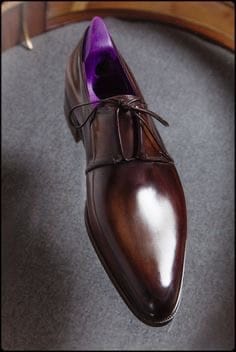
Not all “dark brown” is created equal.
You want a tone that sits closer to espresso than chocolate.
Rich. Deep. Controlled.
No red undertones. No orange warmth.
The correct shade should:
Read nearly black in low light
Reveal brown only in natural light
Complement navy, charcoal, and deep grey seamlessly
If the brown reads casual, the shoe will skew casual—no matter how formal the construction.
Leather Quality: Where Authority Is Won or Lost
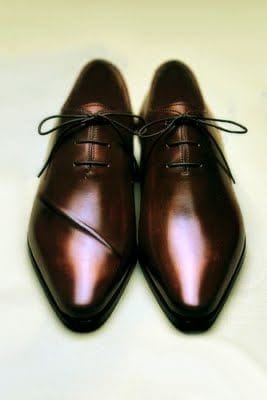
Your shoes are the only leather item in your outfit that touches the ground.
They carry the visual burden of gravity.
Low-grade leather collapses, creases harshly, and reflects light unevenly.
High-grade leather ages with restraint. Creases softly. Develops patina instead of fatigue.
What to look for:
Full-grain calfskin
Tight, smooth pores
Even dye saturation
No plastic sheen
In executive settings, poor leather is read subconsciously as poor standards.
The shoe may be small. The signal is not.
The Role of Dark Brown Oxfords in the 30-Piece System
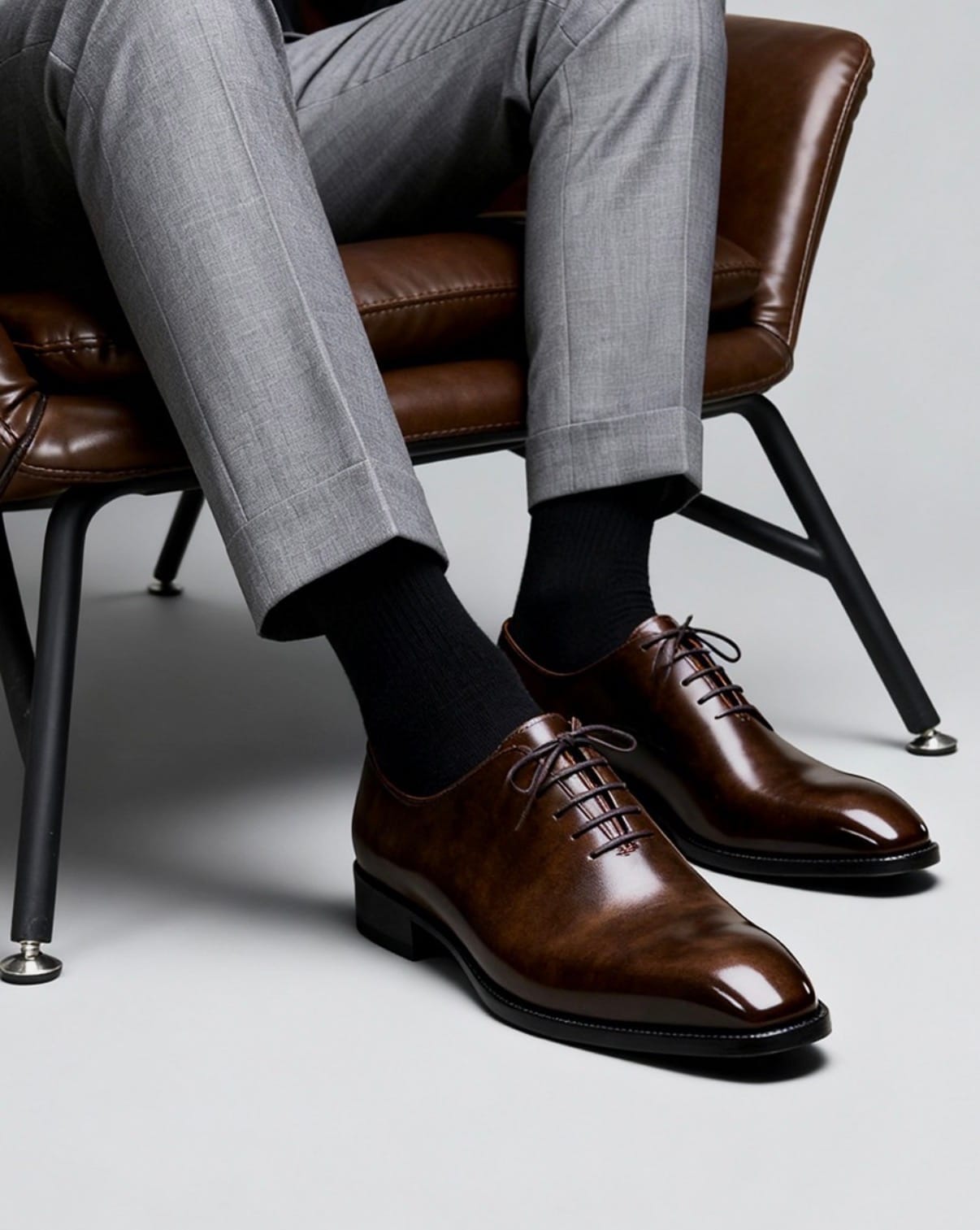
Within the 30-Piece Executive Wardrobe, dark brown Oxfords serve as the primary formal brown leather anchor.
They are designed to pair with:
Navy suits
Charcoal suits
Mid-grey suits
Flannel trousers
Dark denim in elevated professional environments
Tailored sport coats with formal trousers
They are not weekend shoes.
They are not casual shoes.
They are professional instruments.
When paired correctly, they eliminate decision fatigue. You don’t wonder whether they work. They do.
How to Wear Them (Without Overthinking It)
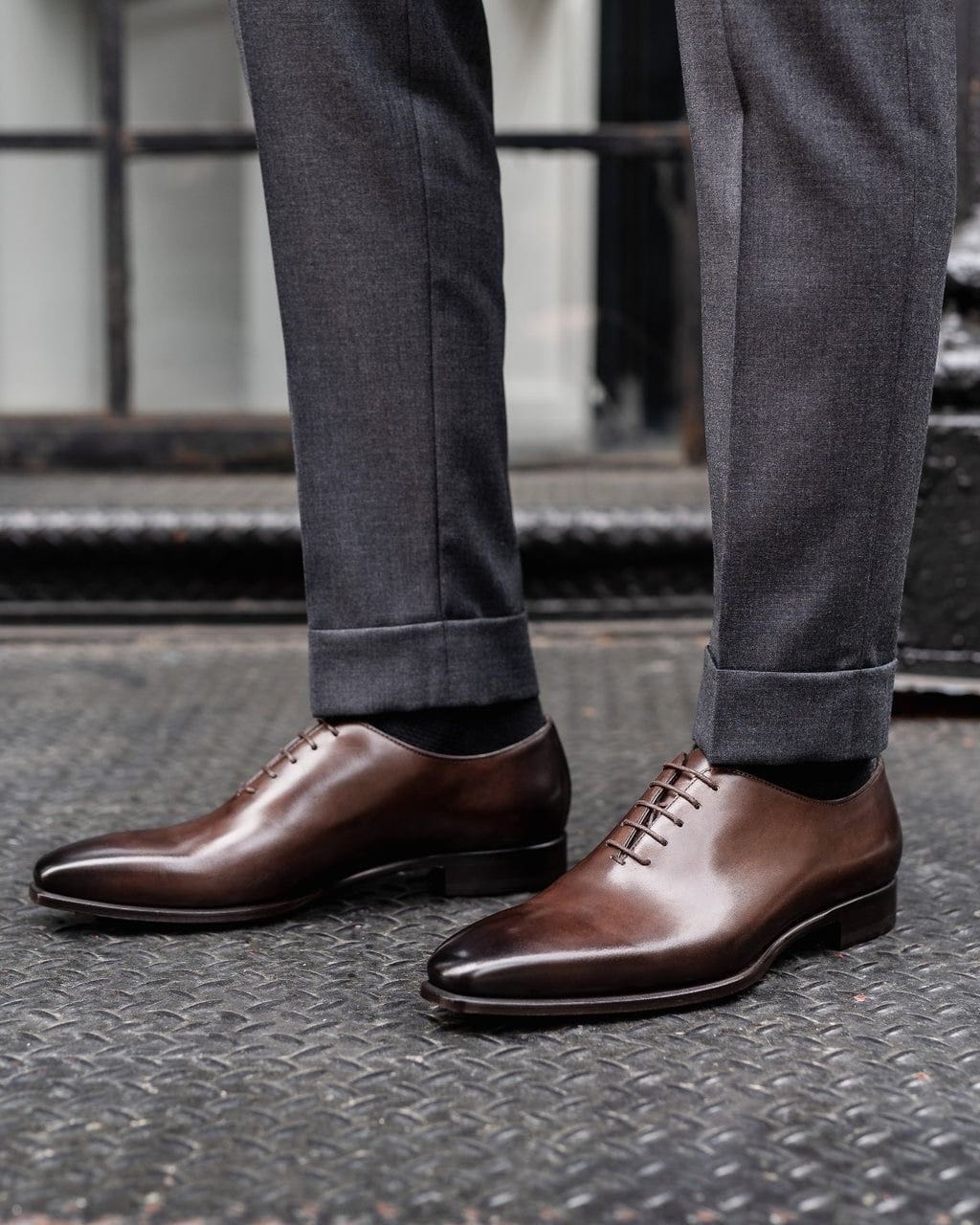
Pair dark brown Oxfords with:
Navy suit + light blue Oxford shirt
Charcoal suit + white or pale blue shirt
Grey flannel trousers + navy blazer
Navy suit + fine-gauge knit polo for modern executive settings
Avoid pairing them with:
Black suits (stay with black shoes here)
Light summer linen suits
Casual chinos
Anything distressed, overly textured, or intentionally relaxed
The shoe thrives in structured environments.
Use it where structure matters.
Maintenance as a Form of Executive Discipline
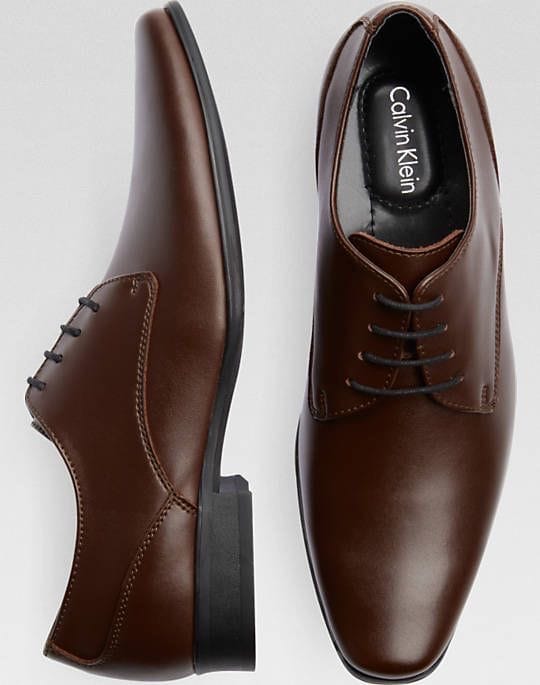
Well-made shoes are a long-term asset—if you treat them like one.
Non-negotiables:
Use cedar shoe trees after every wear
Rotate shoes (never wear the same pair two days in a row)
Condition leather sparingly, polish intentionally
Replace soles before they fail structurally
A polished shoe doesn’t scream.
It whispers competence.
The Quiet Signal of Standards
In leadership environments, people notice what you don’t let slide.
Wrinkled cuffs.
Scuffed shoes.
Cheap leather.
Overly loud design.
Dark brown Oxfords, worn correctly, signal restraint and discipline. They suggest the wearer is not performing professionalism—he is practicing it.
This is the underlying purpose of the 30-Piece Executive Wardrobe:
To remove noise.
To reduce friction.
To project standards without spectacle.
The Principle
Your shoes should never be the most interesting thing about you.
They should be the most assured.
Dark brown Oxford shoes do not compete for attention.
They hold the line.
In executive environments, that is power.